


Internal anal sphincter relaxation associated with bisacodyl-induced colonic high amplitude propagating contractions in children with constipation: a colo-anal reflex?
- PMID: 22757618
- PMCID: PMC3465462
- DOI: 10.1111/j.1365-2982.2012.01965.x
Internal anal sphincter relaxation associated with bisacodyl-induced colonic high amplitude propagating contractions in children with constipation: a colo-anal reflex?
Abstract
Background: Describe the association of internal anal sphincter (IAS) relaxation with colonic high- amplitude peristaltic contractions (HAPCs).
Methods: Retrospective review of colon manometry tracings of children with constipation to determine the IAS relaxation characteristics associated with HAPC's (HAPC-IASR) events and compare them to the those seen during the performance of the anorectal manometry (ARMRAIR) events.
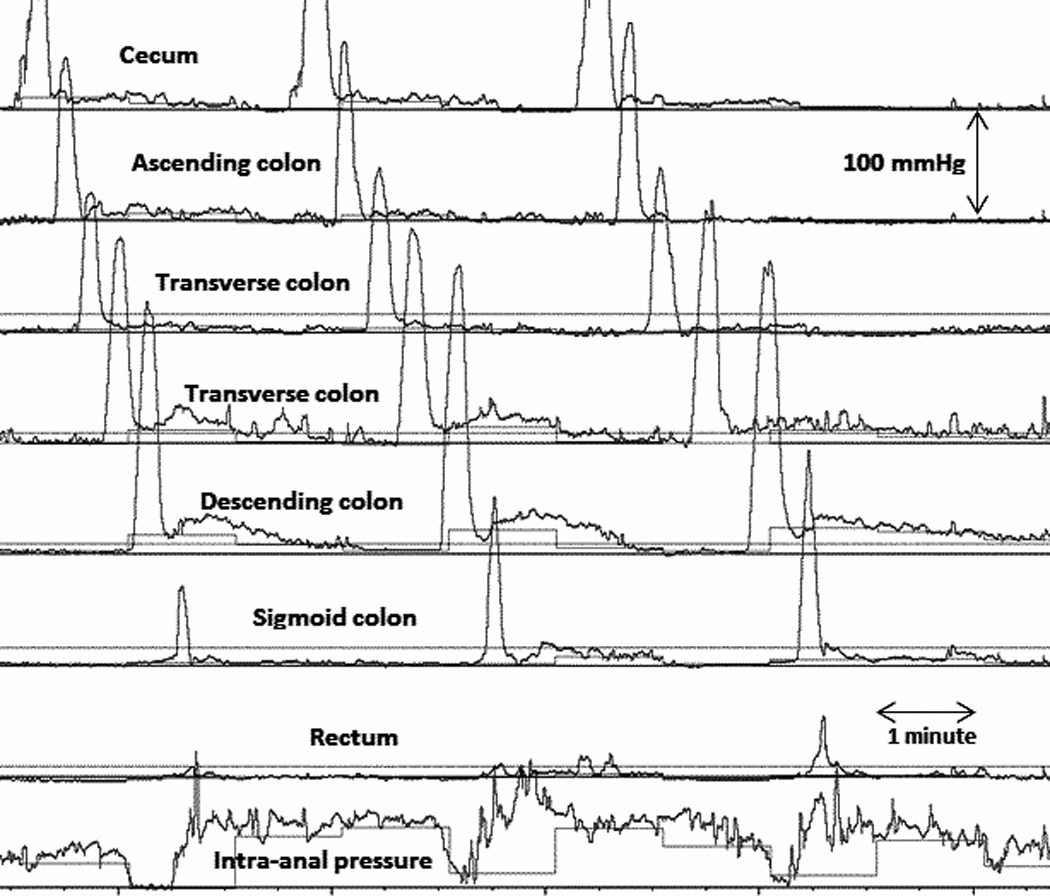
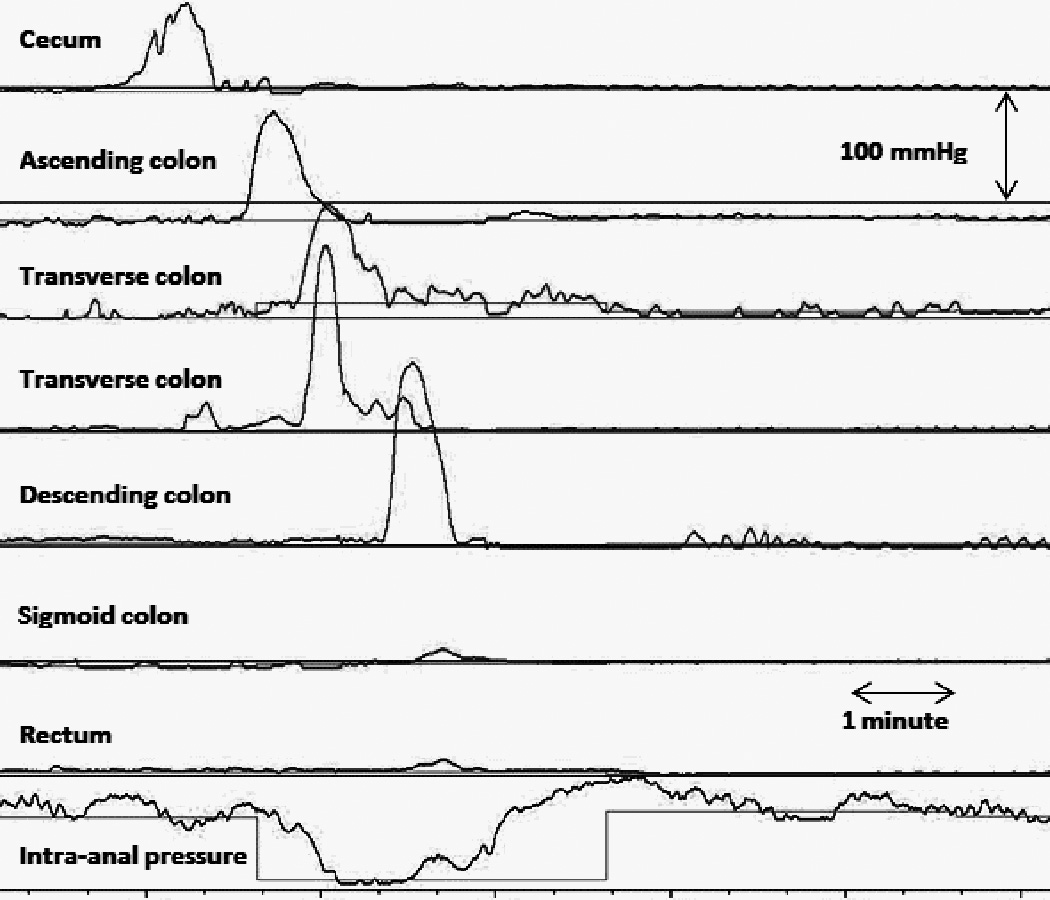
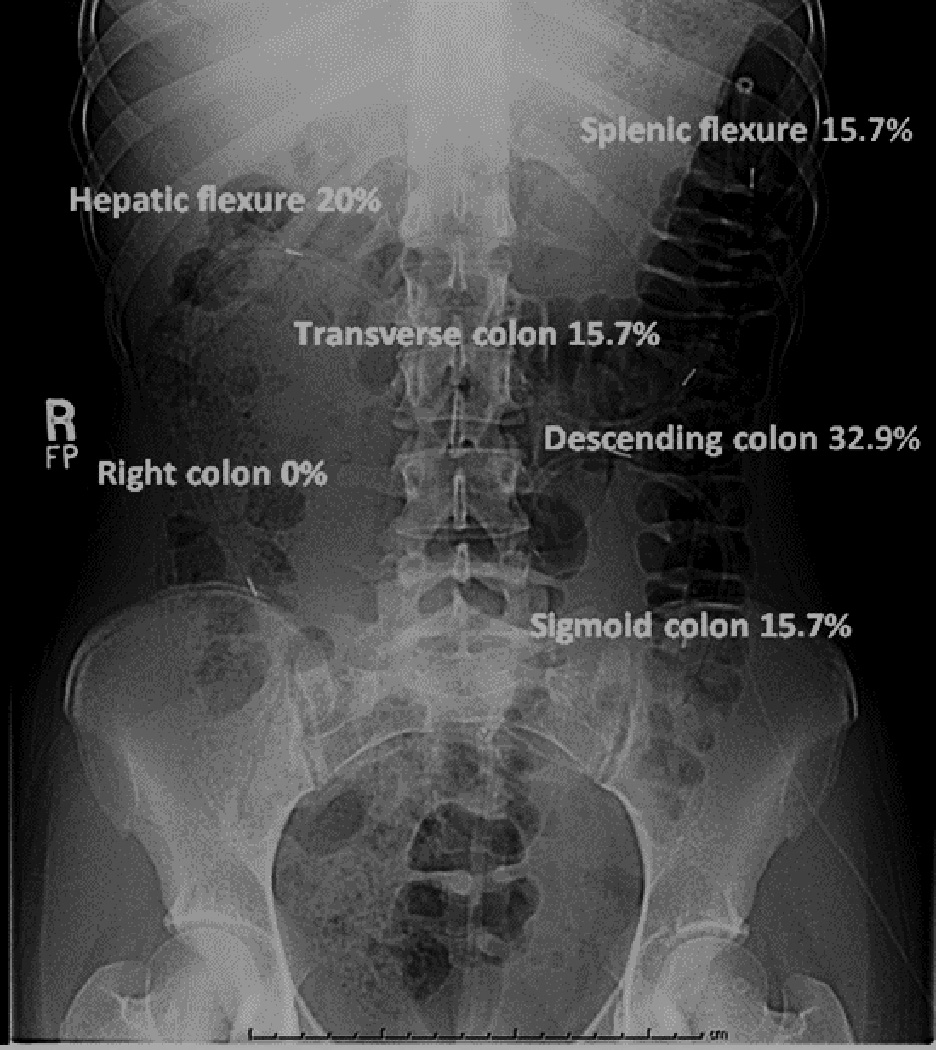
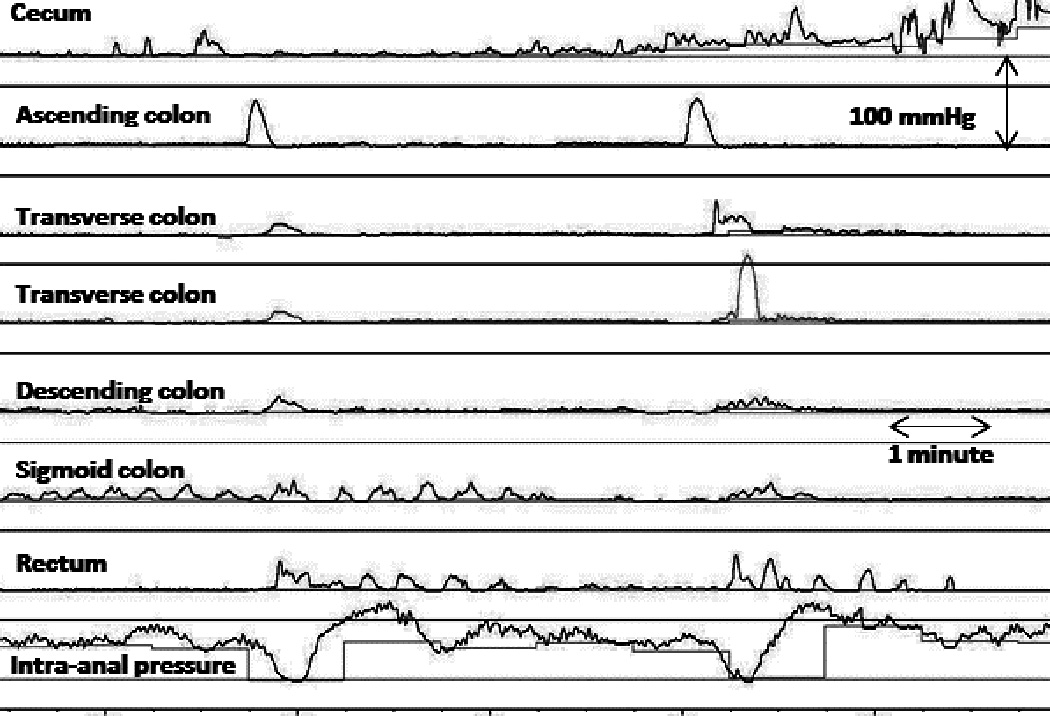
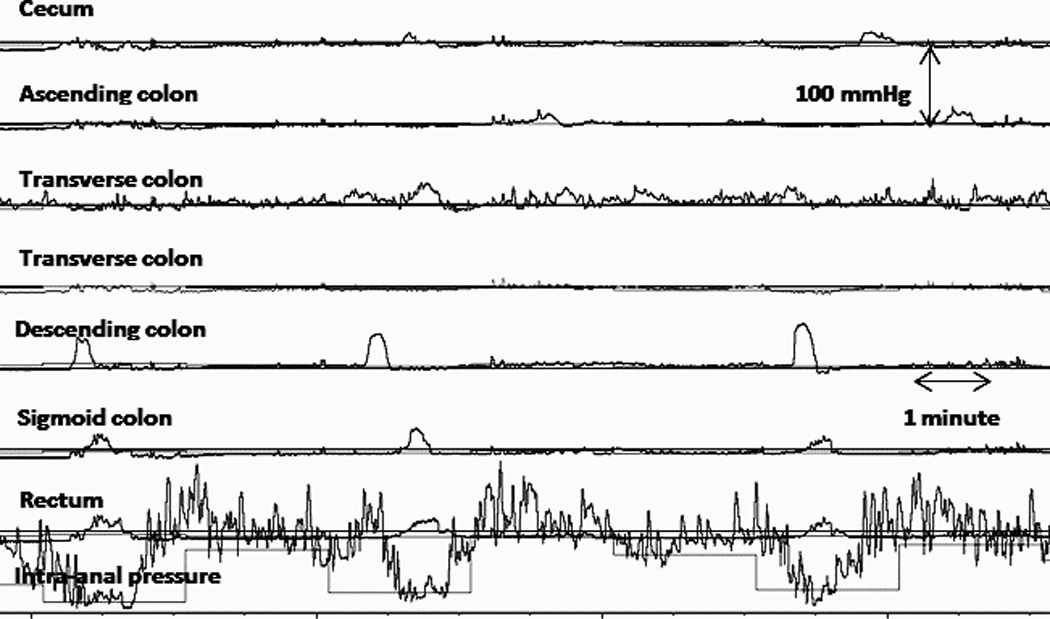
Key results: A total of 70 HAPC- IASRs were observed in 15 patients, 65 after bisacodyl, two during fasting and three after a meal. In 64% of events, the IAS relaxation started when the HAPC reached left colon and in 36% as proximal as the hepatic flexure. High- amplitude peristaltic contraction propagation seems to be important in HAPC-IASR characteristics; those propagating distal to sigmoid colon demonstrated larger and longer IAS relaxation as well as lower residual pressure, but equivalent resting pressure compared with HAPC's ending proximal to sigmoid colon. Although IAS resting pressure was comparable for ARM-RAIRs and HAPC-IASRs, the duration and magnitude of anal relaxation was higher, and the anal residual pressure was lower in HAPC-IASRs.
Conclusions & inferences: We demonstrated that IAS relaxation in constipated children is associated with HAPCs migrating in the proximal and distal colon; in most cases, starting when peristalsis is migrating through left colon and in an important proportion while migrating proximally. We also demonstrated that HAPC-IASRs are different from ARM-RAIRs suggesting a neurally mediated reflex. Finally, the IAS relaxation characteristics are highly dependent on the degree of propagation of HAPCs, which could have important implications in the understanding of defecation disorders.
© 2012 Blackwell Publishing Ltd.
Figures
References
-
- Kamm MA, van der Sijp JR, Lennard-Jones JE. Observations on the characteristics of stimulated defaecation in severe idiopathic constipation. Int J Colorectal Dis. 1992;7:197–201. - PubMed
-
- Malcolm A, Camilleri M. Coloanal motor coordination in association with high-amplitude colonic contractions after pharmacological stimulation. Am J Gastroenterol. 2000;95:715–719. - PubMed
-
- Kamm MA, van der Sijp JR, Lennard-Jones JE. Colorectal and anal motility during defaecation. Lancet. 1992;339:820. - PubMed
-
- Di Lorenzo C, Flores AF, Reddy SN, et al. Use of colonic manometry to differentiate causes of intractable constipation in children. J Pediatr. 1992;120:690–695. - PubMed
Publication types
MeSH terms
Substances
Grants and funding
LinkOut - more resources
Full Text Sources
Medical
