


The major histocompatibility complex and autism spectrum disorder
- PMID: 22760919
- PMCID: PMC4365477
- DOI: 10.1002/dneu.22046
The major histocompatibility complex and autism spectrum disorder
Abstract
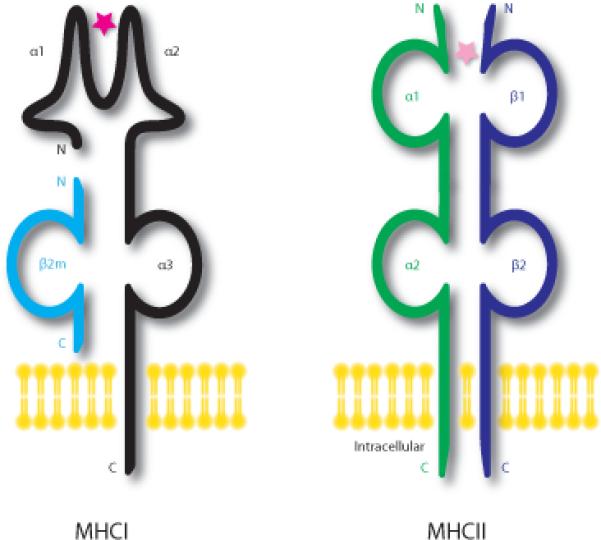
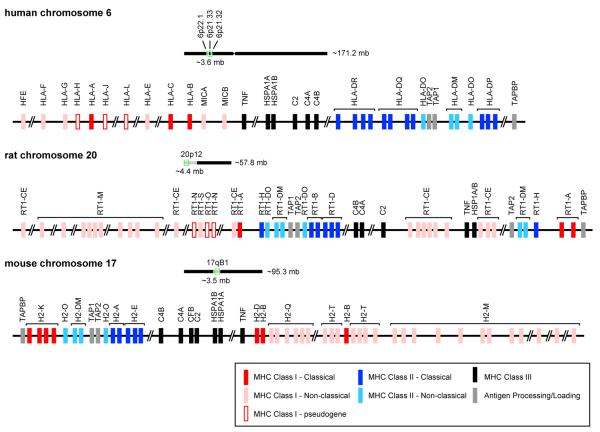
Autism spectrum disorder (ASD) is a complex disorder that appears to be caused by interactions between genetic changes and environmental insults during early development. A wide range of factors have been linked to the onset of ASD, but recently both genetic associations and environmental factors point to a central role for immune-related genes and immune responses to environmental stimuli. Specifically, many of the proteins encoded by the major histocompatibility complex (MHC) play a vital role in the formation, refinement, maintenance, and plasticity of the brain. Manipulations of levels of MHC molecules have illustrated how disrupted MHC signaling can significantly alter brain connectivity and function. Thus, an emerging hypothesis in our field is that disruptions in MHC expression in the developing brain caused by mutations and/or immune dysregulation may contribute to the altered brain connectivity and function characteristic of ASD. This review provides an overview of the structure and function of the three classes of MHC molecules in the immune system, healthy brain, and their possible involvement in ASD.
Copyright © 2012 Wiley Periodicals, Inc.
Figures
Similar articles
-
Immune mediators in the brain and peripheral tissues in autism spectrum disorder.Nat Rev Neurosci. 2015 Aug;16(8):469-86. doi: 10.1038/nrn3978. Nat Rev Neurosci. 2015. PMID: 26189694 Free PMC article. Review.
-
Autism spectrum disorders: from immunity to behavior.Methods Mol Biol. 2012;934:219-40. doi: 10.1007/978-1-62703-071-7_12. Methods Mol Biol. 2012. PMID: 22933149
-
Neuronal connectivity as a convergent target of gene × environment interactions that confer risk for Autism Spectrum Disorders.Neurotoxicol Teratol. 2013 Mar-Apr;36:3-16. doi: 10.1016/j.ntt.2012.12.001. Epub 2012 Dec 23. Neurotoxicol Teratol. 2013. PMID: 23269408 Free PMC article. Review.
-
Maternal immune activation and strain specific interactions in the development of autism-like behaviors in mice.Transl Psychiatry. 2013 Mar 12;3(3):e240. doi: 10.1038/tp.2013.16. Transl Psychiatry. 2013. PMID: 23481627 Free PMC article.
-
Immune dysregulation in autism spectrum disorder.Int Rev Neurobiol. 2013;113:269-302. doi: 10.1016/B978-0-12-418700-9.00009-5. Int Rev Neurobiol. 2013. PMID: 24290389 Review.
Cited by
-
Association of HLA alleles with autism.Neuropsychiatr Dis Treat. 2018 Nov 27;14:3259-3265. doi: 10.2147/NDT.S186673. eCollection 2018. Neuropsychiatr Dis Treat. 2018. PMID: 30568448 Free PMC article.
-
The Relationship of HLA Class I and II Alleles and Haplotypes with Autism: A Case Control Study.Autism Res Treat. 2014;2014:242048. doi: 10.1155/2014/242048. Epub 2014 Feb 3. Autism Res Treat. 2014. PMID: 24672722 Free PMC article.
-
Major histocompatibility complex I in brain development and schizophrenia.Biol Psychiatry. 2014 Feb 15;75(4):262-8. doi: 10.1016/j.biopsych.2013.10.003. Epub 2013 Oct 10. Biol Psychiatry. 2014. PMID: 24199663 Free PMC article. Review.
-
Microglia from offspring of dams with allergic asthma exhibit epigenomic alterations in genes dysregulated in autism.Glia. 2018 Mar;66(3):505-521. doi: 10.1002/glia.23261. Epub 2017 Nov 14. Glia. 2018. PMID: 29134693 Free PMC article.
-
Respiratory viral infection in neonatal piglets causes marked microglia activation in the hippocampus and deficits in spatial learning.J Neurosci. 2014 Feb 5;34(6):2120-9. doi: 10.1523/JNEUROSCI.2180-13.2014. J Neurosci. 2014. PMID: 24501353 Free PMC article.
References
-
- Abdallah MW, Larsen N, Grove J, Norgaard-Pedersen B, Thorsen P, Mortensen EL, Hougaard DM. Amniotic fluid inflammatory cytokines: Potential markers of immunologic dysfunction in autism spectrum disorders. World J Biol Psychiatry. 2011 - PubMed
-
- Abdallah MW, Larsen N, Grove J, Norgaard-Pedersen B, Thorsen P, Mortensen EL, Hougaard DM. Amniotic fluid chemokines and autism spectrum disorders: an exploratory study utilizing a Danish Historic Birth Cohort. Brain Behav Immun. 2012;26:170–176. - PubMed
-
- Albensi BC, Mattson MP. Evidence for the involvement of TNF and NF-kappaB in hippocampal synaptic plasticity. Synapse. 2000;35:151–159. - PubMed
-
- Alfonso C, Karlsson L. Nonclassical MHC class II molecules. Annual review of immunology. 2000;18:113–142. - PubMed
-
- Ashwood P, Enstrom A, Krakowiak P, Hertz-Picciotto I, Hansen RL, Croen LA, Ozonoff S, Pessah IN, Van de Water J. Decreased transforming growth factor beta1 in autism: a potential link between immune dysregulation and impairment in clinical behavioral outcomes. J Neuroimmunol. 2008;204:149–153. - PMC - PubMed
Publication types
MeSH terms
Grants and funding
LinkOut - more resources
Full Text Sources
Research Materials
