


Computational predictions of volatile anesthetic interactions with the microtubule cytoskeleton: implications for side effects of general anesthesia
- PMID: 22761654
- PMCID: PMC3382613
- DOI: 10.1371/journal.pone.0037251
Computational predictions of volatile anesthetic interactions with the microtubule cytoskeleton: implications for side effects of general anesthesia
Abstract
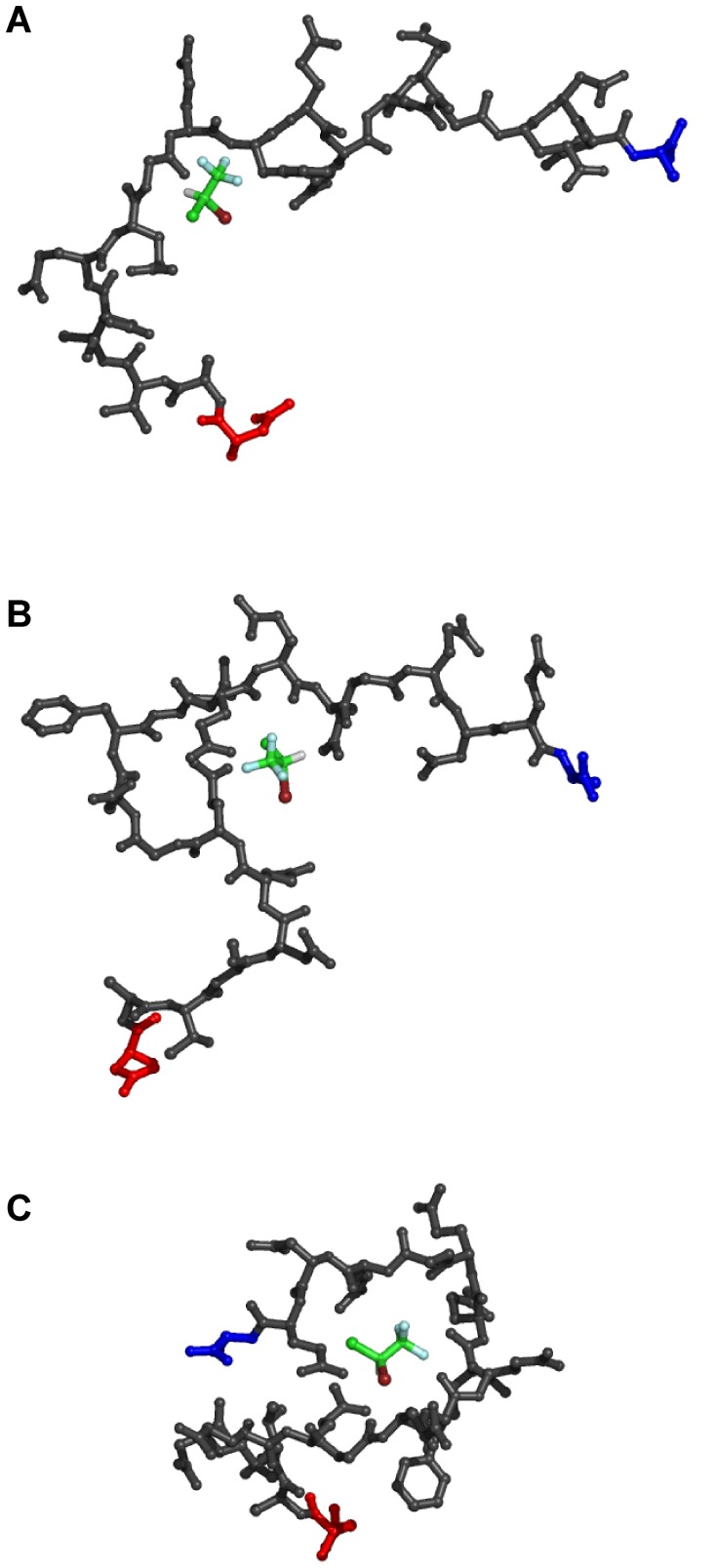
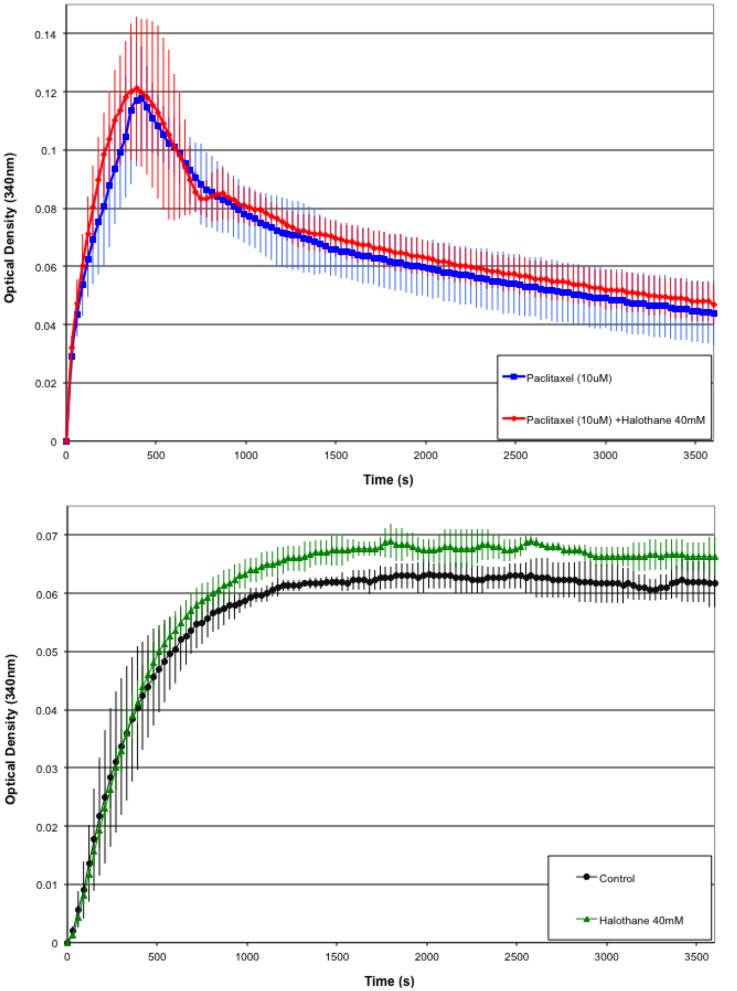
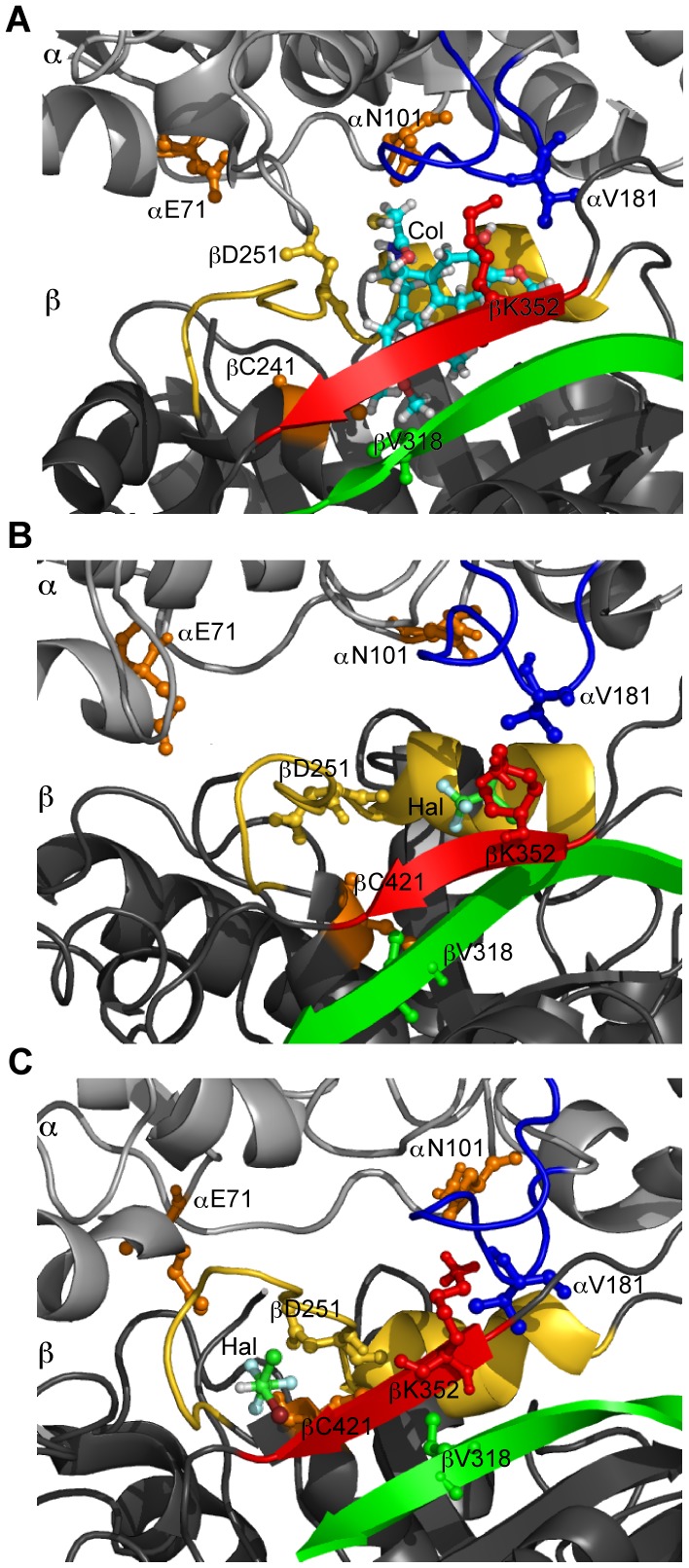
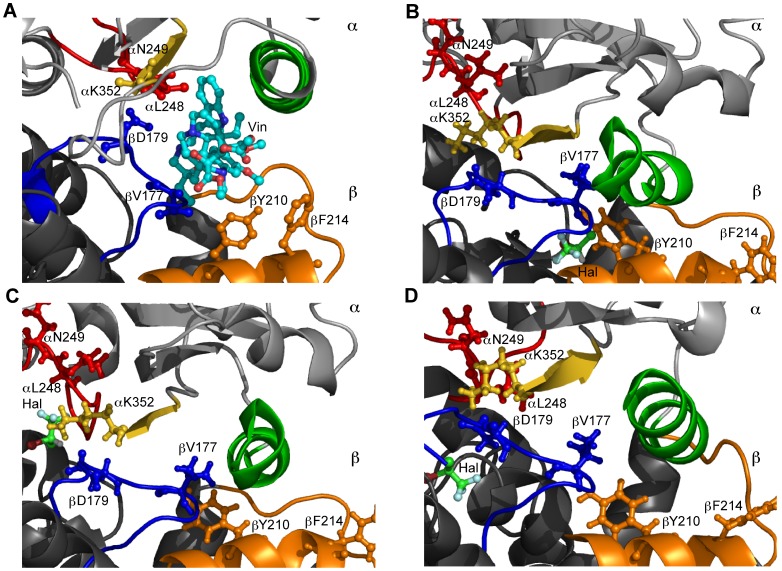
The cytoskeleton is essential to cell morphology, cargo trafficking, and cell division. As the neuronal cytoskeleton is extremely complex, it is no wonder that a startling number of neurodegenerative disorders (including but not limited to Alzheimer's disease, Parkinson's disease and Huntington's disease) share the common feature of a dysfunctional neuronal cytoskeleton. Recently, concern has been raised about a possible link between anesthesia, post-operative cognitive dysfunction, and the exacerbation of neurodegenerative disorders. Experimental investigations suggest that anesthetics bind to and affect cytoskeletal microtubules, and that anesthesia-related cognitive dysfunction involves microtubule instability, hyper-phosphorylation of the microtubule-associated protein tau, and tau separation from microtubules. However, exact mechanisms are yet to be identified. In this paper the interaction of anesthetics with the microtubule subunit protein tubulin is investigated using computer-modeling methods. Homology modeling, molecular dynamics simulations and surface geometry techniques were used to determine putative binding sites for volatile anesthetics on tubulin. This was followed by free energy based docking calculations for halothane (2-bromo-2-chloro-1,1,1-trifluoroethane) on the tubulin body, and C-terminal regions for specific tubulin isotypes. Locations of the putative binding sites, halothane binding energies and the relation to cytoskeleton function are reported in this paper.
Conflict of interest statement
Figures
References
-
- Campagna J, Miller K, Forman S. Mechanisms of actions of inhaled anesthetics. N Engl J Med. 2003;348:2110–2124. - PubMed
-
- Mihic SJ, Ye Q, Wick MJ, Koltchine VV, Krasowski MD, et al. Sites of alcohol and volatile anaesthetic action on GABAA and glycine receptors. Nature. 1997;389:385–389. - PubMed
-
- Franks NP, Lieb WR. Molecular and cellular mechanisms of general anaesthesia. Nature. 1994;367:607–614. - PubMed
-
- Franks NP, Lieb WR. Do general anaesthetics act by competitive binding to specific receptors? Nature. 1984;310:599–601. - PubMed
Publication types
MeSH terms
Substances
LinkOut - more resources
Full Text Sources
Medical
Research Materials
