


Local gene expression changes after UV-irradiation of human skin
- PMID: 22761785
- PMCID: PMC3382209
- DOI: 10.1371/journal.pone.0039411
Local gene expression changes after UV-irradiation of human skin
Abstract
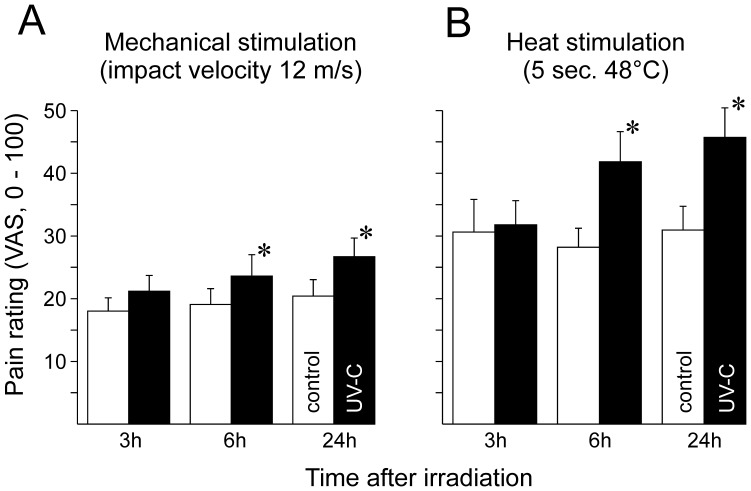
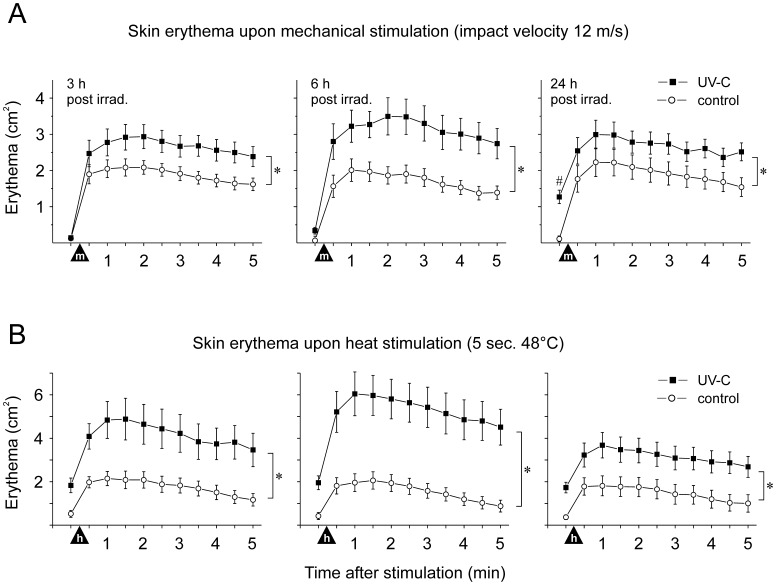
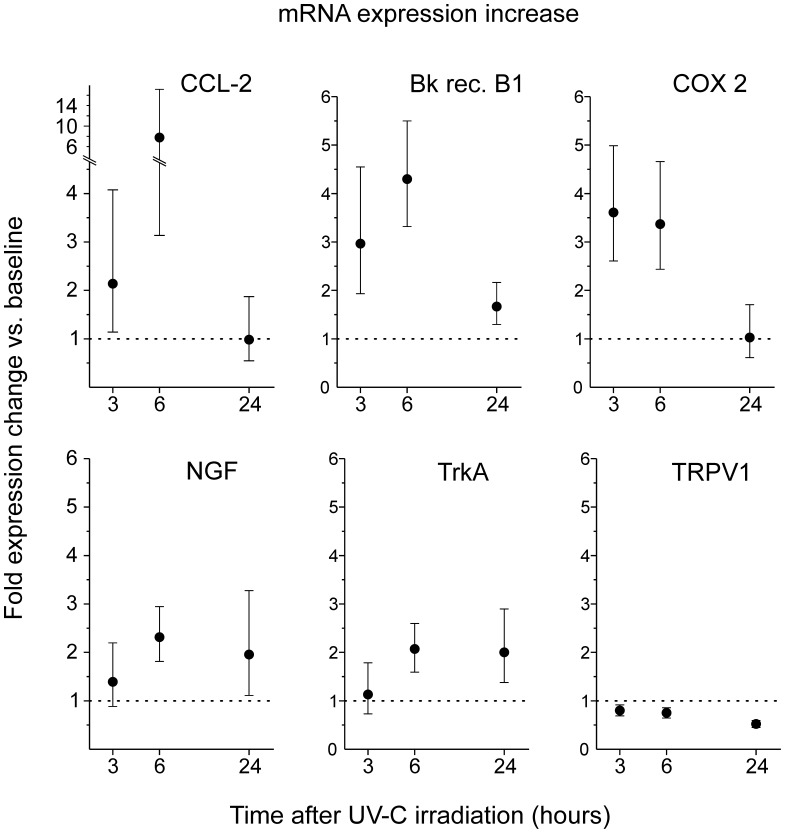
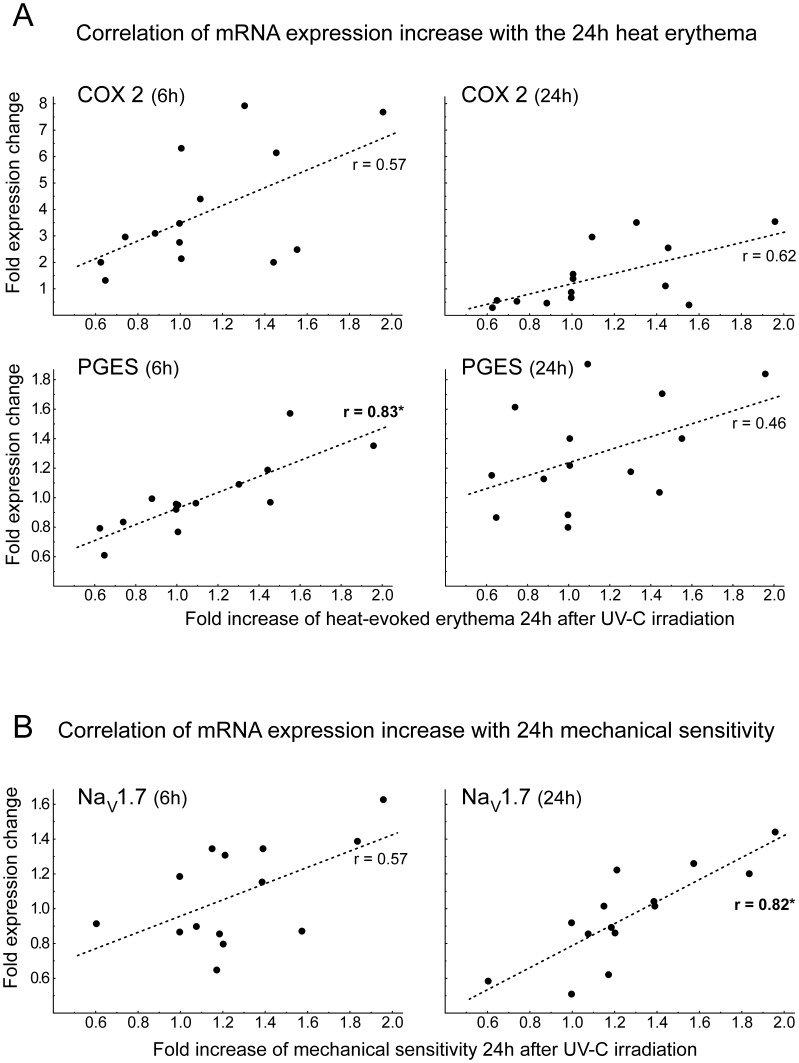
UV-irradiation is a well-known translational pain model inducing local inflammation and primary hyperalgesia. The mediators and receptor proteins specifically contributing to mechanical or heat hyperalgesia are still unclear. Therefore, we irradiated buttock skin of humans (n = 16) with 5-fold MED of UV-C and assessed the time course of hyperalgesia and axon reflex erythema. In parallel, we took skin biopsies at 3, 6 and 24 h after UVC irradiation and assessed gene expression levels (RT-PCR ) of neurotrophins (e.g. NGF, BDNF, GDNF), ion channels (e.g. NaV1.7, TRPV1), inflammatory mediators (e.g. CCL-2, CCL-3) and enzymes (e.g. PGES, COX2). Hyperalgesia to mechanical impact (12 m/s) and heat (48 °C) stimuli was significant at 6 h (p<0.05 and p<0.01) and 24 h (p<0.005 and p<0.01) after irradiation. Axon reflex erythema upon mechanical and thermal stimuli was significantly increased 3 h after irradiation and particularly strong at 6 h. A significant modulation of 9 genes was found post UV-C irradiation, including NGF (3, 6, 24 h), TrkA (6, 24 h), artemin, bradykinin-1 receptor, COX-2, CCL-2 and CCL-3 (3 and 6 h each). A significant down-regulation was observed for TRPV1 and iNOS (6, 24 h). Individual one-to-one correlation analysis of hyperalgesia and gene expression revealed that changes of Nav1.7 (SCN9A) mRNA levels at 6 and 24 h correlated to the intensity of mechanical hyperalgesia recorded at 24 h post UV-irradiation (Pearson r: 0.57, p<0.04 and r: 0.82, p<0.001). Expression of COX-2 and mPGES at 6 h correlated to the intensity of heat-induced erythema 24 h post UV (r: 0.57, p<0.05 for COX-2 and r: 0.83, p<0.001 for PGES). The individual correlation analyses of functional readouts (erythema and pain response) with local expression changes provided evidence for a potential role of Nav1.7 in mechanical hyperalgesia.
Conflict of interest statement
Figures
References
-
- Gillardon F, Eschenfelder C, Rush RA, Zimmerman M. Increase in Neuronal Jun Immunoreactivity and Epidermal NGF Levels Following UV Exposure of Rat Skin. Neuroreport. 1995;6:1322–1324. - PubMed
-
- Benrath J, Eschenfelder C, Zimmerman M, Gillardon F. Calcitonin gene-related peptide, substance P and nitric oxide are involved in cutaneous inflammation following ultraviolet irradiation. Eur J Pharmacol. 1995;293:87–96. - PubMed
-
- Bishop T, Marchand F, Young AR, Lewin GR, McMahon SB. Ultraviolet-B-induced mechanical hyperalgesia: A role for peripheral sensitisation. Pain. 2010;150:524–532. - PubMed
-
- Bishop T, Hewson DW, Yip PK, Fahey MS, Dawbarn D, et al. Characterisation of ultraviolet-B-induced inflammation as a model of hyperalgesia in the rat. Pain. 2007;131:70–82. - PubMed
-
- Rukwied R, Dusch M, Schley M, Forsch E, Schmelz M. Nociceptor sensitization to mechanical and thermal stimuli in pig skin in vivo. Eur J Pain. 2008;12:242–250. - PubMed
Publication types
MeSH terms
Substances
LinkOut - more resources
Full Text Sources
Other Literature Sources
Research Materials
