


Regulation and deregulation of cholesterol homeostasis: The liver as a metabolic "power station"
- PMID: 22761969
- PMCID: PMC3388116
- DOI: 10.4254/wjh.v4.i6.184
Regulation and deregulation of cholesterol homeostasis: The liver as a metabolic "power station"
Abstract
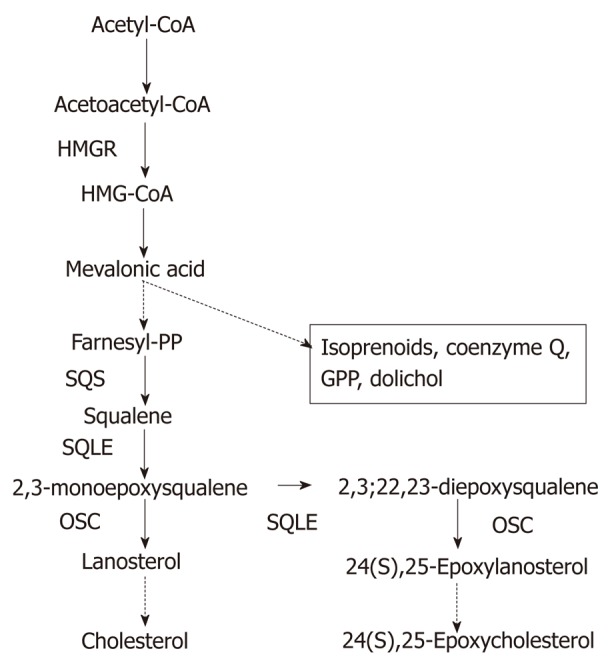
Cholesterol plays several structural and metabolic roles that are vital for human biology. It spreads along the entire plasma membrane of the cell, modulating fluidity and concentrating in specialized sphingolipid-rich domains called rafts and caveolae. Cholesterol is also a substrate for steroid hormones. However, too much cholesterol can lead to pathological pictures such as atherosclerosis, which is a consequence of the accumulation of cholesterol into the cells of the artery wall. The liver is considered to be the metabolic power station of mammalians, where cholesterol homeostasis relies on an intricate network of cellular processes whose deregulations can lead to several life-threatening pathologies, such as familial and age-related hypercholesterolemia. Cholesterol homeostasis maintenance is carried out by: biosynthesis, via 3-hydroxy-3-methylglutaryl coenzyme A reductase (HMGR) activity; uptake, through low density lipoprotein receptors (LDLr); lipoprotein release in the blood; storage by esterification; and degradation and conversion into bile acids. Both HMGR and LDLr are transcribed as a function of cellular sterol amount by a family of transcription factors called sterol regulatory element binding proteins that are responsible for the maintenance of cholesterol homeostasis through an intricate mechanism of regulation. Cholesterol obtained by hepatic de novo synthesis can be esterified and incorporated into apolipoprotein B-100-containing very low density lipoproteins, which are then secreted into the bloodstream for transport to peripheral tissues. Moreover, dietary cholesterol is transferred from the intestine to the liver by high density lipoproteins (HDLs); all HDL particles are internalized in the liver, interacting with the hepatic scavenger receptor (SR-B1). Here we provide an updated overview of liver cholesterol metabolism regulation and deregulation and the causes of cholesterol metabolism-related diseases. Moreover, current pharmacological treatment and novel hypocholesterolemic strategies will also be introduced.
Keywords: 3-hydroxy-3-methylglutaryl coenzyme A reductase; Cholesterol; Hypercholesterolemia; Liver; Low density lipoprotein receptors.
Figures
References
-
- Podar K, Anderson KC. Caveolin-1 as a potential new therapeutic target in multiple myeloma. Cancer Lett. 2006;233:10–15. - PubMed
-
- Pasqualini JR. Enzymes involved in the formation and transformation of steroid hormones in the fetal and placental compartments. J Steroid Biochem Mol Biol. 2005;97:401–415. - PubMed
LinkOut - more resources
Full Text Sources
Research Materials
