. 2012 Jul 4:11:86.
doi: 10.1186/1476-511X-11-86.

The effects of berberine on hyperhomocysteinemia and hyperlipidemia in rats fed with a long-term high-fat diet

Affiliations

The effects of berberine on hyperhomocysteinemia and hyperlipidemia in rats fed with a long-term high-fat diet

Xin-xia Chang et al. Lipids Health Dis. .

Abstract

Background: The study was undertaken to examine the effects of berberine (BBR) on serum homocysteine, lipids and the aortic lesion in Sprague-Dawley (SD) rats fed with a long-term high-fat diet (HFD).

Methods: Healthy male SD rats weighing 190-210 g received randomly standard diet or a high-fat diet for 24 weeks. After 8 weeks of feeding, rats fed with HFD were randomized to receive berberine (200 mg · kg-1· day-1) or vehicle by gavage for 16 weeks. After overnight fasting, all rats were sacrificed and total blood samples were also collected for determinant of fasting serum homocysteine (Hcy), total cholesterol (TC) and low density lipoprotein cholesterol (LDL-c) levels. The aorta was stained with hematoxylin and eosin (HE) and Sudan Ш to evaluate aortic lesion. The livers were dissected out and snap-frozen in liquid nitrogen for hepatic TC content and molecular analysis. 3-hydroxy-3-methyl-glutaryl-CoA reductase (HMGR), Lipoprotein receptors and apolipoproteins gene expression in the liver were determined by real-time PCR.

Results: Intragastrical administration with berberine for 16 weeks lowered serum Hcy in rats fed with a high-fat diet. In parallel, it also decreased body weight and improved serum TC and LDL-c. Berberine also tended to decrease hepatic cholesterol. Consistently, berberine also upregulated LDL receptor (LDLR) mRNA level and suppressed HMGR gene expression. Meanwhile, upon berberine-treated rats, there was a significant increase in apolipoprotein E (apoE) mRNA, but no change in apoAI and scavenger receptor (SR) mRNA in the liver. Further, no atherosclerotic lesions were developed in berberine-treated rats for 16 weeks.

Conclusion: Berberine can counteract HFD-elicited hyperhomocysteinemia and hyperlipidemia partially via upregulating LDLR and apoE mRNA levels and suppressing HMGR gene expression.


Figures
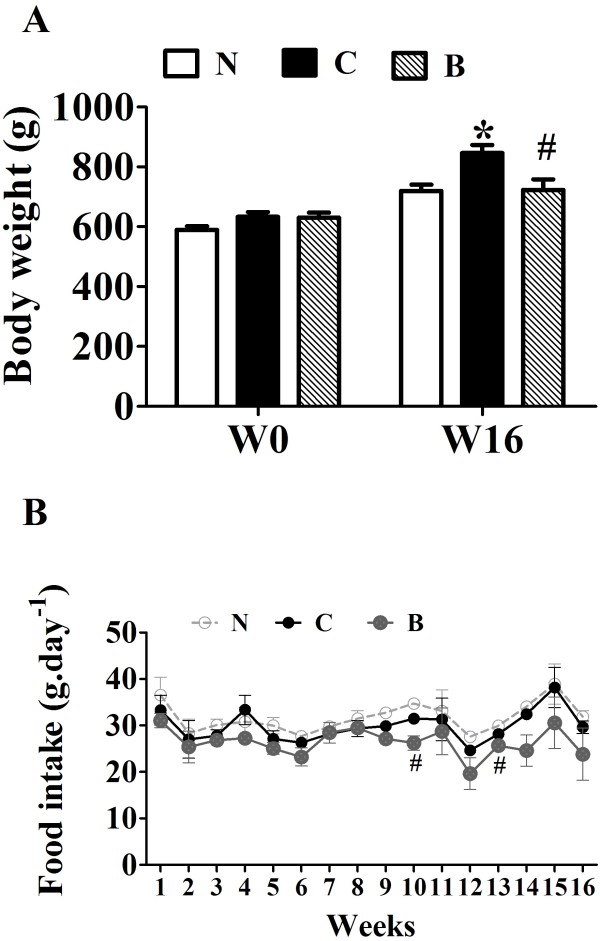
Figure 1
Figure 1
Effects of berberine (BBR) on body weight and food intake of rats. Male SD rats at 6 weeks of age received a high-fat diet (HFD) or regular rodent chow. After 8 weeks of feeding, rats were treated for 16 weeks with BBR or vehicle (n = 8 per group). A: The body weight is the average weight of 8 rats at the beginning of BBR treatment and after 16-week experiment. N, Normal control; C, vehicle –treated rats fed with HFD; B, rats with berberine treatment (200 mg/kg/d). B: Effects of BBR on food intake. The food intake was measured every week. Values are mean ± SEM. *p < 0.05vs N; #p < 0.05 vs C.
Figure 2
Figure 2
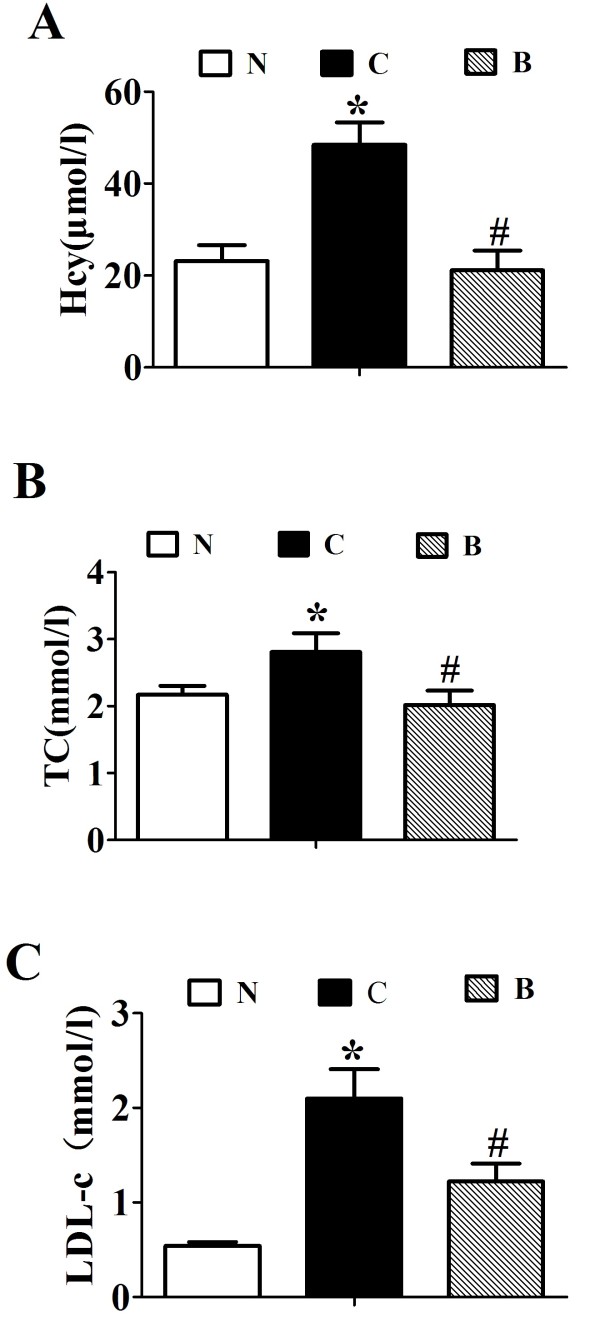
Effects of berberine (BBR) on serum Hcy and lipid profile. Serum Hcy (A), TC (B) and LDL-c (C) are the average of each group (n = 8). N, Normal control; C, vehicle –treated rats fed with HFD; B, rats with berberine treatment (200 mg/kg/d). Values are mean ± SEM. *p < 0.05vs N; #p < 0.05 vs C.
Figure 3
Figure 3
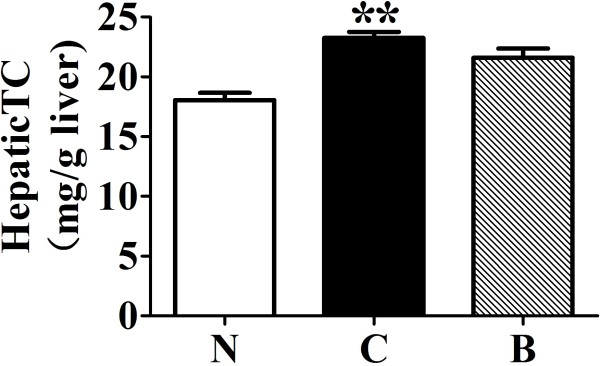
Effects of berberine (BBR) on hepatic total cholesterol. N, Normal control; C, vehicle –treated rats fed with HFD; B, rats with berberine treatment (200 mg/kg/d). Values are mean ± SEM. Significance was assessed by one-way ANOVA followed by Tukey's Multiple Comparison test. Data are mean ± SEM. *p < 0.05, **p < 0.01 vs N.
Figure 4
Figure 4
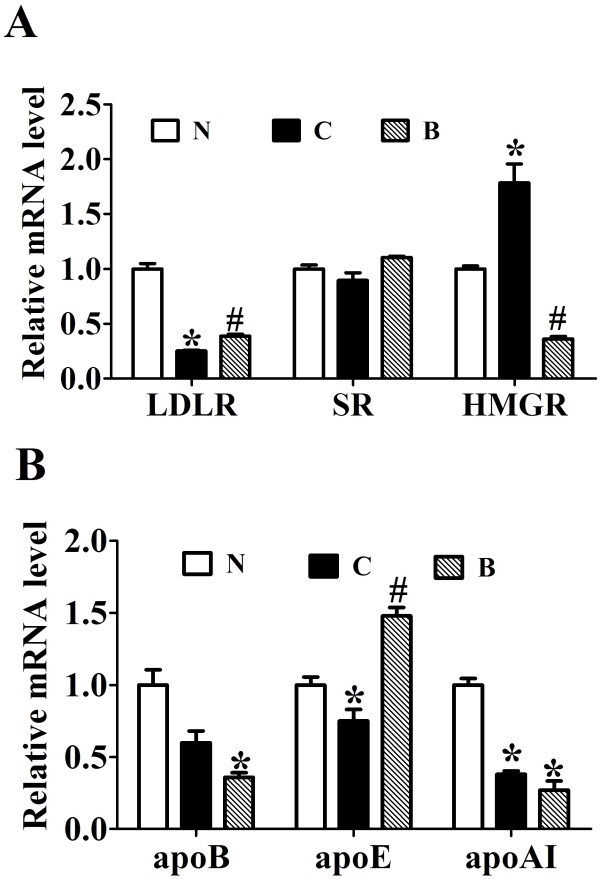
The effects of berberine on 3-hydroxy-3-methyl-glutaryl-CoA reductase (HMGR), Lipoprotein receptors and apolipoproteins gene expression. Real-time quantitative PCR analysis of LDLR, HMGR and SR (A) and apolipoproteins (B) in the livers of SD rats administrated with berberine or vehicle (n = 8 per group). Relative mRNA amounts of each gene were normalized to that of beta-actin. Values are mean ± SEM. *p < 0.05vs N; #p < 0.05 vs C.
Figure 5
Figure 5
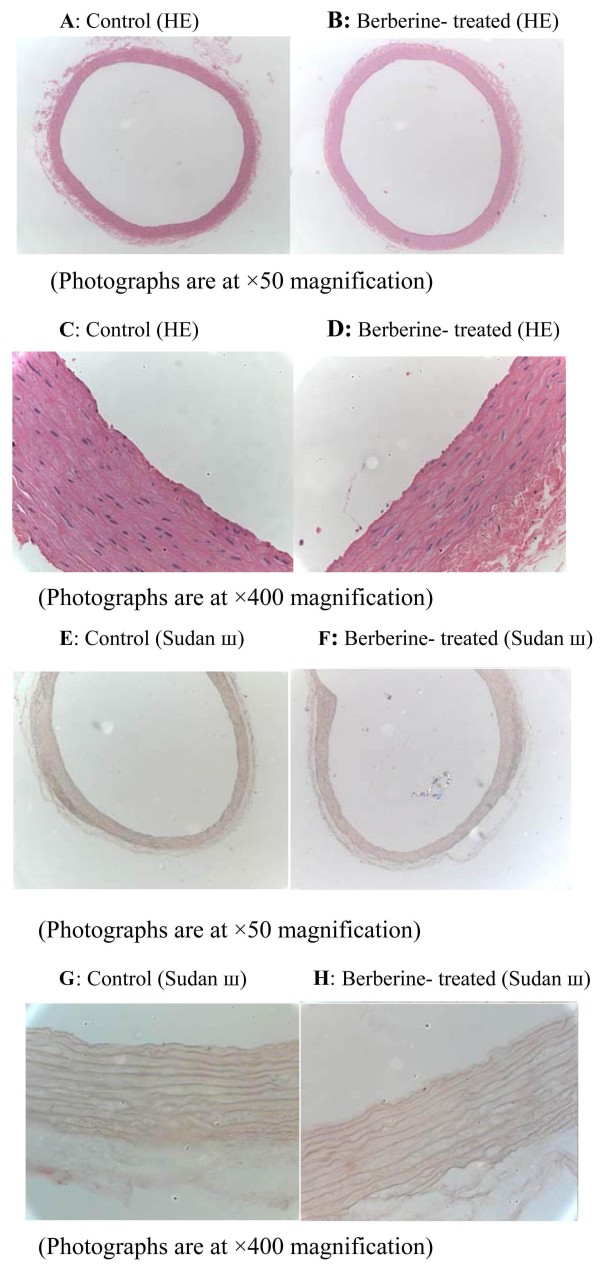
Effects of berberine (BBR) on the aorta of rats fed with a high-fat diet. After BBR treatment for 16 weeks, rats were killed after a 14-hour fast. Histological analysis of the aorta of the HFD-fed rats treated with vehicle (C group) or BBR (B group). The aorta sections were stained with hematoxylin and eosin (A-D) or with Sudan Ш (E-I) to evaluate the pathologic structures. Representative photographs are shown. A-B, E-F: Photographs are at × 50 magnification, C-D, G-H: Photographs are at × 400 magnification.

References

    1. McCully KS. Hyperhomocysteinemia and arteriosclerosis: historical perspectives. Clin Chem Lab Med. 2005;43:980–986. - PubMed
    1. Graham IM, Daly LE, Refsum HM, Robinson K, Brattstrom LE, Ueland PM. et al. Plasma homocysteine as a risk factor for vascular disease. The European Concerted Action Project. JAMA. 1997;277:1775–1781. doi: 10.1001/jama.1997.03540460039030. - DOI - PubMed
    1. McCully KS. Homocysteine and vascular disease. Nat Med. 1996;2:386–389. doi: 10.1038/nm0496-386. - DOI - PubMed
    1. Guthikonda S, Haynes WG. Homocysteine as a novel risk factor for atherosclerosis. Curr Opin Cardiol. 1999;14:283–291. doi: 10.1097/00001573-199907000-00002. - DOI - PubMed
    1. Chen QM, Xie MZ. Studies on the hypoglycemic effect of Coptis chinensis and berberine. Yao Xue Xue Bao. 1986;21:401–406. - PubMed

Publication types

MeSH terms