


Effect of novel water soluble curcumin derivative on experimental type- 1 diabetes mellitus (short term study)
- PMID: 22762693
- PMCID: PMC3533893
- DOI: 10.1186/1758-5996-4-30
Effect of novel water soluble curcumin derivative on experimental type- 1 diabetes mellitus (short term study)
Abstract
Background: Diabetes mellitus type 1 is an autoimmune disorder caused by lymphocytic infiltration and beta cells destruction. Curcumin has been identified as a potent inducer of heme-oxygenase-1 (HO-1), a redoxsensitive inducible protein that provides protection against various forms of stress. A novel water soluble curcumin derivative (NCD) has been developed to overcome low in vivo bioavailability of curcumin. The aim of the present work is to evaluate the anti diabetic effects of the "NCD" and its effects on diabetes-induced ROS generation and lipid peroxidation in experimental type- 1 diabetes mellitus. We also examine whether the up regulation of HO-1 accompanied by increased HO activity mediates these antidiabetic and anti oxidant actions.
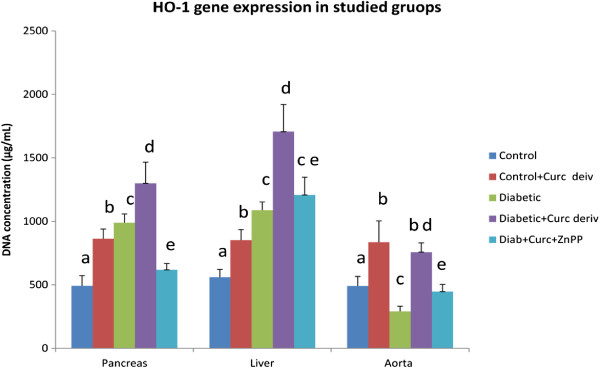
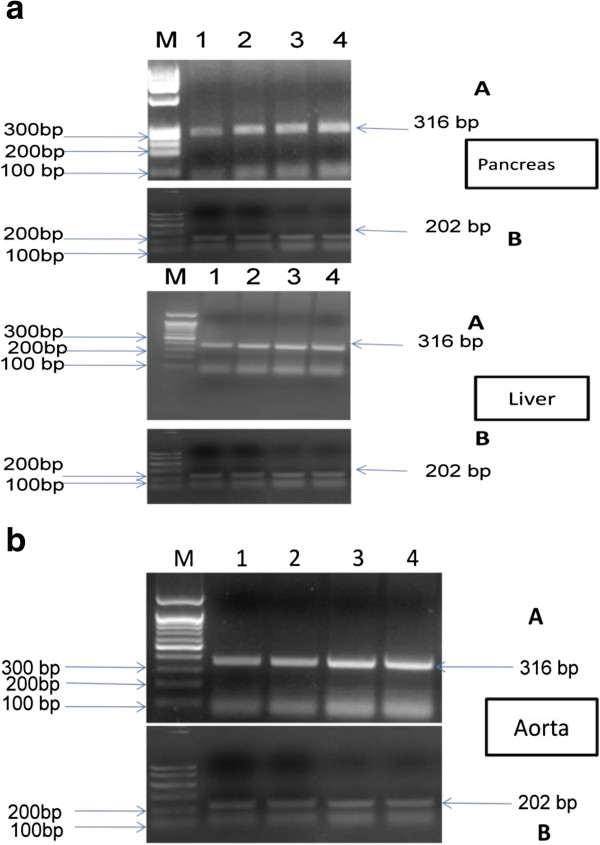
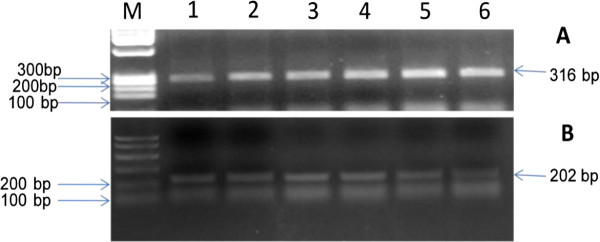
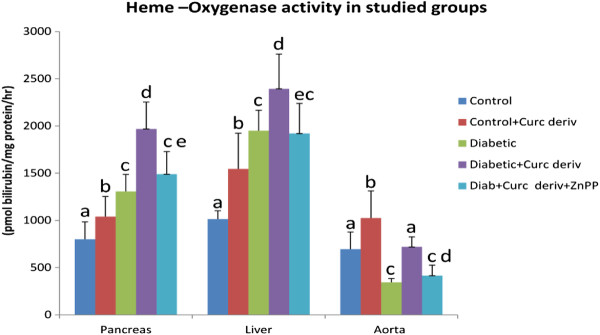
Materials and methods: Rats were divided into control group, control group receiving curcumin derivative, diabetic group, diabetic group receiving curcumin derivative and diabetic group receiving curcumin derivative and HO inhibitor ZnPP. Type-1 diabetes was induced by intraperitoneal injection of streptozotocin. Curcumin derivative was given orally for 45 days. At the planned sacrification time (after 45 days), fasting blood samples were withdrawn for estimation of plasma glucose, plasma insulin and lipid profile . Animals were sacrificed; pancreas, aorta and liver were excised for the heme oxygenase - 1 expression, activity and malondialdehyde estimation.
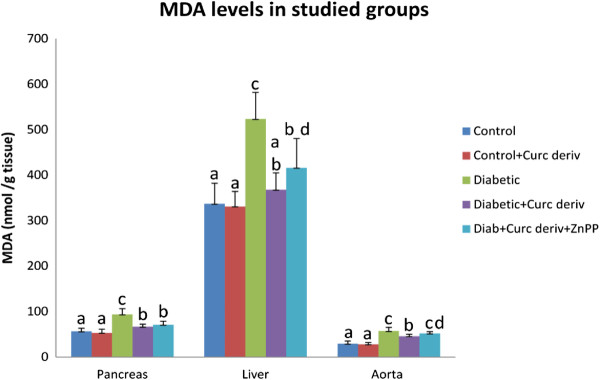
Results: NCD supplementation to diabetic rats significantly lowered the plasma glucose by 27.5% and increased plasma insulin by 66.67%. On the other hand, the mean plasma glucose level in the control group showed no significant difference compared to the control group receiving the oral NCD whereas, NCD supplementation to the control rats significantly increased the plasma insulin by 47.13% compared to the control. NCD decreased total cholesterol, triglycerides, LDL cholesterol and increased HDL cholesterol levels. Also, it decreased lipid peroxides (malondialdehyde) in the pancreas, aorta and liver.
Conclusion: The (NCD) by its small dose possesses antidiabetic actions and that heme oxygenase induction seems to play an important role in its anti-diabetic effects. NCD also improves the lipid profile and oxidative status directly, proved by decreasing lipid peroxides (malondialdehyde) in pancreas, liver & aorta. The new water soluble curcumin derivative still retains the essential potencies of natural curcumin.
Figures
References
-
- Kaneto H, Kajimoto Y, Miyagawa J, Matruoka T, Fujitani Y, Umayahara Y, Hanafusa T, Matsuzawa Y, Yamasaki Y, Hori M. Benefecial effects of antioxidants in diabetes. Possible protection of pancreatic b - cells against glucose toxicity. Diabetes. 1999;48:2398–2406. doi: 10.2337/diabetes.48.12.2398. - DOI - PubMed
LinkOut - more resources
Full Text Sources
