. 2012 Aug 30;488(7413):656-9.
doi: 10.1038/nature11323.

IDH1(R132H) mutation increases murine haematopoietic progenitors and alters epigenetics

Affiliations

IDH1(R132H) mutation increases murine haematopoietic progenitors and alters epigenetics

Masato Sasaki et al. Nature. .

Abstract

Mutations in the IDH1 and IDH2 genes encoding isocitrate dehydrogenases are frequently found in human glioblastomas and cytogenetically normal acute myeloid leukaemias (AML). These alterations are gain-of-function mutations in that they drive the synthesis of the ‘oncometabolite’ R-2-hydroxyglutarate (2HG). It remains unclear how IDH1 and IDH2 mutations modify myeloid cell development and promote leukaemogenesis. Here we report the characterization of conditional knock-in (KI) mice in which the most common IDH1 mutation, IDH1(R132H), is inserted into the endogenous murine Idh1 locus and is expressed in all haematopoietic cells (Vav-KI mice) or specifically in cells of the myeloid lineage (LysM-KI mice). These mutants show increased numbers of early haematopoietic progenitors and develop splenomegaly and anaemia with extramedullary haematopoiesis, suggesting a dysfunctional bone marrow niche. Furthermore, LysM-KI cells have hypermethylated histones and changes to DNA methylation similar to those observed in human IDH1- or IDH2-mutant AML. To our knowledge, our study is the first to describe the generation and characterization of conditional IDH1(R132H)-KI mice, and also the first report to demonstrate the induction of a leukaemic DNA methylation signature in a mouse model. Our report thus sheds light on the mechanistic links between IDH1 mutation and human AML.


Figures
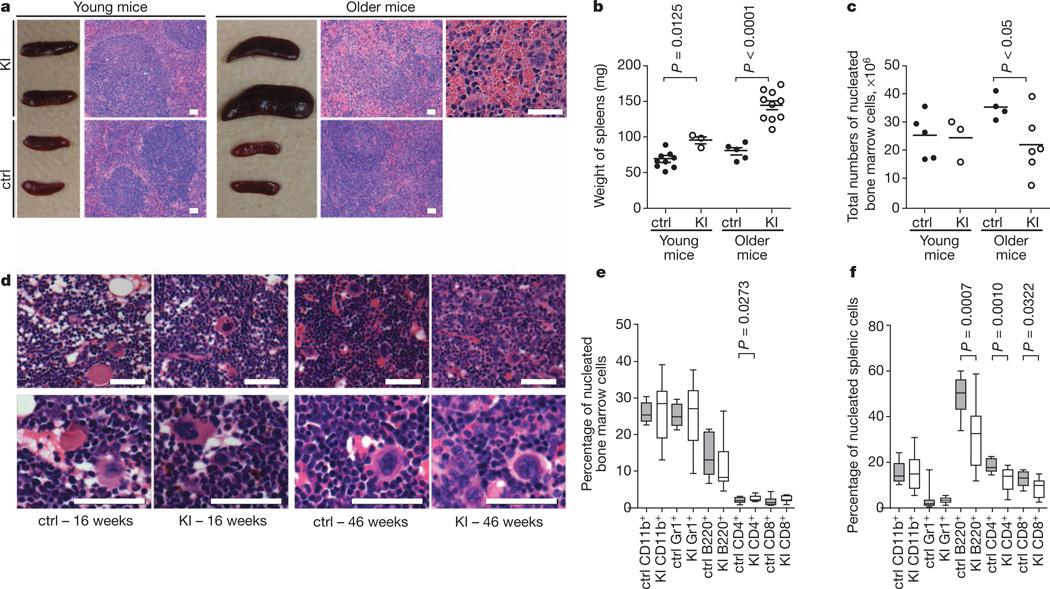
Figure 1
Figure 1. LysM-KI mice show age-dependent splenomegaly and decreased bone marrow cellularity
a, Macroscopic appearance and haematoxylin-and-eosin-stained sections of spleens from young and older control (ctrl) and LysM-KI (KI) mice. b, c, Spleen weights (b) and total numbers of nucleated BM cells (c) from young and older control and LysM-KI mice (n = 3–5 per group). Horizontal line, mean. d, Representative haematoxylin-and-eosin-stained sections of BM from femurs of young and older control and LysM-KI mice (n = 4 per group). e, f, Quantifications of flow cytometric analyses of mature haematopoietic cell populations among total nucleated BM (e) and splenic cells (f) from older control and LysM-KI (n = 10–14 per group) mice. P values were determined using the unpaired t-test with Welch’s correction. Scale bars, 50 µm.
Figure 2
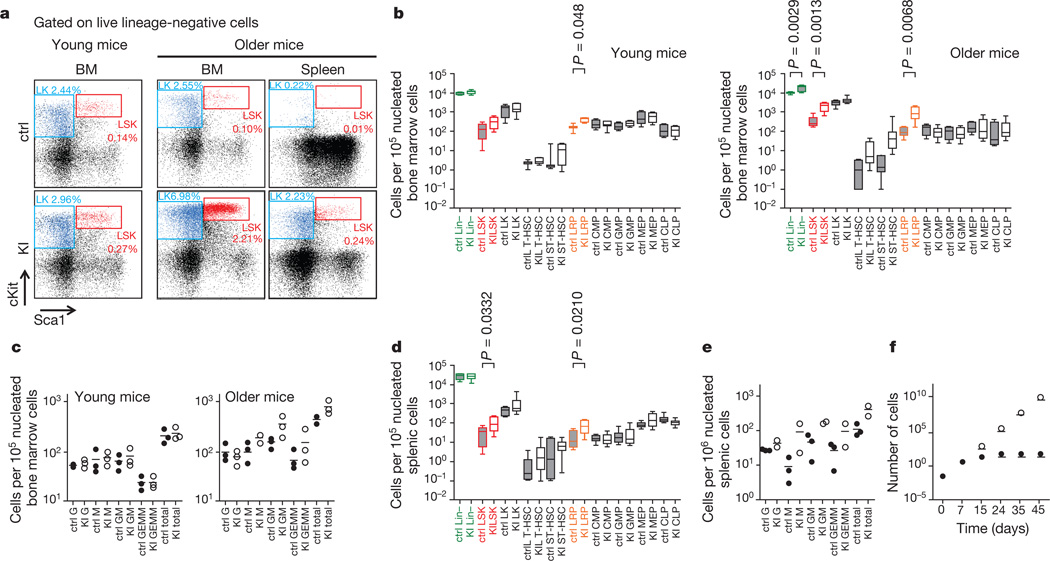
Figure 2. LysM-KI mice showage-dependent increases in lineage-restricted progenitors and extramedullary haematopoiesis
a, Flow cytometric analysis of live lineage-negative cells for cKit and Sca1 in cells from the BM of young (left), and from the BM and spleen of older control and LysM-KI mice (right). LSK (red) and LK (blue) populations are highlighted. The percentage of a given population among total viable BM cells is indicated. b, Quantification of flow cytometric analyses for the indicated HSC and HPC populations in BM of young (n = 3–14 per group) and older (n = 4–8 per group) control and LysM-KI mice. Horizontal line, median; box, median±25%; end of bars, minimum and maximum. c, CFC assays of BM cells from young and older control and LysM-KI mice (n = 3 per group). Data points are the mean number of colonies of the indicated lineage for individual mice. Horizontal line, mean of values for all three mice in a group. d, Quantification of flow cytometric analyses for the indicated HSC and HPC populations in the spleens of older (n = 7–8 per group) control and LysM-KI mice, determined as for b. e, CFC assays of nucleated splenic cells from older control (n = 3) and LysM-KI (n = 2) mice determined as for c. f, Serial replating in methylcellulose of BM cells from control and LysM-KI mice (n = 2 per group; control, filled circles; LysM-KI, empty circles). Data are the mean total cell number for both mice in a group (in units of 106).
Figure 3
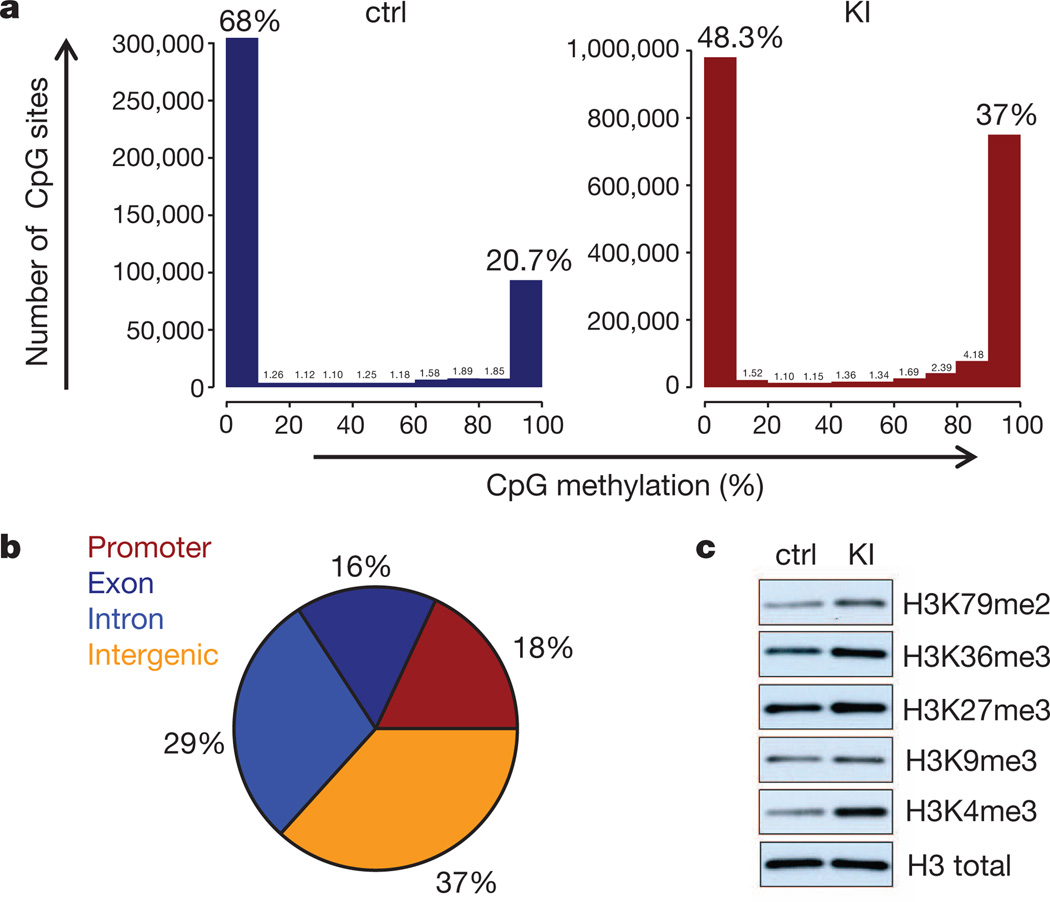
Figure 3. Altered methylation of DNA and histones in LysM-KI cells
a, Sequencing data from bisulphite-treated DNA from sorted BM LSK cells of young control (n = 2) and LysM-KI (n = 3) mice. Numbers of fragments showing the indicated percentage of CpG methylation were calculated as detailed in Methods. Data shown are from one LysM-KI and one control mouse and are representative of all animals in a group. b, Graphic representation of the differentially methylated genomic regions with respect to their genomic location. c, Immunoblot analysis of methylation of the indicated H3 lysine residues in lysates of BMDMs derived from young control and LysM-KI mice. Results are representative of two independent experiments.

References

    1. Parsons DW, et al. An integrated genomic analysis of human glioblastoma multiforme. Science. 2008;321:1807–1812. - PMC - PubMed
    1. Mardis ER, et al. Recurring mutations found by sequencing an acute myeloid leukemia genome. N. Engl. J. Med. 2009;361:1058–1066. - PMC - PubMed
    1. Dang L, et al. Cancer-associated IDH1 mutations produce 2-hydroxyglutarate. Nature. 2009;462:739–744. - PMC - PubMed
    1. Xu W, et al. Oncometabolite 2-hydroxyglutarate is a competitive inhibitor of α-ketoglutarate-dependent dioxygenases. Cancer Cell. 2011;19:17–30. - PMC - PubMed
    1. Figueroa ME, et al. Leukemic IDH1 and IDH2 mutations result in a hypermethylation phenotype, disrupt TET2 function, and impair hematopoietic differentiation. Cancer Cell. 2010;18:553–567. - PMC - PubMed

Publication types

MeSH terms

Associated data