Potential P-glycoprotein-mediated drug-drug interactions of antimalarial agents in Caco-2 cells
- PMID: 22764293
- PMCID: PMC3391059
- DOI: 10.4269/ajtmh.2012.11-0817
Potential P-glycoprotein-mediated drug-drug interactions of antimalarial agents in Caco-2 cells
Abstract
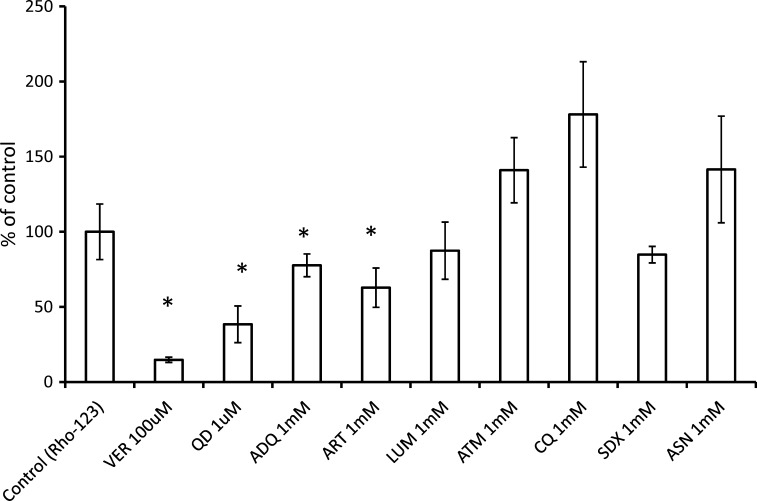
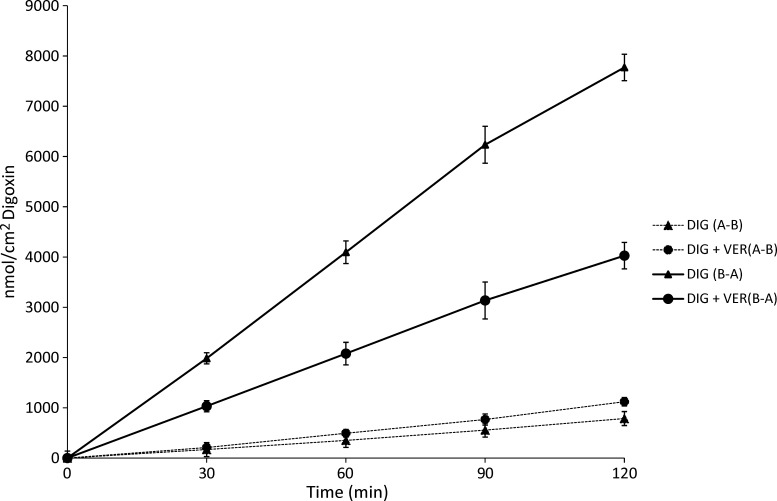
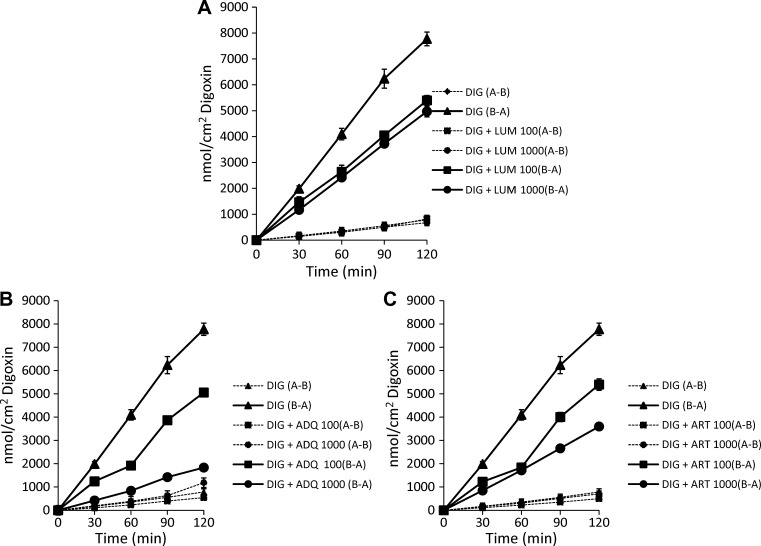
Antimalarials are widely used in African and Southeast Asian countries, where they are combined with other drugs for the treatment of concurrent ailments. The potential for P-glycoprotein (P-gp)-mediated drug-drug interactions (DDIs) between antimalarials and P-gp substrates was examined using a Caco-2 cell-based model. Selected antimalarials were initially screened for their interaction with P-gp based on the inhibition of rhodamine-123 (Rho-123) transport in Caco-2 cells. Verapamil (100 μM) and quinidine (1 μM) were used as positive inhibition controls. Lumefantrine, amodiaquin, and artesunate all showed blockade of Rho-123 transport. Subsequently, the inhibitory effect of these antimalarials on the bi-directional passage of digoxin (DIG) was examined. All of the drugs decreased basal-to-apical (B-A) P-gp-mediated DIG transport at concentrations of 100 μM and 1 mM. These concentrations may reflect therapeutic doses for amodiaquin and artesunate. Therefore, clinically relevant DDIs may occur between certain antimalarials and P-gp substrates in general.
Figures
References
-
- WHO . World Health Organization Expert Committee on Malaria. WHO, Geneva: 2000. http://www.rollbackmalaria.org/docs/ecr20.pdf 20th Report. Available at. Accessed April 28, 2011.
-
- Breman JG, Alilio MS, Mills A. Conquering the intolerable burden of malaria: what's new, what's needed: a summary. Am J Trop Med Hyg. 2004;71:1–15. - PubMed
-
- Brentlinger P, Behrens C, Mice M. Challenges in the concurrent management of malaria and HIV in pregnancy in sub-Saharan Africa. Lancet Infect Dis. 2006;6:100–111. - PubMed
MeSH terms
Substances
LinkOut - more resources
Full Text Sources
Miscellaneous