


Gastric acid suppression and outcomes in Clostridium difficile infection: a population-based study
- PMID: 22766083
- PMCID: PMC3538480
- DOI: 10.1016/j.mayocp.2011.12.021
Gastric acid suppression and outcomes in Clostridium difficile infection: a population-based study
Abstract
Objective: To evaluate the association of gastric acid suppression medications, including proton pump inhibitors and histamine type 2 blockers, with outcomes in patients with Clostridium difficile infection (CDI) in a population-based cohort.
Patients and methods: To understand the association between acid suppression and outcomes in patients with CDI, we conducted a population-based study in Olmsted County, Minnesota, from January 1, 1991, through December 31, 2005. We compared demographic data and outcomes, including severe, severe-complicated, and recurrent CDI and treatment failure, in a cohort of patients with CDI who were treated with acid suppression medications with these outcomes in a cohort with CDI that was not exposed to acid-suppressing agents.
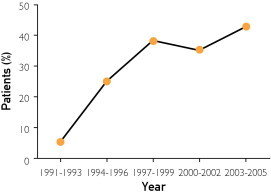
Results: Of 385 patients with CDI, 36.4% were undergoing acid suppression (23.4% with proton pump inhibitors, 13.5% with histamine type 2 blockers, and 0.5% with both). On univariate analysis, patients taking acid suppression medications were significantly older (69 vs 56 years; P<.001) and more likely to have severe (34.2% vs 23.6%; P=.03) or severe-complicated (4.4% vs 2.6% CDI; P=.006) infection than patients not undergoing acid suppression. On multivariable analyses, after adjustment for age and comorbid conditions, acid suppression medication use was not associated with severe or severe-complicated CDI. In addition, no association between acid suppression and treatment failure or CDI recurrence was found.
Conclusion: In this population-based study, after adjustment for age and comorbid conditions, patients with CDI who underwent acid suppression were not more likely to experience severe or severe-complicated CDI, treatment failure, or recurrent infection.
Copyright © 2012 Mayo Foundation for Medical Education and Research. Published by Elsevier Inc. All rights reserved.
Figures
References
-
- Khanna S., Pardi D.S. The growing incidence and severity of Clostridium difficile infection in inpatient and outpatient settings. Expert Rev Gastroenterol Hepatol. 2010;4(4):409–416. - PubMed
-
- Kelly C.P., LaMont J.T. Clostridium difficile—more difficult than ever. N Engl J Med. 2008;359(18):1932–1940. - PubMed
-
- Al-Tureihi F., Hassoun A., Wolf-Klein G., Isenberg H. Albumin, length of stay, and proton pump inhibitors: key factors in Clostridium difficile-associated disease in nursing home patients. J Am Med Dir Assoc. 2005;6(2):105–108. - PubMed
-
- Dubberke E., Reske K., Yan Y., Olsen M., McDonald L., Fraser V. Clostridium difficile–associated disease in a setting of endemicity: identification of novel risk factors. Clin Infect Dis. 2007;45(12):1543–1549. - PubMed
Publication types
MeSH terms
Substances
Grants and funding
LinkOut - more resources
Full Text Sources
Medical
