


Radial forearm free flap surgery: a modified skin-closure technique improving donor-site aesthetic appearance
- PMID: 22767980
- PMCID: PMC3385055
Radial forearm free flap surgery: a modified skin-closure technique improving donor-site aesthetic appearance
Abstract
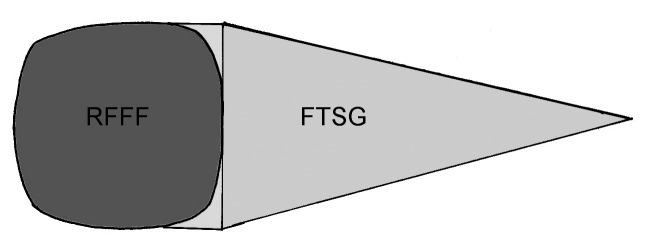
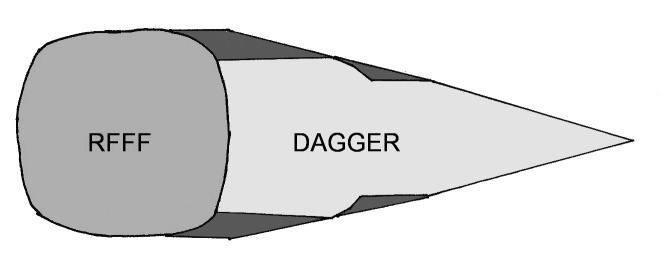
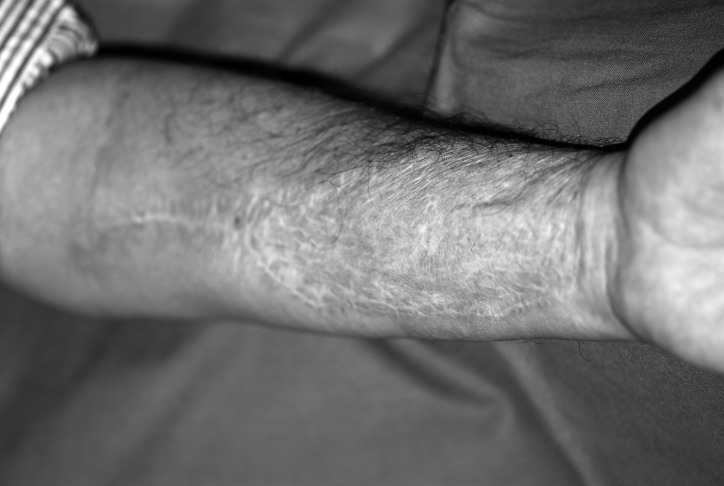
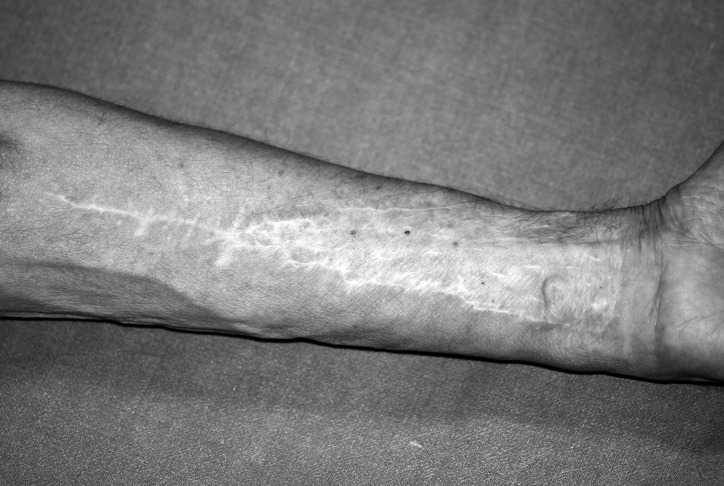
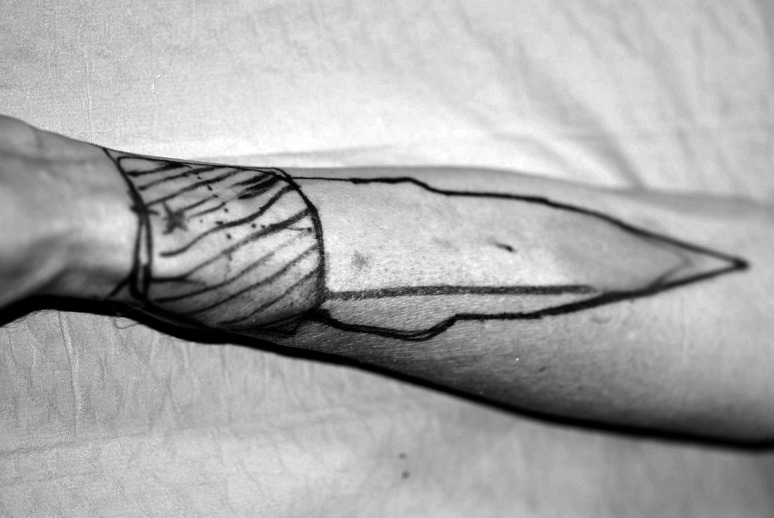
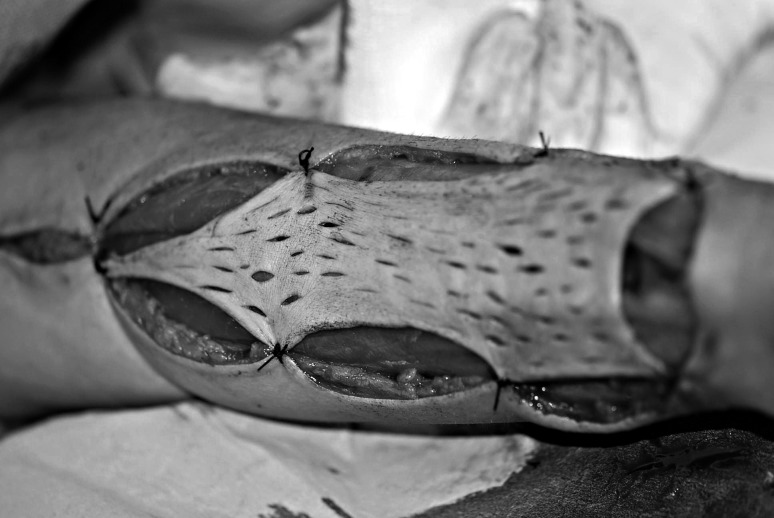
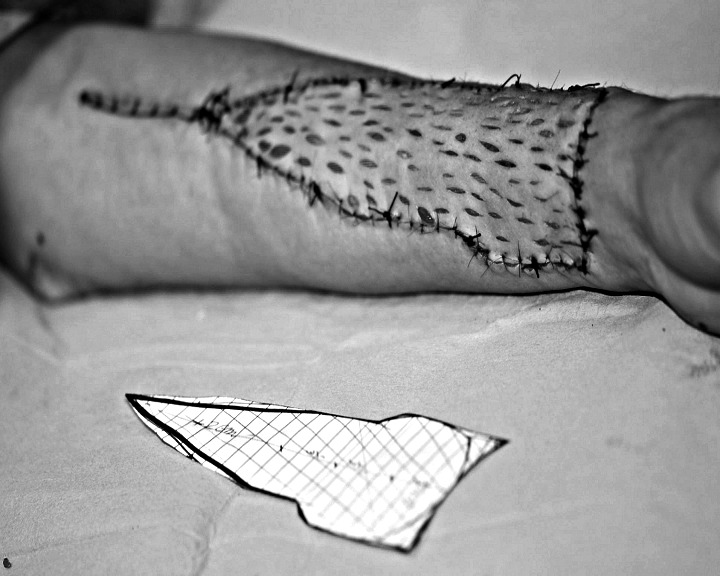
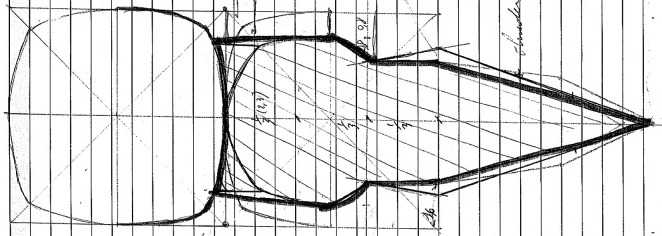
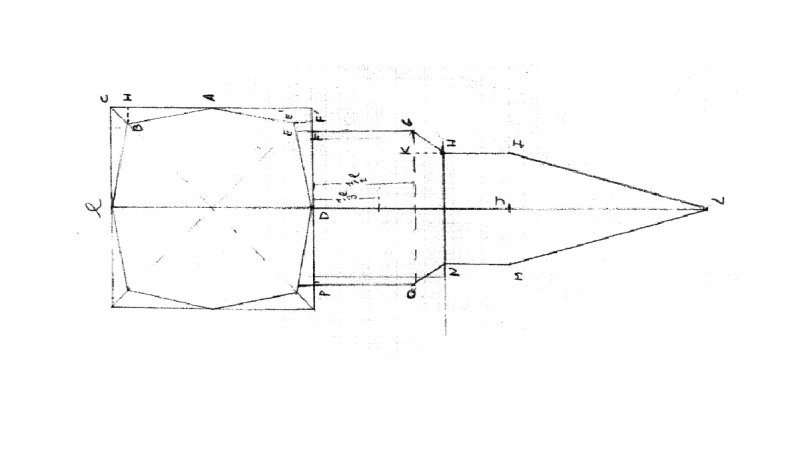
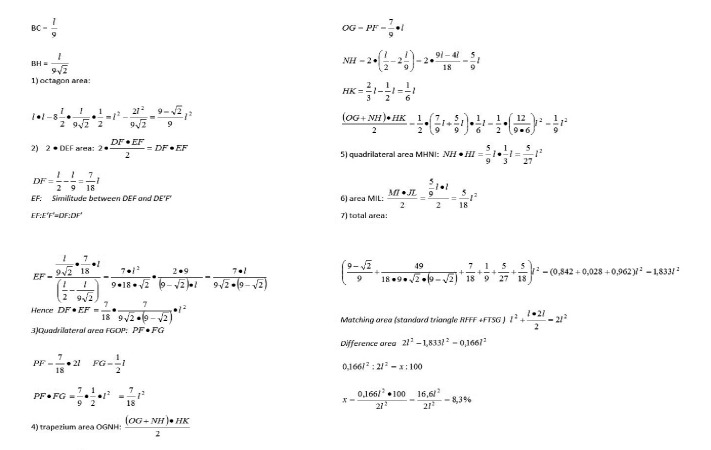
Radial forearm free flap surgery is a versatile technique that is widely adopted for microvascular reconstruction of the oral, oropharyngeal and hypopharyngeal lining. Nowadays, the technique for harvesting is standardized, while reconstruction of the forearm donor site defect is somewhat controversial. The authors describe a modified closure technique developed to reduce skin tension that provides subsequent improvement of the cosmetic appearance of the forearm donor site. A series of 43 patients undergoing radial forearm free flap (RFFF) reconstruction is presented, carried out by our ENT department between September 2007 and December 2010. The authors used a modification of the standard triangular full-thickness skin graft (FTSG) technique to close the forearm donor site on 23 patients with a new shape similar to a dagger. Using the Stony Brook Evaluation Scale, the authors analyzed the outcomes of 23 cases employing the dagger-shaped FTSG and compared these with a standard (triangular shaped) reconstructive graft used in 20 earlier patients. The new dagger-shaped graft decreases skin tension and reduces the need of multiple slits in the graft with improved aesthetic outcome; it is an effective method for repair of the forearm donor site with low tension and without the need to harvest the skin graft from the thigh. The technique is simple, reliable and requires no more time than a standard procedure.
Il lembo libero di avambraccio è ancora oggi ampiamente utilizzato nella ricostruzione microvascolare di cavo orale, orofaringe ed ipofaringe. La tecnica di prelievo è standardizzata, mentre la ricostruzione del sito donatore è alquanto controversa. L'autore descrive una nuova tecnica di chiusura della cute dell'avambraccio elaborata per ridurre la tensione sui margini dell'innesto. Nel periodo compreso fra settembre 2007 e dicembre 2010, 43 pazienti sono stati sottoposti ad intervento chirurgico di ricostruzione del cavo orale e dell'oroipofaringe con lembo libero rivascolarizzato di avambraccio. Negli ultimi 23 casi trattati la tecnica di chiusura con innesto triangolare V-Y a tutto spessore è stata modificata e sostituita con un nuovo modello di innesto a forma di pugnale. Utilizzando la Stony Brook Scar Evaluation Scale gli esiti cicatriziali della superficie volare dell'avambraccio sono stati analizzati e confrontati ed è emersa una differenza statisticamente significativa a favore del gruppo di pazienti sottoposti a ricostruzione con innesto modificato (p < 0,01). L'innesto a forma di pugnale riduce la tensione lungo la linea di sutura e ciò consente un numero inferiore di incisioni sull'innesto riducendo l'effetto "a maglie"; ne consegue un miglior risultato estetico a distanza. La tecnica è semplice, affidabile e non richiede un allungamento dei tempi chirurgici.
Keywords: Cosmetic appearance; Radial forearm free flap; Reconstructive surgery; Skin graft.
Figures
References
-
- Yang GF, Chen PJ, Gao YZ, et al. Forearm free skin flap transplantation: a report of 56 cases, 1981. Br J Plast Surg. 1997;50:162–165. - PubMed
-
- Gonzalez-Garcia R, Naval-Gias L, Rodriguez-Campo F, et al. Reconstruction of oromandibular defects by vascularized free flaps: the radial forearm free flap and fibular free flap as major donor sites. J Oral Maxillofac Surg. 2009;67:1473–1477. - PubMed
-
- Karimi A, Mahy P, Reychler H. Closure of radial forearm free flap donor site defect with a local meshed full-thickness skin graft: a retrospective study of an original technique. J Cranio-Maxillofac Surg. 2007;35:369–373. - PubMed
-
- Moazzam A, Gordon DJ. Cross-suturing as an aid to wound closure: a prospective randomised trial using the forearm flap donor site as a model. Br Ass Plast Surg. 2003;56:695–700. - PubMed
-
- Ho T, Couch M, Carson K, et al. Radial forearm free flap donor site outcomes comparison by closure methods. Otolar Head Neck Surg. 2006;134:309–315. - PubMed
MeSH terms
LinkOut - more resources
Full Text Sources
Medical
Research Materials
Miscellaneous