


6-Shogaol induces apoptosis in human hepatocellular carcinoma cells and exhibits anti-tumor activity in vivo through endoplasmic reticulum stress
- PMID: 22768104
- PMCID: PMC3387266
- DOI: 10.1371/journal.pone.0039664
6-Shogaol induces apoptosis in human hepatocellular carcinoma cells and exhibits anti-tumor activity in vivo through endoplasmic reticulum stress
Abstract
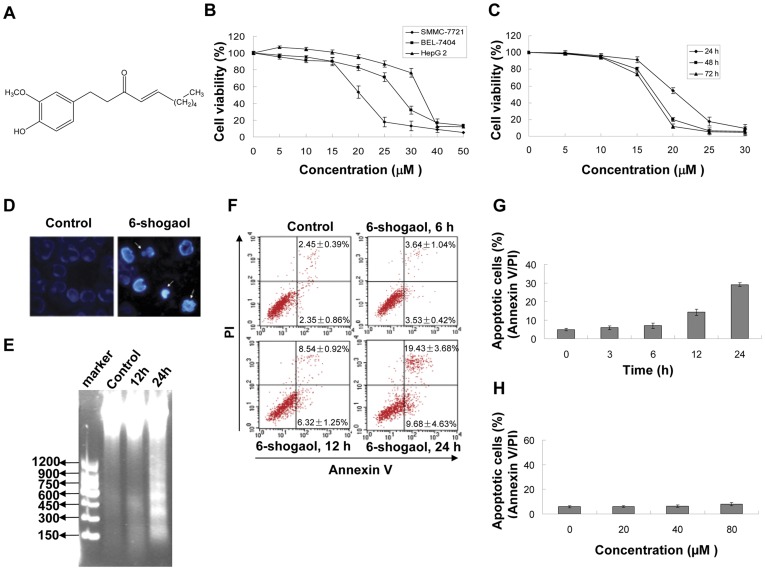
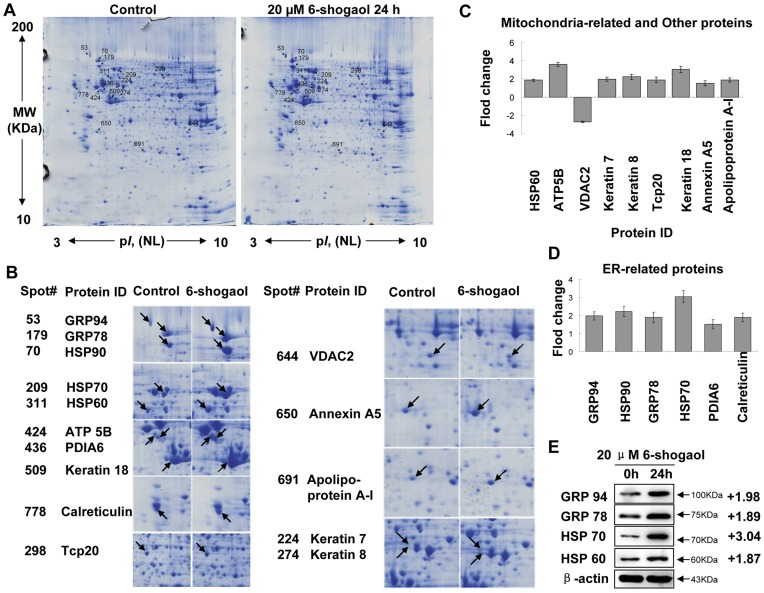
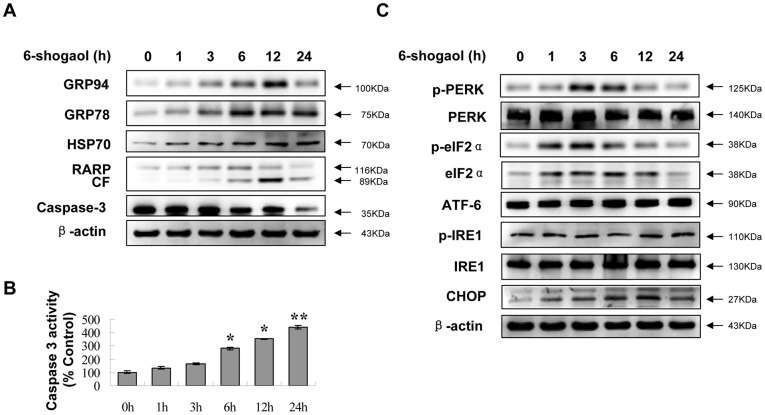
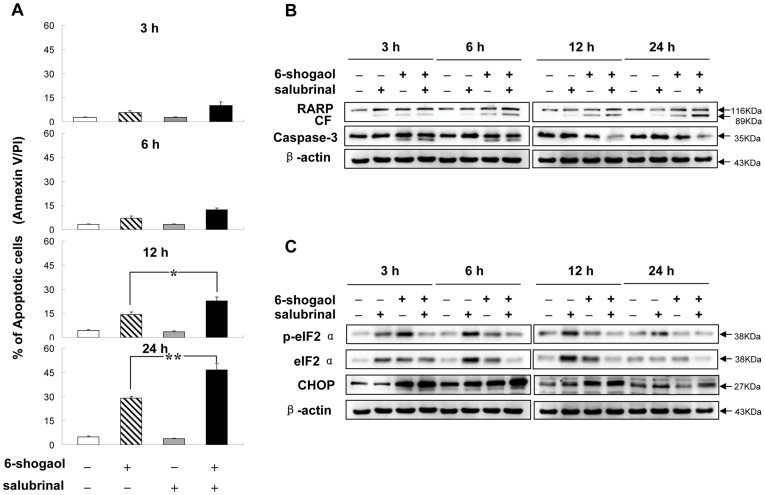
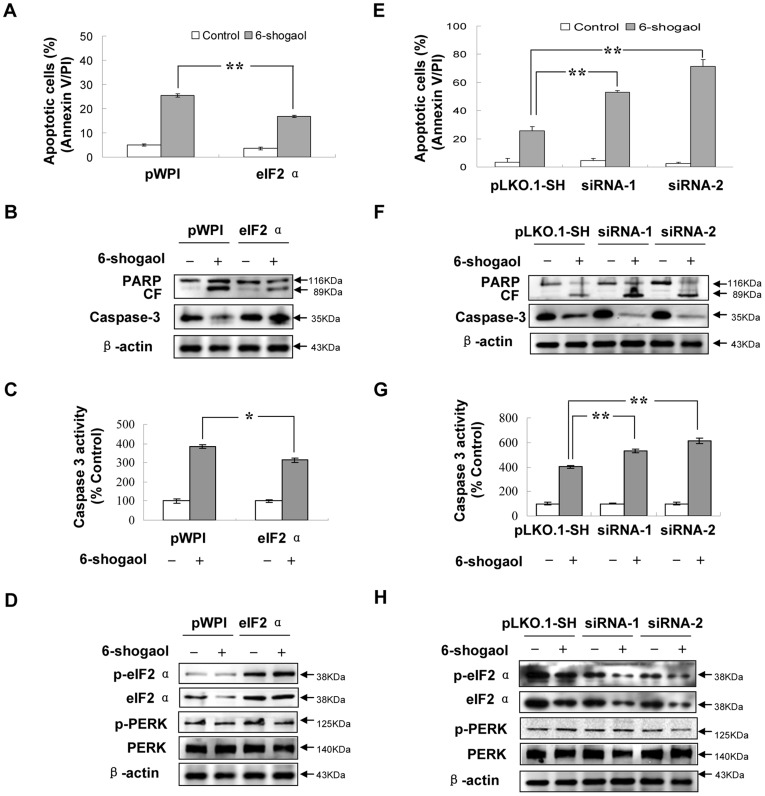
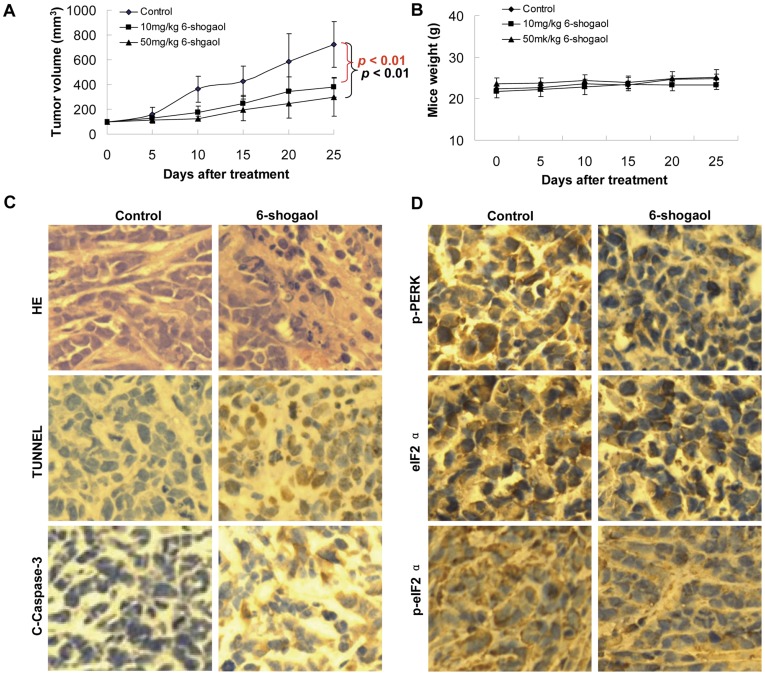
6-Shogaol is an active compound isolated from Ginger (Zingiber officinale Rosc). In this work, we demonstrated that 6-shogaol induces apoptosis in human hepatocellular carcinoma cells in relation to caspase activation and endoplasmic reticulum (ER) stress signaling. Proteomic analysis revealed that ER stress was accompanied by 6-shogaol-induced apoptosis in hepatocellular carcinoma cells. 6-shogaol affected the ER stress signaling by regulating unfolded protein response (UPR) sensor PERK and its downstream target eIF2α. However, the effect on the other two UPR sensors IRE1 and ATF6 was not obvious. In prolonged ER stress, 6-shogaol inhibited the phosphorylation of eIF2α and triggered apoptosis in SMMC-7721 cells. Salubrinal, an activator of the PERK/eIF2α pathway, strikingly enhanced the phosphorylation of eIF2α in SMMC-7721 cells with no toxicity. However, combined treatment with 6-shogaol and salubrinal resulted in significantly increase of apoptosis and dephosphorylation of eIF2α. Overexpression of eIF2α prevented 6-shogaol-mediated apoptosis in SMMC-7721 cells, whereas inhibition of eIF2α by small interfering RNA markedly enhanced 6-shogaol-mediated cell death. Furthermore, 6-shogaol-mediated inhibition of tumor growth of mouse SMMC-7721 xenograft was associated with induction of apoptosis, activation of caspase-3, and inactivation of eIF2α. Altogether our results indicate that the PERK/eIF2α pathway plays an important role in 6-shogaol-mediated ER stress and apoptosis in SMMC-7721 cells in vitro and in vivo.
Conflict of interest statement
Figures
References
-
- Kim SO, Kundu JK, Shin YK, Park JH, Cho MH, et al. [6]-Gingerol inhibits COX-2 expression by blocking the activation of p38 MAP kinase and NF-kappaB in phorbol ester-stimulated mouse skin. Oncogene. 2005;24:2558–2567. - PubMed
-
- Surh YJ. Anti-tumor promoting potential of selected spice ingredients with antioxidative and anti-inflammatory activities: a short review. Food Chem Toxicol. 2002;40:1091–1097. - PubMed
-
- Hung JY, Hsu YL, Li CT, Ko YC, Ni WC, et al. 6-Shogaol, an active constituent of dietary ginger, induces autophagy by inhibiting the AKT/mTOR pathway in human non-small cell lung cancer A549 cells. J Agric Food Chem. 2009;57:9809–9816. - PubMed
-
- Pan MH, Hsieh MC, Kuo JM, Lai CS, Wu H, et al. 6-Shogaol induces apoptosis in human colorectal carcinoma cells via ROS production, caspase activation, and GADD 153 expression. Mol Nutr Food Res. 2008;52:527–537. - PubMed
Publication types
MeSH terms
Substances
LinkOut - more resources
Full Text Sources
Other Literature Sources
Medical
Research Materials
