


Activating KIR and HLA Bw4 ligands are associated to decreased susceptibility to pemphigus foliaceus, an autoimmune blistering skin disease
- PMID: 22768326
- PMCID: PMC3388041
- DOI: 10.1371/journal.pone.0039991
Activating KIR and HLA Bw4 ligands are associated to decreased susceptibility to pemphigus foliaceus, an autoimmune blistering skin disease
Abstract
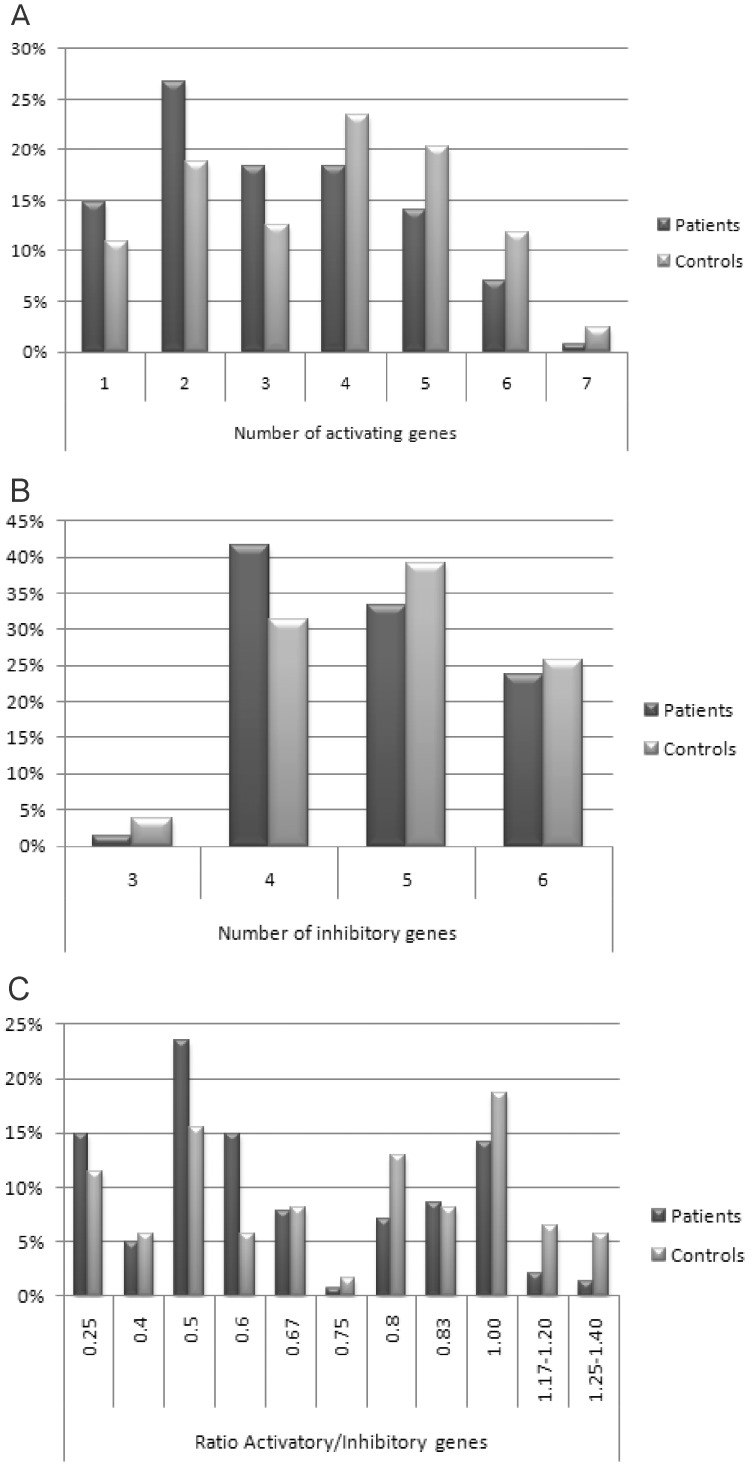
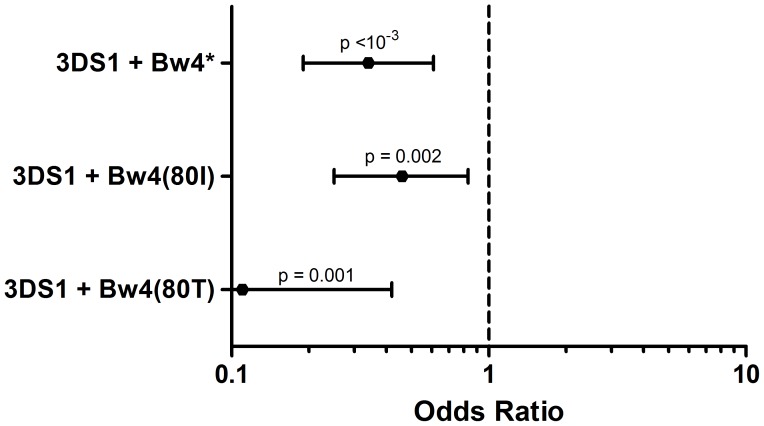
The KIR genes and their HLA class I ligands have thus far not been investigated in pemphigus foliaceus (PF) and related autoimmune diseases, such as pemphigus vulgaris. We genotyped 233 patients and 204 controls for KIR by PCR-SSP. HLA typing was performed by LABType SSO reagent kits. We estimated the odds ratio, 95% confidence interval and performed logistic regression analyses to test the hypothesis that KIR genes and their known ligands influence susceptibility to PF. We found significant negative association between activating genes and PF. The activating KIR genes may have an overlapping effect in the PF susceptibility and the presence of more than three activating genes was protective (OR=0.49, p=0.003). A strong protective association was found for higher ratios activating/inhibitory KIR (OR=0.44, p=0.001). KIR3DS1 and HLA-Bw4 were negatively associated to PF either isolated or combined, but higher significance was found for the presence of both together (OR=0.34, p<10(-3)) suggesting that the activating function is the major factor to interfere in the PF pathogenesis. HLA-Bw4 (80I and 80T) was decreased in patients. There is evidence that HLA-Bw4(80T) may also be important as KIR3DS1 ligand, being the association of this pair (OR=0.07, p=0.001) stronger than KIR3DS1-Bw4(80I) (OR=0.31, p=0.002). Higher levels of activating KIR signals appeared protective to PF. The activating KIR genes have been commonly reported to increase the risk for autoimmunity, but particularities of endemic PF, like the well documented influence the environmental exposure in the pathogenesis of this disease, may be the reason why activated NK cells probably protect against pemphigus foliaceus.
Conflict of interest statement
Figures
References
-
- Chidgey M. Desmosomes and disease: an update. Histol Histopathol. 2002;17:1179–1192. - PubMed
-
- Sampaio SA, Rivitti EA, Aoki V, Diaz LA. Brazilian pemphigus foliaceus, endemic pemphigus foliaceus, or fogo selvagem (wild fire). Dermatol Clin. 1994;12:765–776. - PubMed
-
- Hans-Filho G, dos Santos V, Katayama JH, Aoki V, Rivitti EA, et al. An active focus of high prevalence of fogo selvagem on an Amerindian reservation in Brazil. Cooperative Group on Fogo Selvagem Research. J Invest Dermatol. 1996;107:68–75. - PubMed
-
- Aoki V, Millikan RC, Rivitti EA, Hans-Filho G, Eaton DP, et al. Environmental risk factors in endemic pemphigus foliaceus (fogo selvagem). J Investig Dermatol Symp Proc. 2004;9:34–40. - PubMed
-
- Sekiguchi M, Futei Y, Fujii Y, Iwasaki T, Nishikawa T, et al. Dominant autoimmune epitopes recognized by pemphigus antibodies map to the N-terminal adhesive region of desmogleins. J Immunol. 2001;167:5439–5448. - PubMed
Publication types
MeSH terms
Substances
LinkOut - more resources
Full Text Sources
Medical
Research Materials
