


All-cause and cause-specific mortality among US youth: socioeconomic and rural-urban disparities and international patterns
- PMID: 22772771
- PMCID: PMC3665977
- DOI: 10.1007/s11524-012-9744-0
All-cause and cause-specific mortality among US youth: socioeconomic and rural-urban disparities and international patterns
Abstract
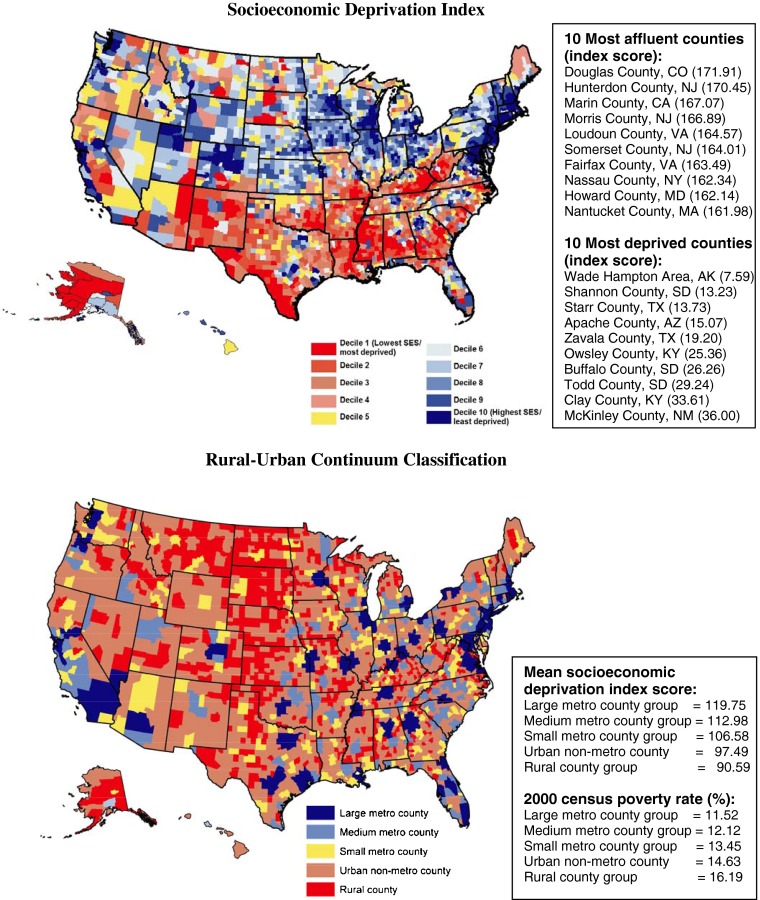
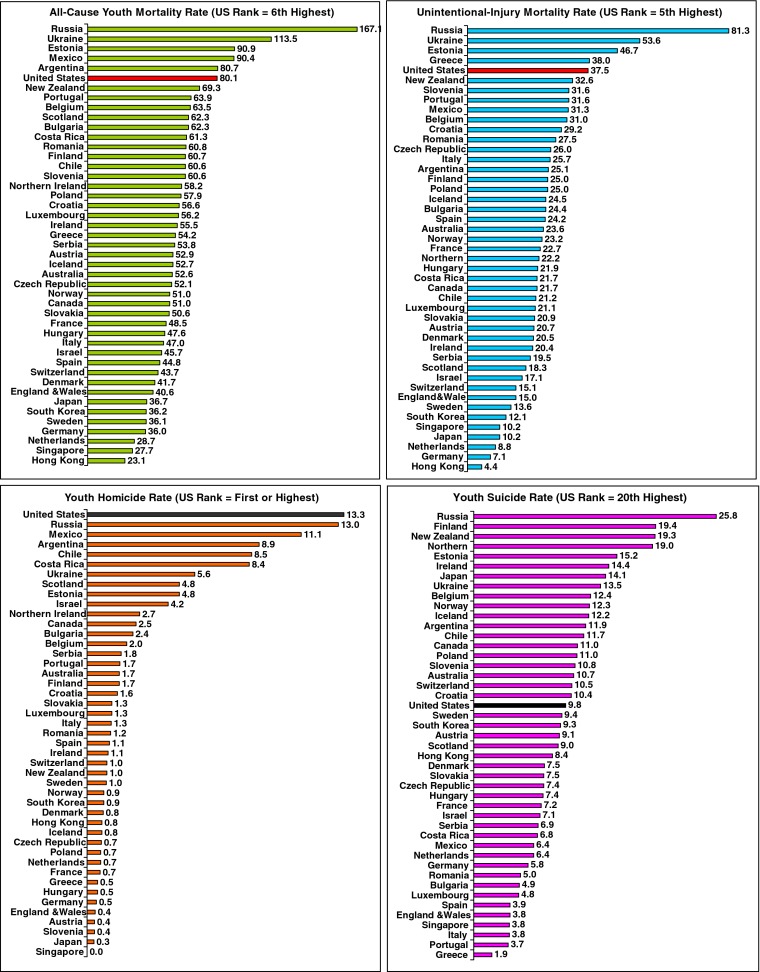
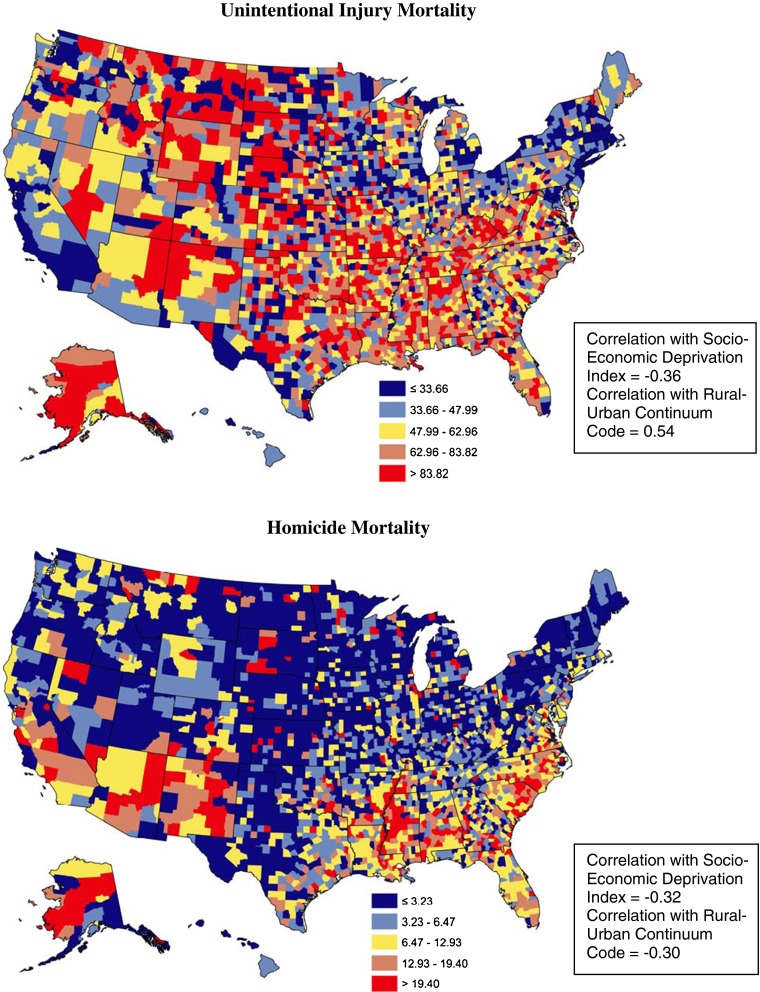
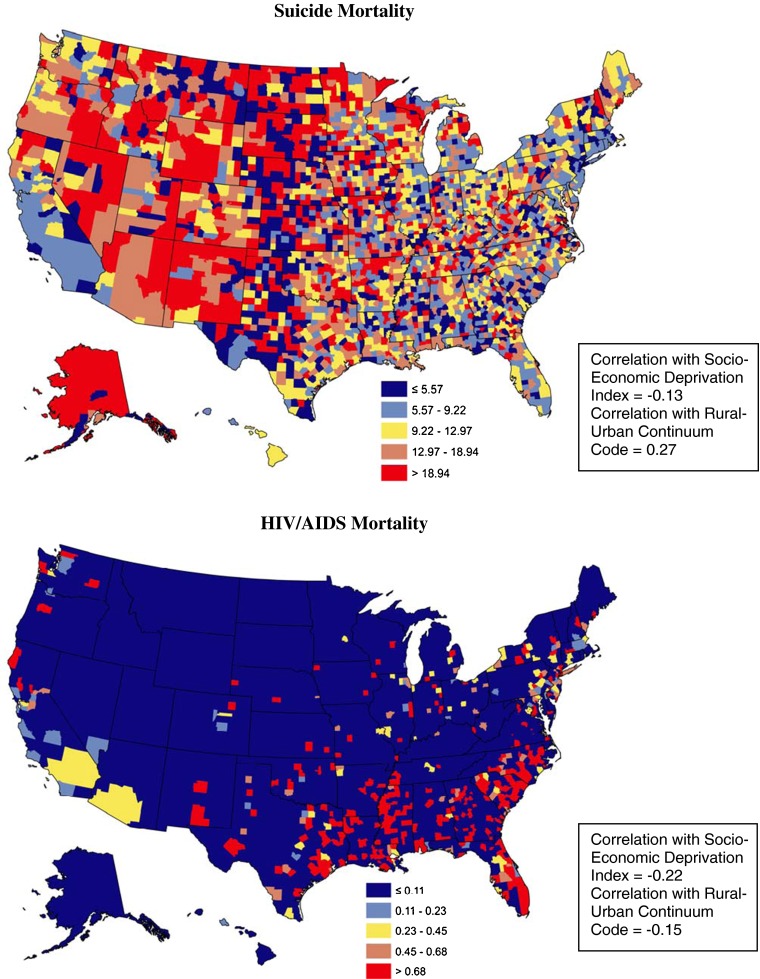
We analyzed international patterns and socioeconomic and rural-urban disparities in all-cause mortality and mortality from homicide, suicide, unintentional injuries, and HIV/AIDS among US youth aged 15-24 years. A county-level socioeconomic deprivation index and rural-urban continuum measure were linked to the 1999-2007 US mortality data. Mortality rates were calculated for each socioeconomic and rural-urban group. Poisson regression was used to derive adjusted relative risks of youth mortality by deprivation level and rural-urban residence. The USA has the highest youth homicide rate and 6th highest overall youth mortality rate in the industrialized world. Substantial socioeconomic and rural-urban gradients in youth mortality were observed within the USA. Compared to their most affluent counterparts, youth in the most deprived group had 1.9 times higher all-cause mortality, 8.0 times higher homicide mortality, 1.5 times higher unintentional-injury mortality, and 8.8 times higher HIV/AIDS mortality. Youth in rural areas had significantly higher mortality rates than their urban counterparts regardless of deprivation levels, with suicide and unintentional-injury mortality risks being 1.8 and 2.3 times larger in rural than in urban areas. However, youth in the most urbanized areas had at least 5.6 times higher risks of homicide and HIV/AIDS mortality than their rural counterparts. Disparities in mortality differed by race and sex. Socioeconomic deprivation and rural-urban continuum were independently related to disparities in youth mortality among all sex and racial/ethnic groups, although the impact of deprivation was considerably greater. The USA ranks poorly in all-cause mortality, youth homicide, and unintentional-injury mortality rates when compared with other industrialized countries.
Figures
References
-
- Singh GK. Youth Mortality in the United States, 1935–2007: Large and Persistent Disparities in Injury and Violent Deaths. A 75th Anniversary Publication. Health Resources and Services Administration, Maternal and Child Health Bureau. Rockville, MD: Department of Health and Human Services; 2010. http://www.mchb.hrsa.gov/.
-
- US Census Bureau. The 2009 American Community Survey. Washington, DC: US Census Bureau; 2010. http://factfinder.census.gov/servlet/DatasetMainPageServlet?_program=ACS...=. Accessed July 6, 2011.
-
- Health, United States, 2010 with special feature on death and dying. Hyattsville, MD: US Department of Health and Human Services; 2011. - PubMed
-
- US Census Bureau. Statistical Abstract of the United States, 2011. 130th edition. Washington, DC: US Government Printing Office; 2010. http://www.census.gov/compendia/statab/.
Publication types
MeSH terms
LinkOut - more resources
Full Text Sources
Medical
