


A case-control study on risk factors associated with death in pregnant women with severe pandemic H1N1 infection
- PMID: 22773536
- PMCID: PMC3400061
- DOI: 10.1136/bmjopen-2012-000827
A case-control study on risk factors associated with death in pregnant women with severe pandemic H1N1 infection
Abstract
Objectives: To describe the risk factors associated with death in pregnant women with severe pandemic H1N1 infection.
Design: Case-control study.
Setting: Anhui, China.
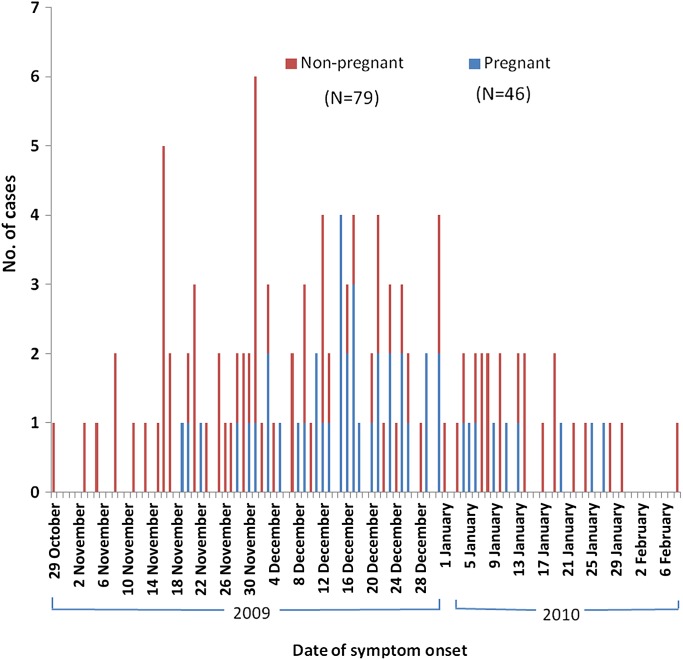
Participants: A total of 46 pregnant women with severe pandemic H1N1 infection were studied during June 2009-April 2011.
Primary and secondary outcome measures: All the cases were confirmed by the clinicians and epidemiologists together based on the positive laboratory result.
Results: Of the seven pregnant women who died of the pandemic H1N1 infection, five (70%) cases were in their third trimester. Twenty-nine (63%) cases from the surviving group were admitted to hospital within 3 days after the onset of symptoms, while only one (2%) case from the death group took the earliest admission 2 days after the onset. There was a significant difference on how soon to be admitted between the death and the surviving groups (OR 0.09, 95% CI 0.01 to 0.68). The median time of administrating corticosteroids was 5 days after the onset in the death group and 3 days in the surviving group showing no significant difference between them (p=0.056).
Conclusions: For the pregnant women with severe p(H1N1) infection, the risk factors associated with death were as follows: the delay of antiviral treatment and being in the third trimester. The corticosteroids therapy appeared to have no effects on preventing the cases from death.
Conflict of interest statement
Figures
References
-
- Centers for Disease Control and Prevention (CDC) Novel influenza A (H1N1) virus infections in three pregnant women — United States, April–May 2009. MMWR Morb Mortal Wkly Rep 2009;58:497–500 - PubMed
-
- Fiore AE, Shay DK, Broder K, et al. ; Centers for Disease Control and Prevention Prevention and control of seasonal influenza with vaccines: recommendations of the Advisory Committee on Immunization Practices (ACIP), 2009. MMWR Recomm Rep 2009;58:1–52 - PubMed
-
- Freeman DW, Barno A. Deaths from Asian influenza associated with pregnancy. Am J Obstet Gynecol 1959;78:1172–5 - PubMed
-
- Harris JW. Influenza occurring in pregnant women. JAMA 1919;72:978–80
-
- Jamieson DJ, Honein MA, Rasmussen SA, et al. H1N1 2009 influenza virus infection during pregnancy in the USA. Lancet 2009;374:451–8 - PubMed
LinkOut - more resources
Full Text Sources
Miscellaneous
