


Functional consequences of PRPF39 on distant genes and cisplatin sensitivity
- PMID: 22773733
- PMCID: PMC3441128
- DOI: 10.1093/hmg/dds266
Functional consequences of PRPF39 on distant genes and cisplatin sensitivity
Abstract
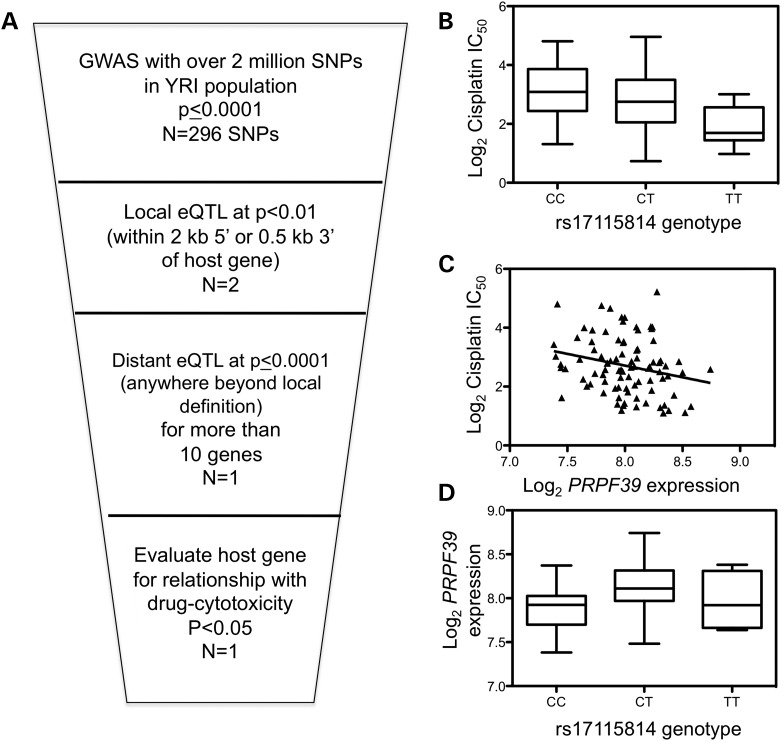
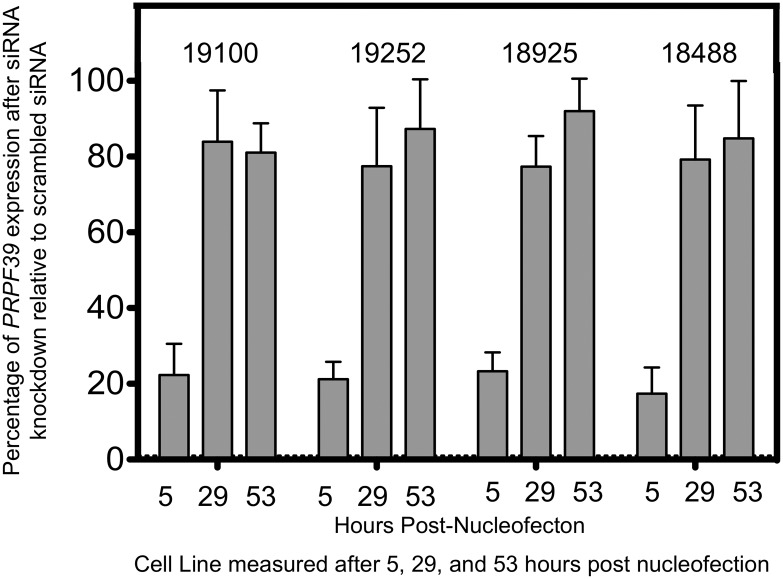
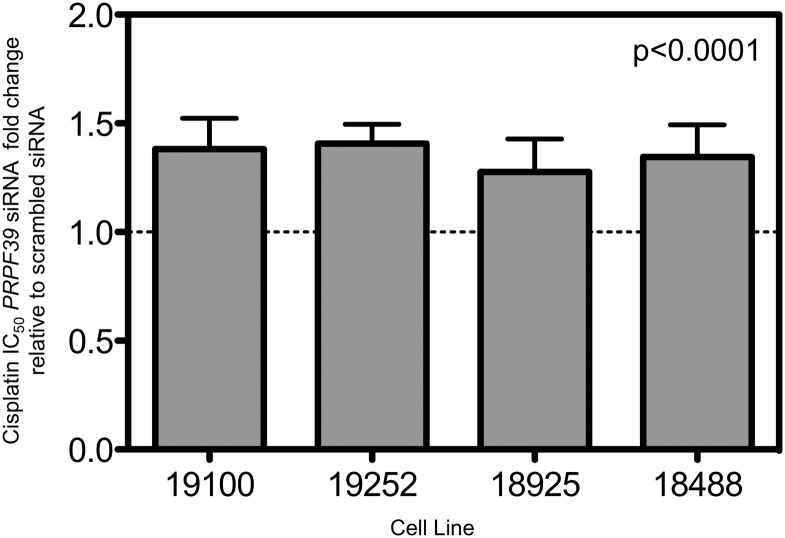
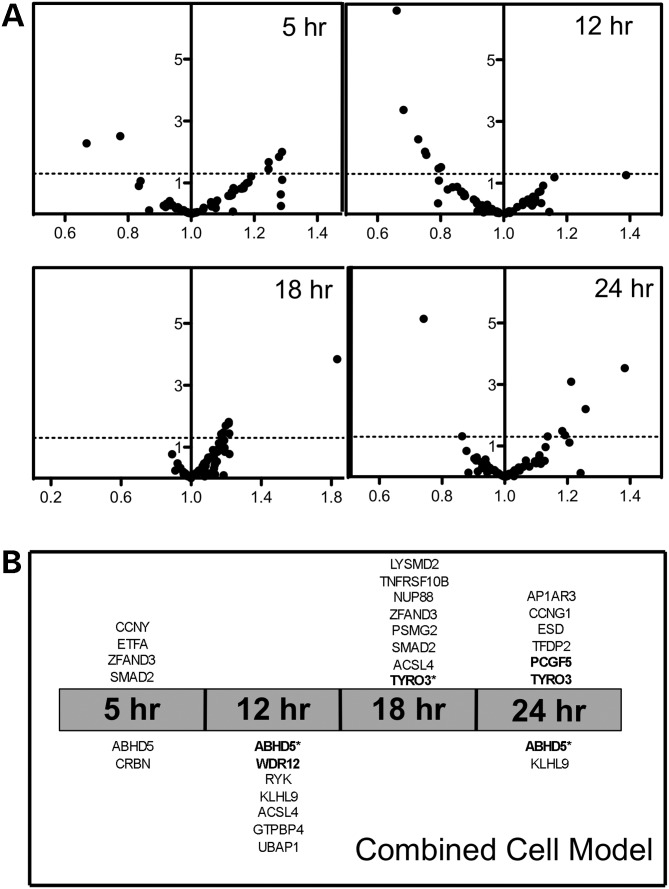
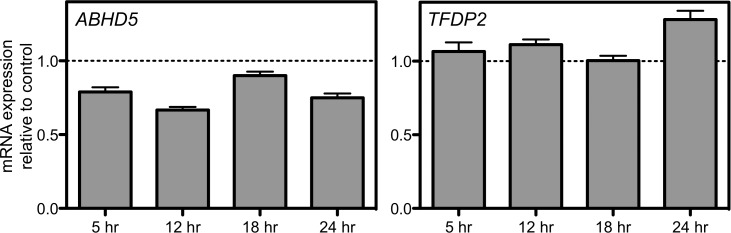
Variation in gene expression has been found to be important in disease susceptibility and pharmacogenomics. Local and distant expression quantitative trait loci (eQTLs) have been identified via genome-wide association study (GWAS); yet the functional analysis of these variants has been challenging. The aim of this study was to unravel the functional consequence of a gene with a local SNP with evidence for local and distant regulatory roles in cellular sensitivity to cisplatin, one of the most widely used chemotherapeutic drugs. To this end, we measured cellular susceptibility to cisplatin in 176 HapMap lymphoblastoid cell lines derived from Yoruba individuals from Ibadan, Nigeria. The 276 cytotoxicity-associated SNPs at the suggestive threshold of P ≤ 0.0001 were significantly enriched for eQTLs. Of these SNPs, we found one intronic SNP, rs17115814, that had a significant relationship with the expression level of its host gene, PRPF39 (P= 0.0007), and a significant correlation with the expression of over 100 distant transcripts (P ≤ 0.0001). Successful knockdown of PRPF39 expression using siRNA resulted in a significant increase in cisplatin resistance. We then measured the expression of 61 downstream targets after PRPF39 knockdown and found 53 gene targets had significant (P ≤ 0.05) expression changes. Included in the list of genes that significantly changed after PRPF39 knockdown were MAP3K4 and TFPD2, two important signaling genes previously shown to be relevant in cisplatin response. Thus, modulation of a local target gene identified through a GWAS was followed by a downstream cascade of gene expression changes resulting in greater resistance to cisplatin.
Figures
References
-
- Ross C.J., Katzov-Eckert H., Dube M.P., Brooks B., Rassekh S.R., Barhdadi A., Feroz-Zada Y., Visscher H., Brown A.M., Rieder M.J., et al. Genetic variants in TPMT and COMT are associated with hearing loss in children receiving cisplatin chemotherapy. Nat. Genet. 2009;41:1345–1349. - PubMed
-
- Oldenburg J., Kraggerud S.M., Cvancarova M., Lothe R.A., Fossa S.D. Cisplatin-induced long-term hearing impairment is associated with specific glutathione S-transferase genotypes in testicular cancer survivors. J. Clin. Oncol. 2007;25:708–714. - PubMed
Publication types
MeSH terms
Substances
Grants and funding
LinkOut - more resources
Full Text Sources
Molecular Biology Databases
Miscellaneous
