Exendin-4 reverts behavioural and neurochemical dysfunction in a pre-motor rodent model of Parkinson's disease with noradrenergic deficit
- PMID: 22774922
- PMCID: PMC3514760
- DOI: 10.1111/j.1476-5381.2012.02100.x
Exendin-4 reverts behavioural and neurochemical dysfunction in a pre-motor rodent model of Parkinson's disease with noradrenergic deficit
Retraction in
-
Retraction. Exendin-4 reverts behavioural and neurochemical dysfunction in a pre-motor rodent model of Parkinson's disease with noradrenergic deficit.Br J Pharmacol. 2013 Jun;169(3):717. doi: 10.1111/bph.12241. Br J Pharmacol. 2013. PMID: 23821776 Free PMC article. No abstract available.
Abstract
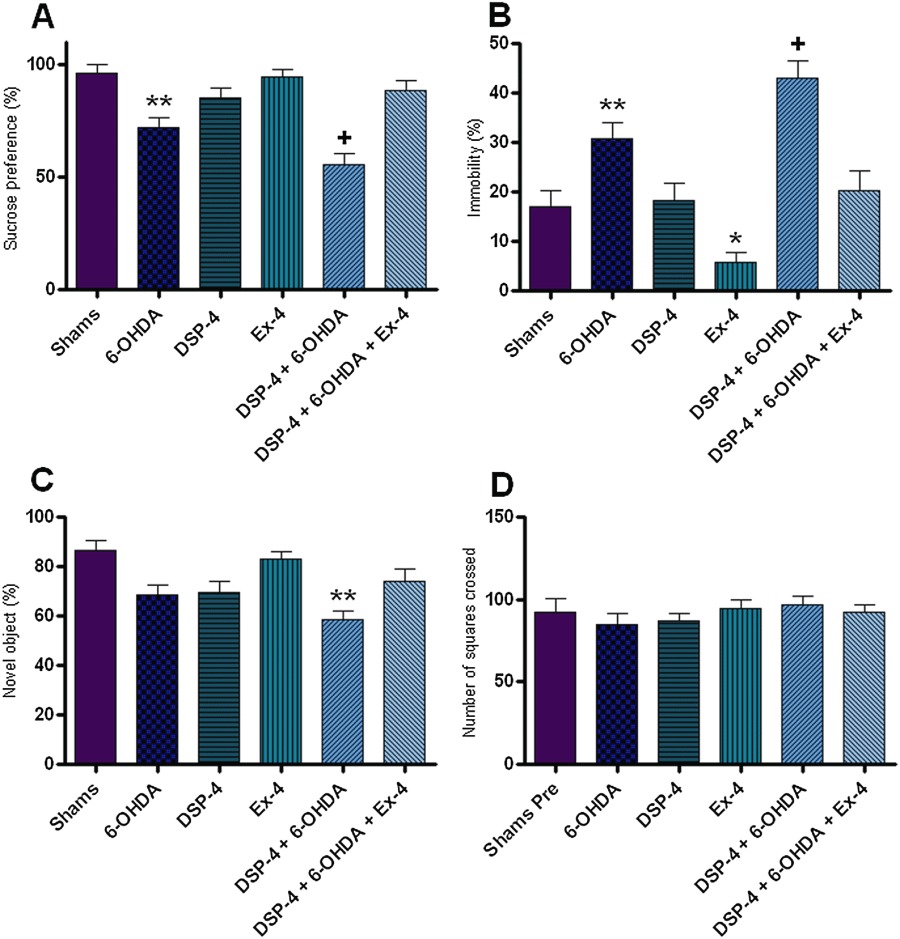
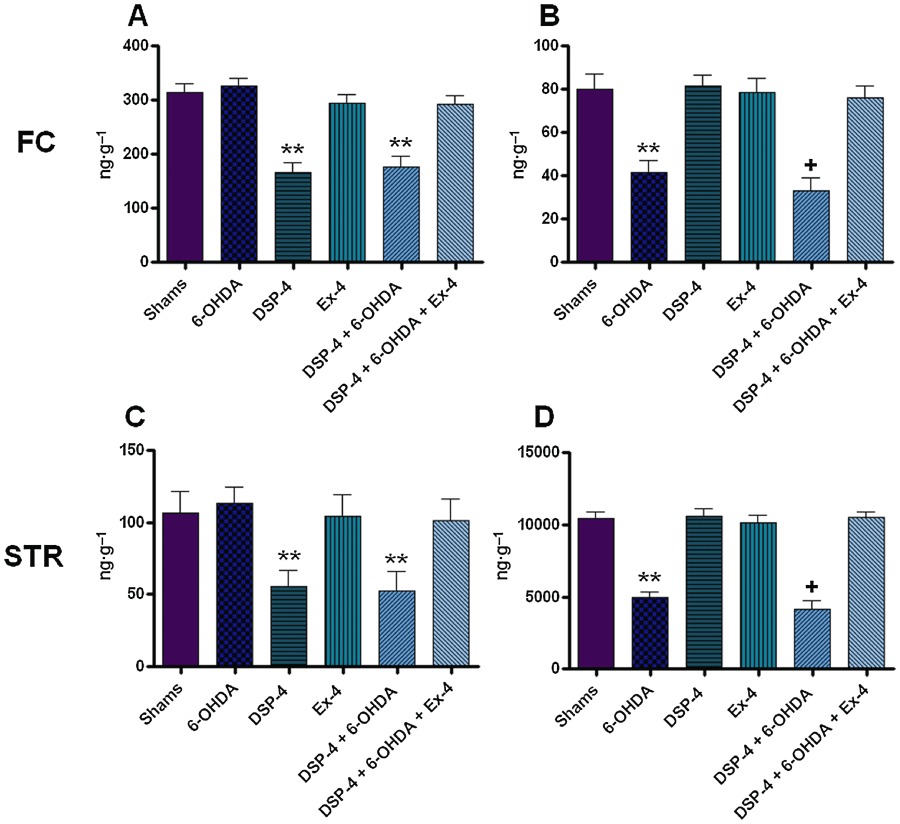
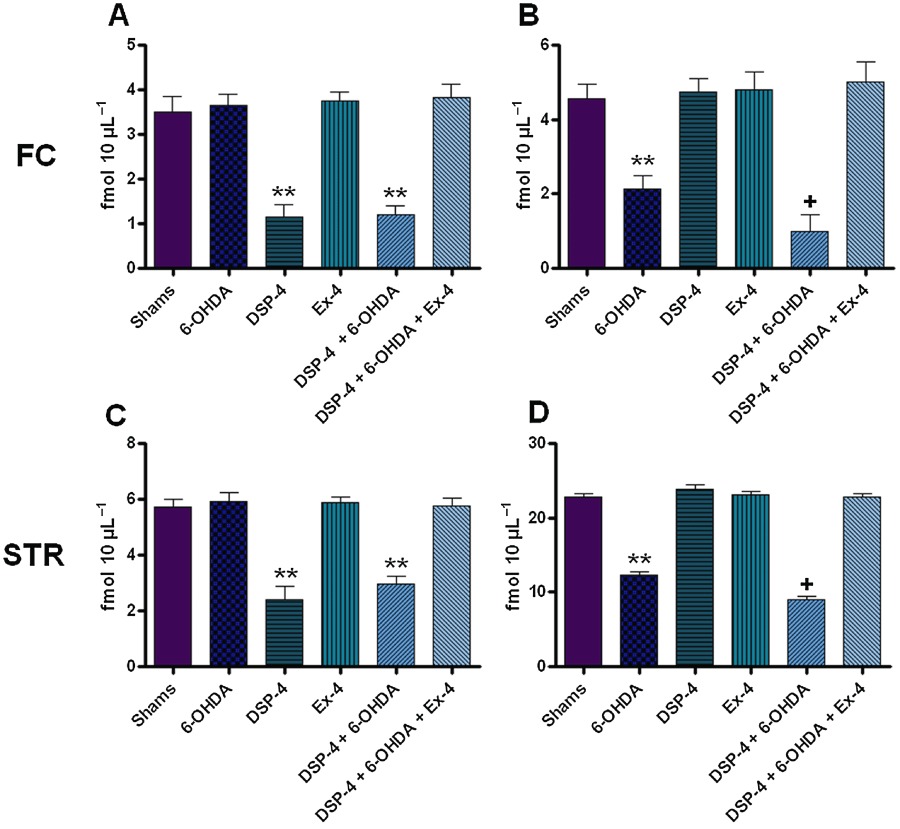
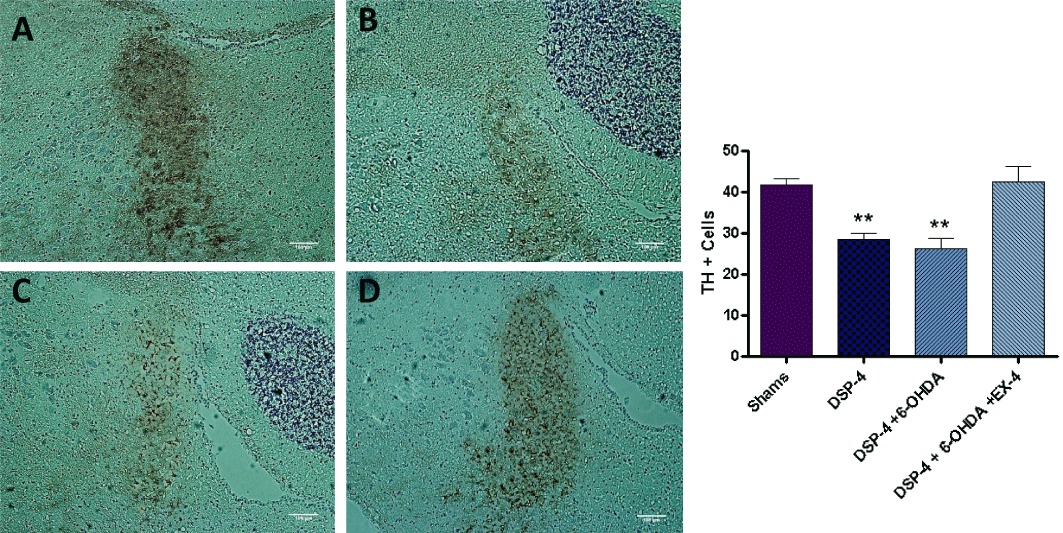
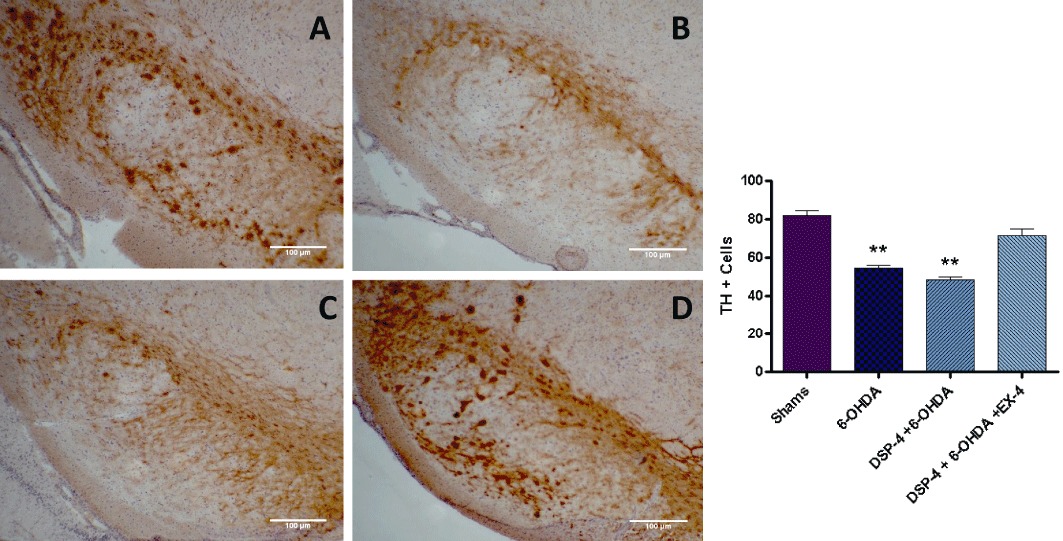
BACKGROUND AND PURPOSE Parkinson's disease (PD) is characterized by progressive dopaminergic cell loss; however, the noradrenergic system exhibits degeneration as well. Noradrenergic deficit in PD may be responsible for certain non-motor symptoms of the pathology, including psychiatric disorders and cognitive decline. The aim of this study was to generate a pre-motor rodent model of PD with noradrenergic denervation, and to assess whether treatment with exendin-4 (EX-4), a glucagon-like peptide 1 receptor agonist, could reverse impairment exhibited by our model. EXPERIMENTAL APPROACH We generated a model of PD utilizing N-(2-chloroethyl)-N-ethyl-2-bromobenzylamine and 6-hydroxydopamine to create partial lesions of both the noradrenergic and dopaminergic systems respectively. We then assessed the validity of our model using an array of behavioural paradigms and biochemical techniques. Finally, we administered EX-4 over a 1 week period to determine therapeutic efficacy. KEY RESULTS Our model exhibits anhedonia and decreased object recognition as indicated by a decrease in sucrose preference, increased immobility in the forced swim test and reduced novel object exploration. Tissue and extracellular dopamine and noradrenaline were reduced in the frontal cortex and striatum. TH+ cell counts decreased in the locus coeruleus and substantia nigra. Treatment with EX-4 reversed behavioural impairment and restored extracellular/tissue levels of both dopamine and noradrenaline and TH+ cell counts. CONCLUSION AND IMPLICATIONS We conclude that early treatment with EX-4 may reverse certain neuropsychiatric dysfunction and restore dopamine and noradrenaline content.
© 2012 The Authors. British Journal of Pharmacology © 2012 The British Pharmacological Society.
Figures
References
-
- Arango V, Underwood MD, Pauler DK, Kass RE, Mann JJ. Differential age-related loss of pigmented locus coeruleus neurons in suicides, alcoholics, and alcoholic suicides. Alcohol Clin Exp Res. 1996;20:1141–1147. - PubMed
-
- Archer T, Fredriksson A. Influence of noradrenaline denervation on MPTP-induced deficits in mice. J Neural Transm. 2006;113:1119–1129. - PubMed
-
- Bambico FR, Nguyen NT, Gobbi G. Decline in serotonergic firing activity and desensitization of 5-HT1A autoreceptors after chronic unpredictable stress. Eur Neuropsychopharmacol. 2009;19:215–228. - PubMed
-
- Benarroch EE. The locus ceruleus norepinephrine system: functional organization and potential clinical significance. Neurology. 2009;73:1699–1704. - PubMed
-
- Bertilsson G, Patrone C, Zachrisson O, Andersson A, Dannaeus K, Heidrich J, et al. Peptide hormone exendin-4 stimulates subventricular zone neurogenesis in the adult rodent brain and induces recovery in an animal model of Parkinson's disease. J Neurosci Res. 2008;86:326–338. - PubMed
Publication types
MeSH terms
Substances
LinkOut - more resources
Full Text Sources
Medical