


The built environment moderates effects of family-based childhood obesity treatment over 2 years
- PMID: 22777879
- PMCID: PMC3446779
- DOI: 10.1007/s12160-012-9383-4
The built environment moderates effects of family-based childhood obesity treatment over 2 years
Abstract
Background: Research suggests the neighborhood built environment is related to child physical activity and eating.
Purpose: The purpose of this study was to determine if characteristics of the neighborhood environment moderate the relationship between obesity treatment and weight loss, and if outcomes of particular treatments are moderated by built environment characteristics.
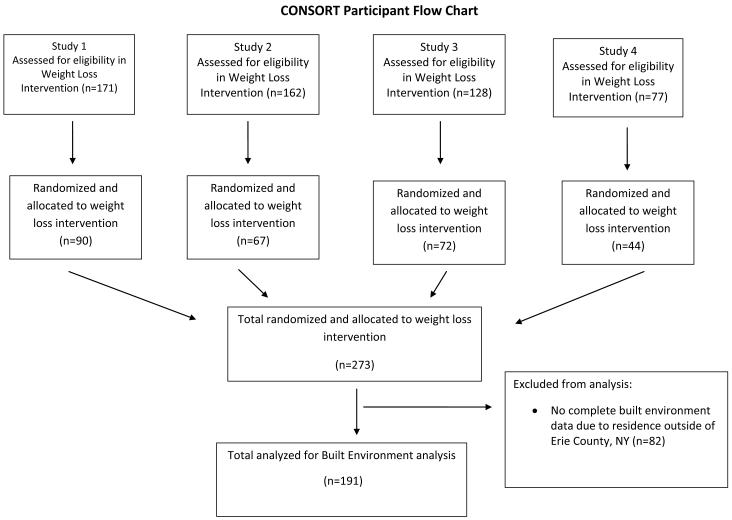
Method: The relationship between the built environment and standardized BMI (zBMI) changes for 191 8-12-year-old children who participated in one of four randomized, controlled trials of pediatric weight management was assessed using mixed models analysis of covariance.
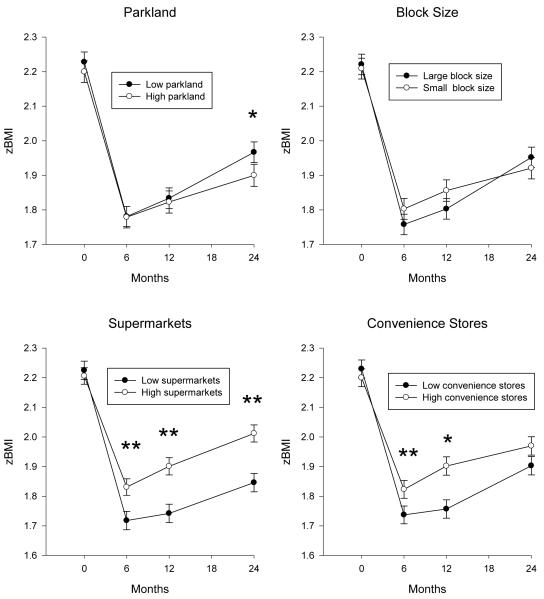
Results: At 2-year follow-up, greater parkland, fewer convenience stores, and fewer supermarkets were associated with greater zBMI reduction across all interventions. No treatments interacted with characteristics of the built environment.
Conclusions: Activity- and eating-related built neighborhood characteristics are associated with child success in behavioral obesity treatments. Efficacy may be improved by individualizing treatments based on built environment characteristics.
Figures
References
-
- Gordon-Larsen P, Nelson MC, Page P, Popkin BM. Inequality in the built environment underlies key health disparities in physical activity and obesity. Pediatrics. 2006;117:417–424. - PubMed
-
- Oreskovic NM, Winickoff JP, Kuhlthau KA, Romm D, Perrin JM. Obesity and the built environment among Massachusetts children. Clin Pediatr (Phila) 2009;48:904–912. - PubMed
-
- Oreskovic NM, Kuhlthau KA, Romm D, Perrin JM. Built environment and weight disparities among children in high- and low-income towns. Acad Pediatr. 2009;9:315–321. - PubMed
-
- Grafova IB. Overweight children: assessing the contribution of the built environment. Prev Med. 2008;47:304–308. - PubMed
