. 2012 Aug 15;189(4):1992-9.
doi: 10.4049/jimmunol.1103207. Epub 2012 Jul 9.

GPR105 ablation prevents inflammation and improves insulin sensitivity in mice with diet-induced obesity

Affiliations

GPR105 ablation prevents inflammation and improves insulin sensitivity in mice with diet-induced obesity

Jianfeng Xu et al. J Immunol. .

Erratum in

  • J Immunol. 2013 Feb 1;190(3):1380. Mamane, Yaël [added]; Mancini, Joseph A [added]; Nawrocki, Andrea R [added]

Abstract

GPR105, a G protein-coupled receptor for UDP-glucose, is highly expressed in several human tissues and participates in the innate immune response. Because inflammation has been implicated as a key initial trigger for type 2 diabetes, we hypothesized that GPR105 (official gene name: P2RY14) might play a role in the initiation of inflammation and insulin resistance in obesity. To this end, we investigated glucose metabolism in GPR105 knockout (KO) and wild-type (WT) mice fed a high-fat diet (HFD). We also examined whether GPR105 regulates macrophage recruitment to liver or adipose tissues by in vivo monocyte tracking and in vitro chemotaxis experiments, followed by transplantation of bone marrow from either KO or WT donors to WT recipients. Our data show that genetic deletion of GPR105 confers protection against HFD-induced insulin resistance, with reduced macrophage infiltration and inflammation in liver, and increased insulin-stimulated Akt phosphorylation in liver, muscle, and adipose tissue. By tracking monocytes from either KO or WT donors, we found that fewer KO monocytes were recruited to the liver of WT recipients. Furthermore, we observed that uridine 5-diphosphoglucose enhanced the in vitro migration of bone marrow-derived macrophages from WT but not KO mice, and that plasma uridine 5-diphosphoglucose levels were significantly higher in obese versus lean mice. Finally, we confirmed that insulin sensitivity improved in HFD mice with a myeloid cell-specific deletion of GPR105. These studies indicate that GPR105 ablation mitigates HFD-induced insulin resistance by inhibiting macrophage recruitment and tissue inflammation. Hence GPR105 provides a novel link between innate immunity and metabolism.


Figures
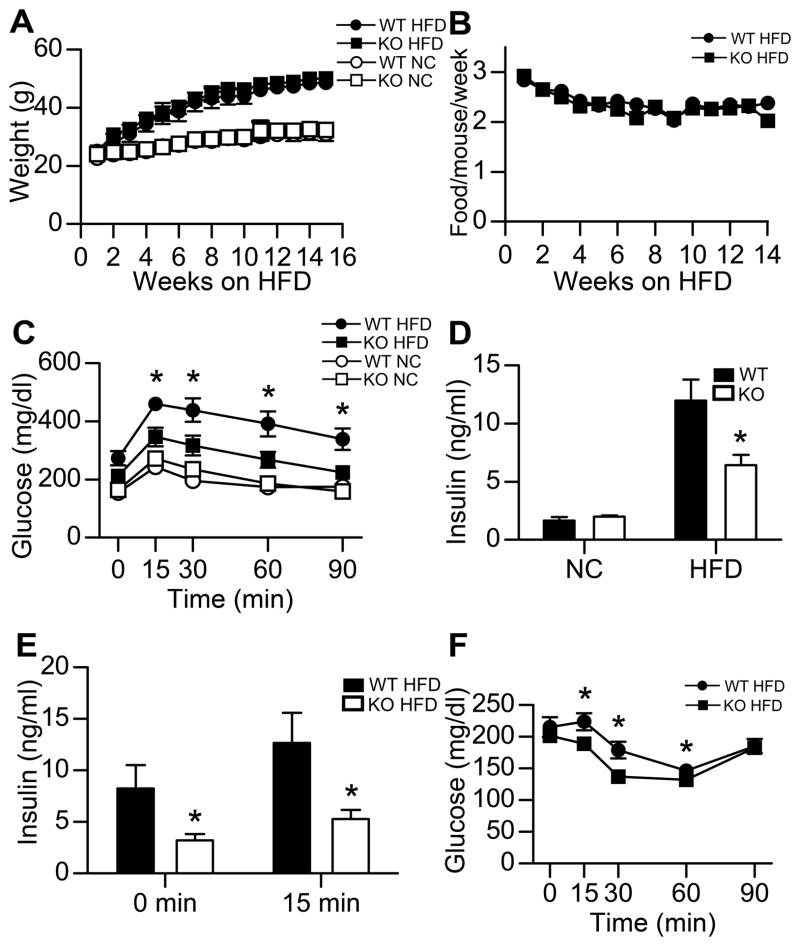
Figure 1
Figure 1. Improved glucose homeostasis of GPR105 KO HFD-fed mice
(A) Body weight gain of WT and GPR105 KO mice on NC and HFD (n=12 per group). (B) Food intake of WT and GPR105 KO mice on HFD (n=12). (C) Glucose tolerance testing in NC and HFD mice. Glucose (1 g/kg) was injected intraperitoneally after a 7h fast, and tail blood was collected for glucose measurement (n=8). (D) Fasting insulin levels of WT and GPR105 KO mice on NC and HFD (n=8). (E) Acute insulin secretion measured in HFD-fed WT and GPR105 KO mice at basal (7h fast) and 15 min after oral glucose challenge (n=8). (F) Insulin tolerance testing in HFD mice. Intraperitoneal insulin (0.6 U/kg) was injected to 7h-fasted HFD WT and GPR105 KO mice. Blood glucose was measured at the indicated time points. All values are expressed as means ± SEM. *p < 0.05 versus diet-matched WT.
Figure 2
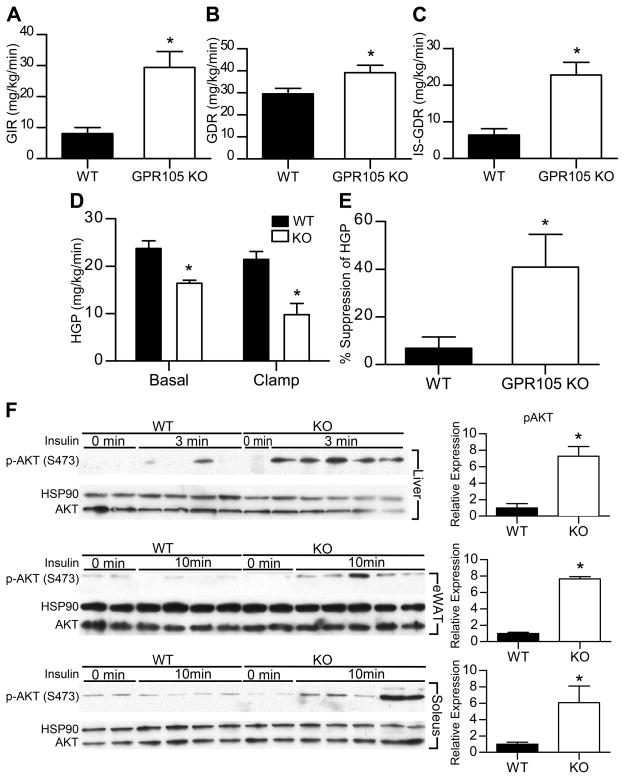
Figure 2. Improved insulin sensitivity of GPR105 KO HFD-fed mice
In vivo insulin sensitivity as determined by hyperinsulinemic-euglycemic clamp in WT (n=6) and GPR105 KO (n=6) mice fed HFD. GIR (A), GDR (B), IS-GDR (C), basal and clamp HGP (D), suppression of HGP (E), are presented as means ± SEM. *p < 0.05 versus WT. (F) Immunoblot analyses of Ser473 phosphorylation of Akt as well as total Akt and HSP90 in liver, adipose tissue and skeletal muscle. Tissues were collected before or at indicated time after insulin injection (0.2 U/kg) into the inferior vena cava.
Figure 3
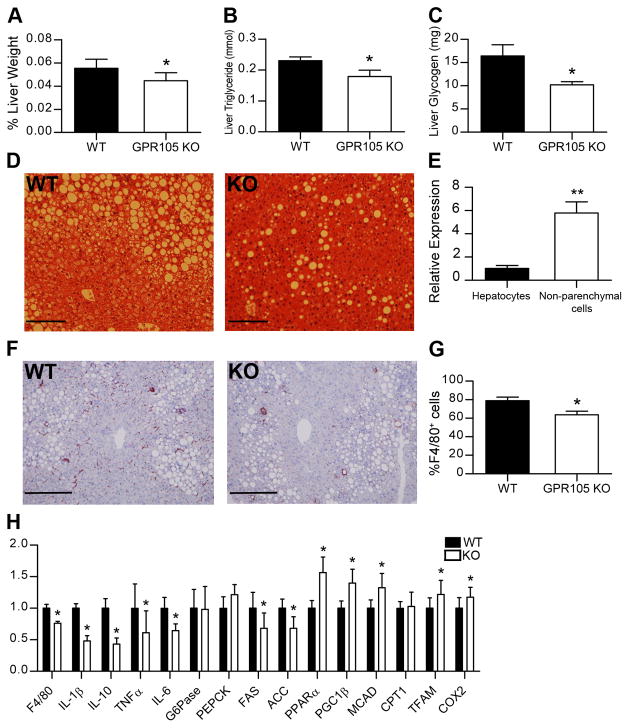
Figure 3. Reduced macrophage infiltration and inflammation in liver
Liver weight (A), TG (B) and glycogen content (C) in liver are presented as means ± SEM. *p < 0.05 versus WT (n=6–12 per group). (D) Representative images of H&E-stained liver sections of HFD-fed WT and GPR105 mice. Scale bars represent 50 μm. (E) GPR105 expression in hepatocytes and non-parenchymal cells by quantitative PCR. Data are presented as means ± SEM. **p <0.005 (n=3). (F) Representative immunohistochemistry images of liver sections stained with anti-F4/80 antibody. Scale bars represent 50 μm. (G) F4/80+ cell as a percentage of all non-parenchymal cells by flow cytometry. *p < 0.05 versus WT (n=4). (H) Gene expression in liver measured by quantitative PCR. Data are presented as means ± SD. *p < 0.05 versus WT (n=8).
Figure 4
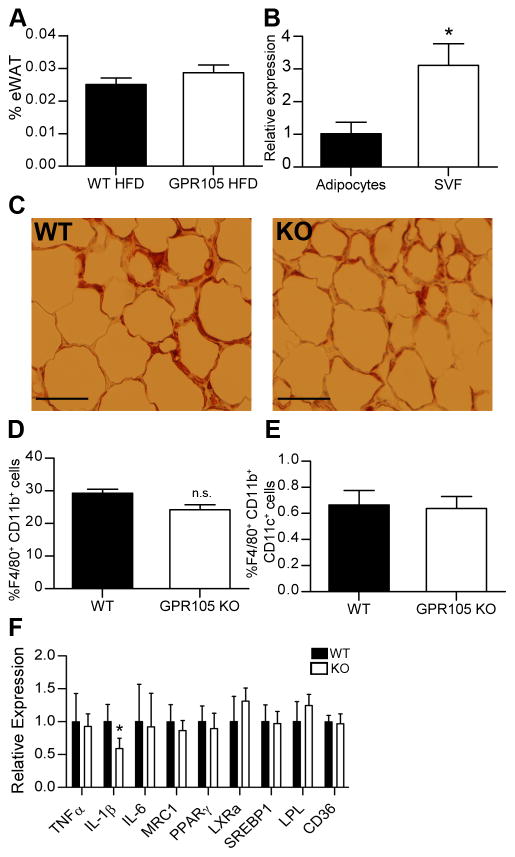
Figure 4. Macrophages in adipose tissue
(A) eWAT weight as a percentage of total body weight (n=8). (B) GPR105 expression in adipocytes and SVF cells by quantitative PCR. (C) Representative immunohistochemistry images of eWAT stained with anti-Mac2 antibody. Scale bars represent 100μm. (D) F4/80+CD11b+ and (E) F4/80+CD11b+CD11c+ cells in eWAT measured by flow cytometry (n=6). (F) Gene expression in eWAT. Data are presented as means ± SD. *p < 0.05 versus WT (n=8).
Figure 5
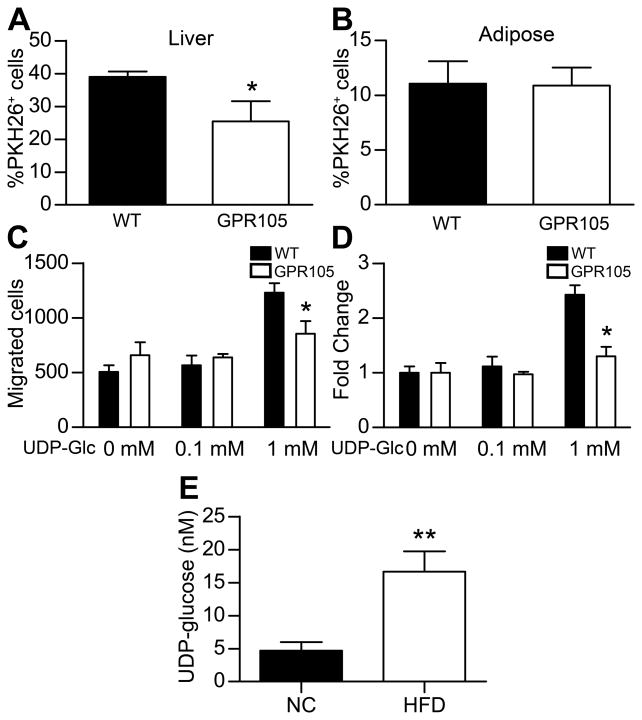
Figure 5. GPR105-mediated chemotaxis in vivo and in vitro
PKH26+ cells in liver non-parenchymal cells (A) and in eWAT SVF cells (B) of WT recipient mice 5 days after injection of labeled monocytes from WT or GPR105 KO donors (n=4). Data are presented as means ± SEM. *p < 0.05 versus WT. (C–D) Chemotaxis of bone-marrow derived macrophages from WT or GPR105 KO mice towards a UDP-glucose gradient in vitro (data from 3 independent experiments). *p < 0.05 versus WT. (E) Measurement of UDP-Glc in plasma from mice fed either normal chow (NC) or HFD (n = 8–10). **p <0.005.
Figure 6
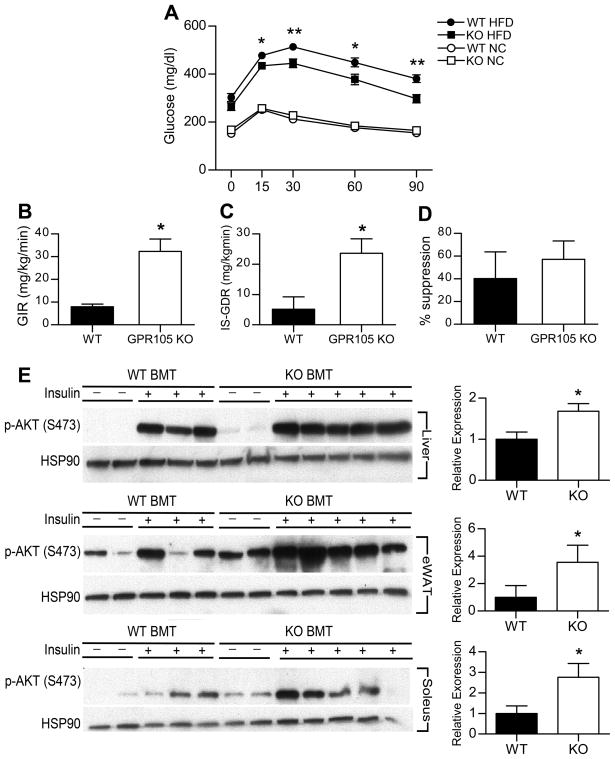
Figure 6. Improved glucose homeostasis and insulin sensitivity of GPR105 KO bone marrow transplanted mice
(A) Glucose tolerance testing in BMT-WT and BMT-KO mice on NC or HFD (n=12). *p < 0.05 and **p < 0.005 versus diet-matched WT. (B–D) Hyperinsulinemic-euglycemic clamp studies in BMT-WT (n=4) and BMT-KO (n=4) mice fed with HFD. GIR (B), IS-GDR (C), suppression of HGP (D), are presented as means ± SEM. *p < 0.05 versus WT. (E) Immunoblot analyses of Ser473 phosphorylation of Akt and HSP90 in liver, adipose tissue and skeletal muscles of BMT-WT and BMT-KO. Tissues were collected at the indicated times before and after insulin injection (0.2 U/kg). *p < 0.05 versus WT

References

    1. Olefsky JM, Glass CK. Macrophages, Inflammation, and Insulin Resistance. Annual Review of Physiology. 2010;72:219–246. - PubMed
    1. Gordon S, Taylor PR. Monocyte and macrophage heterogeneity. Nat Rev Immunol. 2005;5:953–964. - PubMed
    1. Lumeng CN, Deyoung SM, Bodzin JL, Saltiel AR. Increased inflammatory properties of adipose tissue macrophages recruited during diet-induced obesity. Diabetes. 2007;56:16–23. - PubMed
    1. Thewissen MM, Damoiseaux JG, Duijvestijn AM, van Greevenbroek MM, van der Kallen CJ, Feskens EJ, Blaak EE, Schalkwijk CG, Stehouwer CD, Cohen Tervaert JW, Ferreira I. Abdominal fat mass is associated with adaptive immune activation: the CODAM Study. Obesity (Silver Spring) 2011;19:1690–1698. - PubMed
    1. Filmore D. Modern Drug Discovery. American Chemical Society; 2004. It’s a GPCR world; pp. 24–28.

Publication types

MeSH terms

Substances