


Pathogen- and host-directed anti-inflammatory activities of macrolide antibiotics
- PMID: 22778497
- PMCID: PMC3388425
- DOI: 10.1155/2012/584262
Pathogen- and host-directed anti-inflammatory activities of macrolide antibiotics
Abstract
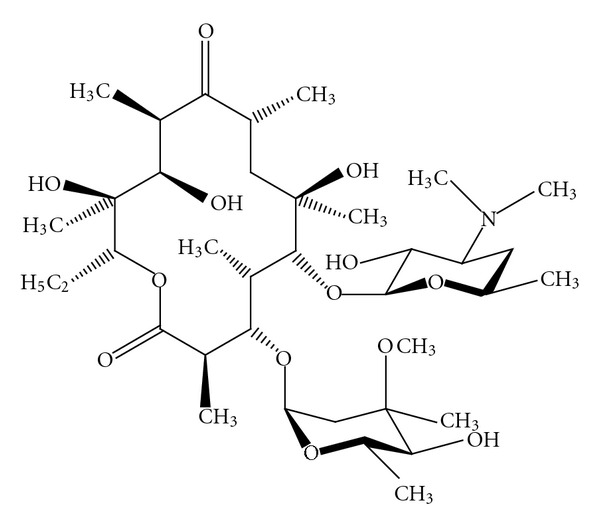
Macrolide antibiotics possess several, beneficial, secondary properties which complement their primary antimicrobial activity. In addition to high levels of tissue penetration, which may counteract seemingly macrolide-resistant bacterial pathogens, these agents also possess anti-inflammatory properties, unrelated to their primary antimicrobial activity. Macrolides target cells of both the innate and adaptive immune systems, as well as structural cells, and are beneficial in controlling harmful inflammatory responses during acute and chronic bacterial infection. These secondary anti-inflammatory activities of macrolides appear to be particularly effective in attenuating neutrophil-mediated inflammation. This, in turn, may contribute to the usefulness of these agents in the treatment of acute and chronic inflammatory disorders of both microbial and nonmicrobial origin, predominantly of the airways. This paper is focused on the various mechanisms of macrolide-mediated anti-inflammatory activity which target both microbial pathogens and the cells of the innate and adaptive immune systems, with emphasis on their clinical relevance.
Figures
Similar articles
-
Macrolides in cystic fibrosis.Chron Respir Dis. 2005;2(2):85-98. doi: 10.1191/1479972305cd066rs. Chron Respir Dis. 2005. PMID: 16279156 Review.
-
Anti-inflammatory effects of macrolide antibiotics in the treatment of chronic rhinosinusitis.Otolaryngol Clin North Am. 2005 Dec;38(6):1339-50. doi: 10.1016/j.otc.2005.08.002. Otolaryngol Clin North Am. 2005. PMID: 16326189
-
The design of novel classes of macrolides for neutrophil-dominated inflammatory diseases.Future Med Chem. 2014 Apr;6(6):657-74. doi: 10.4155/fmc.14.14. Future Med Chem. 2014. PMID: 24895894 Review.
-
Anti-inflammatory capabilities of macrolides.Pharmacol Res. 2001 Dec;44(6):451-4. doi: 10.1006/phrs.2001.0884. Pharmacol Res. 2001. PMID: 11735349 Review.
-
Beneficial and Harmful Interactions of Antibiotics with Microbial Pathogens and the Host Innate Immune System.Pharmaceuticals (Basel). 2010 May 25;3(5):1694-1710. doi: 10.3390/ph3051694. Pharmaceuticals (Basel). 2010. PMID: 27713324 Free PMC article. Review.
Cited by
-
A genome-wide analysis of targets of macrolide antibiotics in mammalian cells.J Biol Chem. 2020 Feb 14;295(7):2057-2067. doi: 10.1074/jbc.RA119.010770. Epub 2020 Jan 8. J Biol Chem. 2020. PMID: 31915244 Free PMC article.
-
Efficacy of Macrolides on Acute Asthma or Wheezing Exacerbations in Children with Recurrent Wheezing: A Systematic Review and Meta-analysis.Paediatr Drugs. 2020 Apr;22(2):217-228. doi: 10.1007/s40272-019-00371-5. Paediatr Drugs. 2020. PMID: 31939108
-
Prevalence, pathogenesis, therapy, and prevention of cardiovascular events in patients with community-acquired pneumonia.Pneumonia (Nathan). 2016 Jul 21;8:11. doi: 10.1186/s41479-016-0011-0. eCollection 2016. Pneumonia (Nathan). 2016. PMID: 28702290 Free PMC article. Review.
-
Lung inflammatory pattern and antibiotic treatment in pneumonia.Respir Res. 2015 Feb 7;16(1):15. doi: 10.1186/s12931-015-0165-y. Respir Res. 2015. PMID: 25849726 Free PMC article.
-
Antivirulence activity of azithromycin in Pseudomonas aeruginosa.Front Microbiol. 2014 Apr 22;5:178. doi: 10.3389/fmicb.2014.00178. eCollection 2014. Front Microbiol. 2014. PMID: 24795709 Free PMC article. Review.
References
-
- Wikipedia, the free encyclopedia. Macrolide, 2011, http://en.wikipedia.org/wiki/Macrolide.
-
- Zuckerman JM, Qamar F, Bono BR. Review of macrolides (azithromycin, clarithromycin), ketolides (telithromycin) and glycylcyclines (tigecycline) Medical Clinics of North America. 2011;95(4):761–791. - PubMed
-
- Foulds G, Shepard RM, Johnson RB. The pharmacokinetics of azithromycin in human serum and tissues. Journal of Antimicrobial Chemotherapy. 1990;25(supplement):73–82. - PubMed
-
- Fraschini F, Scaglione F, Pintucci G, Maccarinelli G, Dugnani S, Demartini G. The diffusion of clarithromycin and roxithromycin into nasal mucosa, tonsil and lung in humans. Journal of Antimicrobial Chemotherapy. 1991;27:61–65. - PubMed
-
- Zuckerman JM. Macrolides and ketolides: azithromycin, clarithromycin, telithromycin. Infectious Disease Clinics of North America. 2004;18(3):621–649. - PubMed
Publication types
MeSH terms
Substances
LinkOut - more resources
Full Text Sources
Medical
