


Prevalence of monogenic diabetes amongst Polish children after a nationwide genetic screening campaign
- PMID: 22782286
- PMCID: PMC3433657
- DOI: 10.1007/s00125-012-2621-2
Prevalence of monogenic diabetes amongst Polish children after a nationwide genetic screening campaign
Abstract
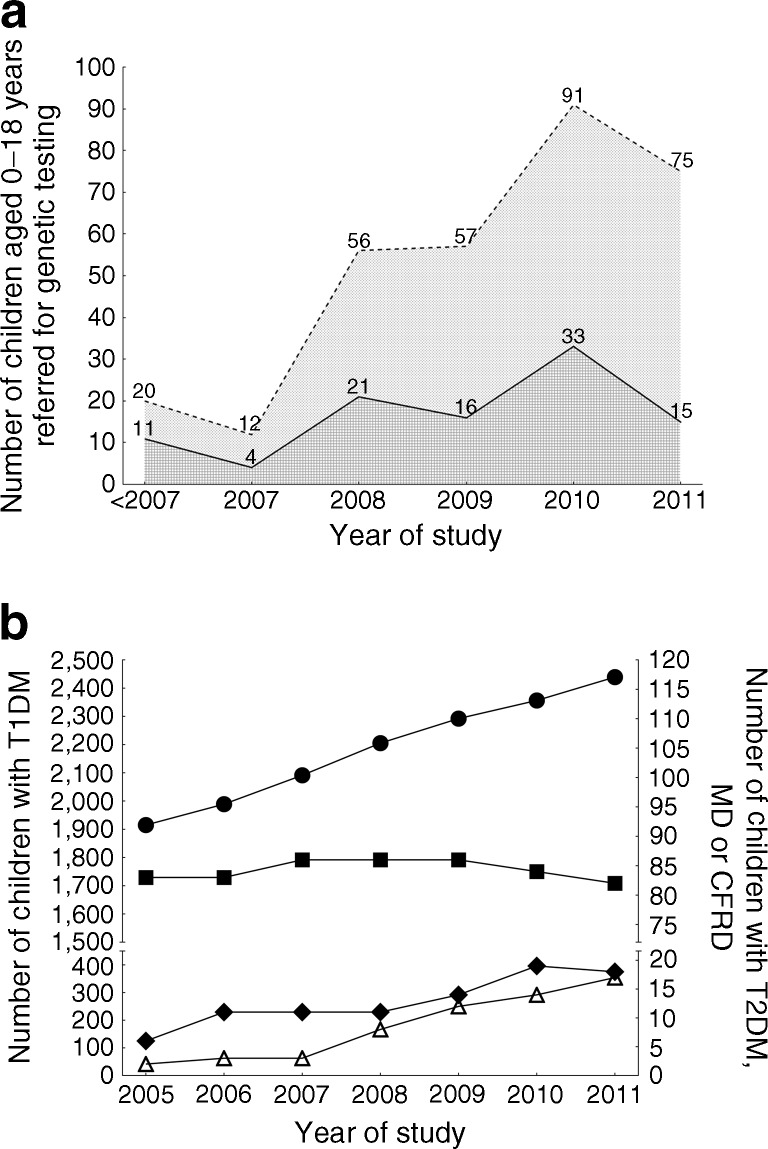
Aims/hypothesis: The aim of this study was to study dynamic changes in the prevalence of different types of diabetes in paediatric populations in Poland, with a specific focus on monogenic diabetes (MD).
Methods: Using epidemiologic data (PolPeDiab Collaboration) and nationwide genetic test results (TEAM Programme), we compared the prevalence of type 1, type 2 and cystic fibrosis-related diabetes (CFRD) and MD. Genetically confirmed MD included MODY, neonatal diabetes and Wolfram and Alström syndromes. The study covered all children aged 0-18 years treated for diabetes between 2005 and 2011 in three regions, inhabited by 23.7% (1,989,988) of Polish children, with a low prevalence of childhood obesity (<5%).
Results: The prevalence of type 1 diabetes showed a continuous increase, from 96 to 138/100,000 children. The prevalence of type 2 diabetes and CFRD also increased, from 0.3 to 1.01/100,000 children and from 0.1 to 0.95/100,000 children, respectively. The prevalence of MD was stable at between 4.2 and 4.6/100,000 children, accounting for 3.1-4.2% of children with diabetes, with glucokinase (GCK)-MODY being the most frequent type, amounting to 83% of patients with MD. The percentage of positive test results decreased with the number of referrals, suggesting that children with the highest probability of MD were referred initially, followed by those with a less clear-cut phenotype. The prevalence of neonatal diabetes equalled 1 in 300,000 children.
Conclusions/interpretation: The prevalence of MD in a paediatric population with a low prevalence of obesity remains stable and is nearly fivefold higher than that of type 2 diabetes and CFRD, justifying a need for increased access to genetic diagnostic procedures in diabetic children.
Figures
References
-
- Neu A, Feldhahn L, Ehehalt S, Hub R, Ranke MB. Type 2 diabetes mellitus in children and adolescents is still a rare disease in Germany: a population-based assessment of the prevalence of type 2 diabetes and MODY in patients aged 0–20 years. Pediatr Diabetes. 2009;10:468–473. doi: 10.1111/j.1399-5448.2009.00528.x. - DOI - PubMed
-
- Borowiec M, Fendler W, Antosik K et al (2011) Doubling the referral rate of monogenic diabetes through a nationwide information campaign – update on glucokinase gene mutations in a Polish Cohort. Clin Genet 2011. doi:10.1111/j.1399-0004.2011.01803.x - PubMed
Publication types
MeSH terms
LinkOut - more resources
Full Text Sources
Medical
Miscellaneous
