Weight gain in smokers after quitting cigarettes: meta-analysis
- PMID: 22782848
- PMCID: PMC3393785
- DOI: 10.1136/bmj.e4439
Weight gain in smokers after quitting cigarettes: meta-analysis
Abstract
Objective: To describe weight gain and its variation in smokers who achieve prolonged abstinence for up to 12 months and who quit without treatment or use drugs to assist cessation.
Design: Meta-analysis.
Data sources: We searched the Central Register of Controlled Trials (CENTRAL) and trials listed in Cochrane reviews of smoking cessation interventions (nicotine replacement therapy, nicotinic partial agonists, antidepressants, and exercise) for randomised trials of first line treatments (nicotine replacement therapy, bupropion, and varenicline) and exercise that reported weight change. We also searched CENTRAL for trials of interventions for weight gain after cessation.
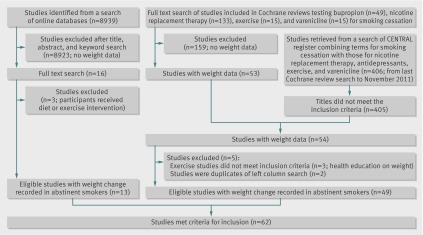
Review methods: Trials were included if they recorded weight change from baseline to follow-up in abstinent smokers. We used a random effects inverse variance model to calculate the mean and 95% confidence intervals and the mean of the standard deviation for weight change from baseline to one, two, three, six, and 12 months after quitting. We explored subgroup differences using random effects meta-regression.
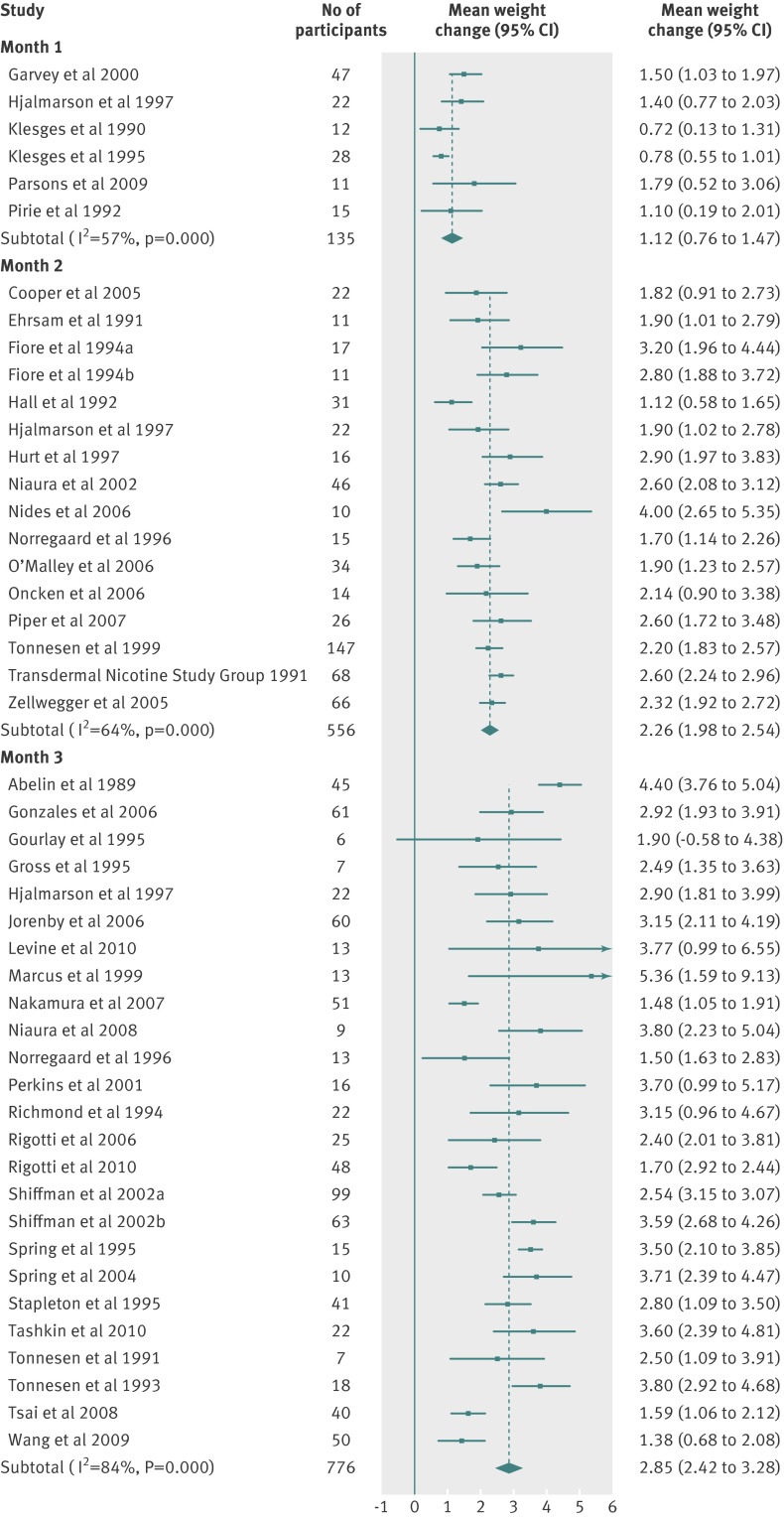
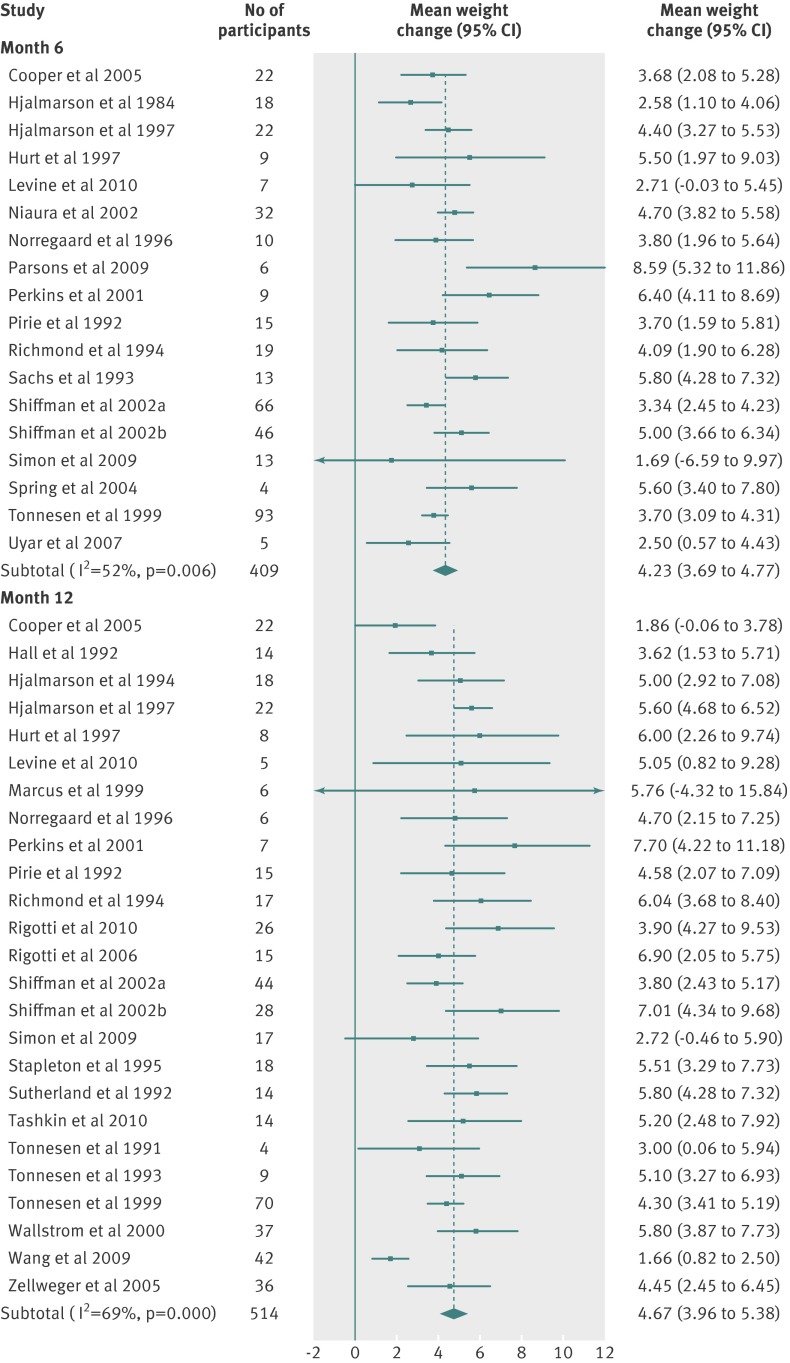
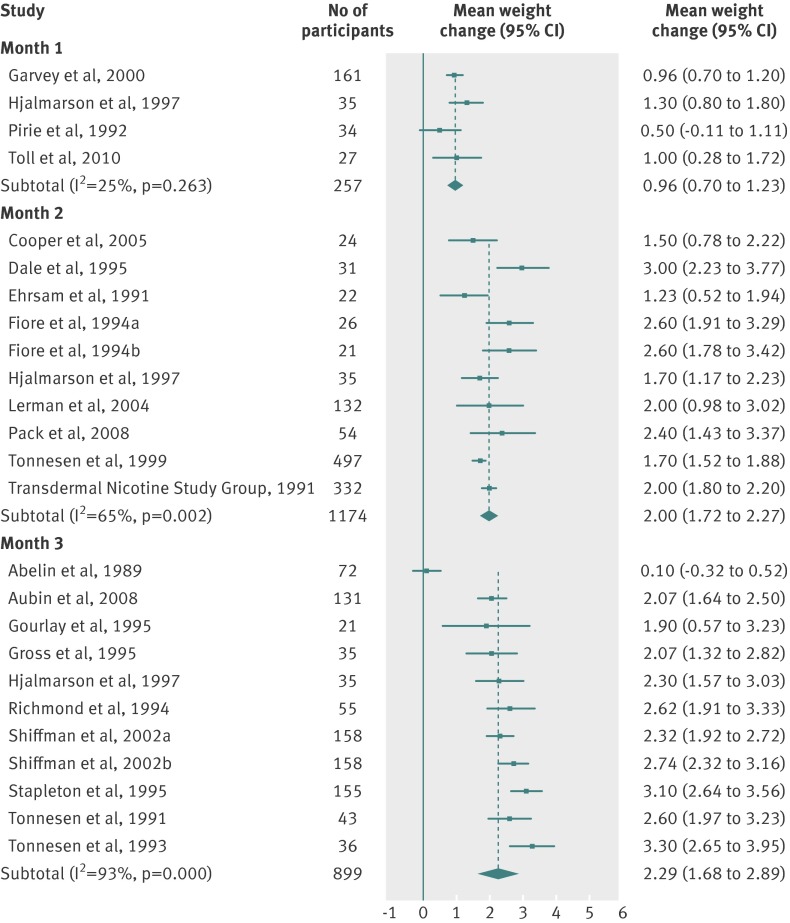
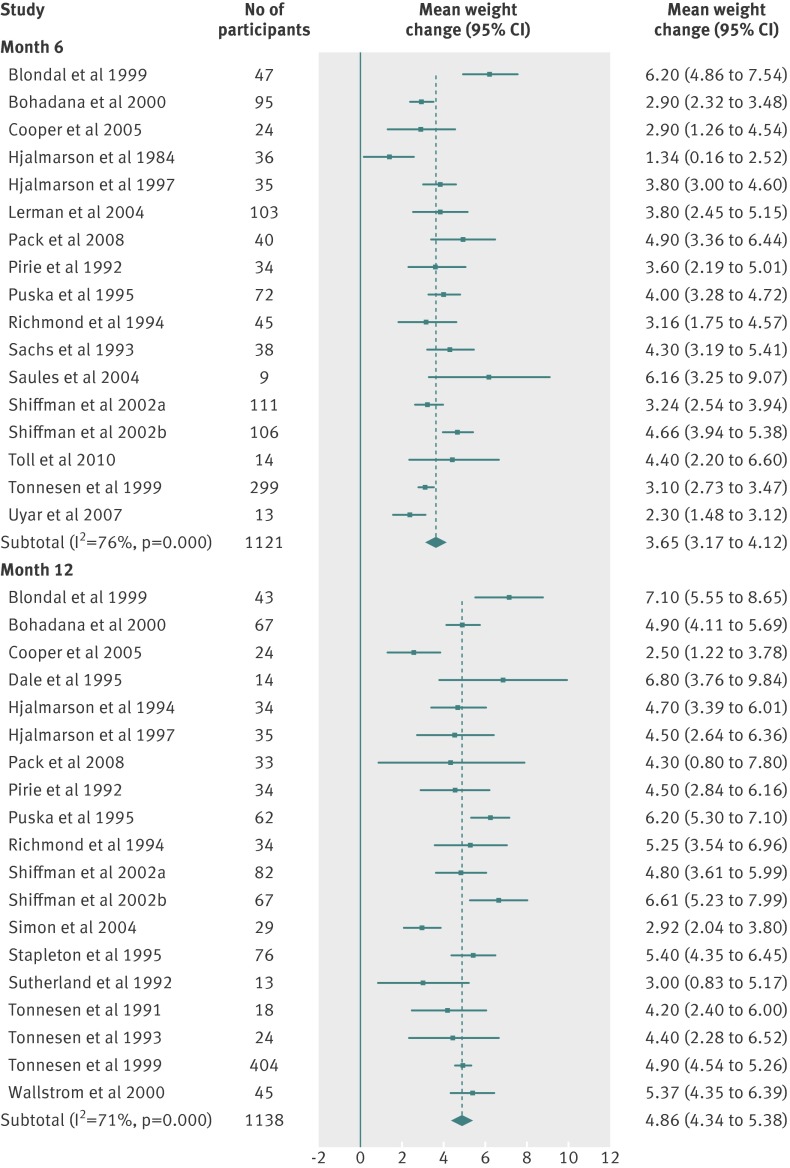
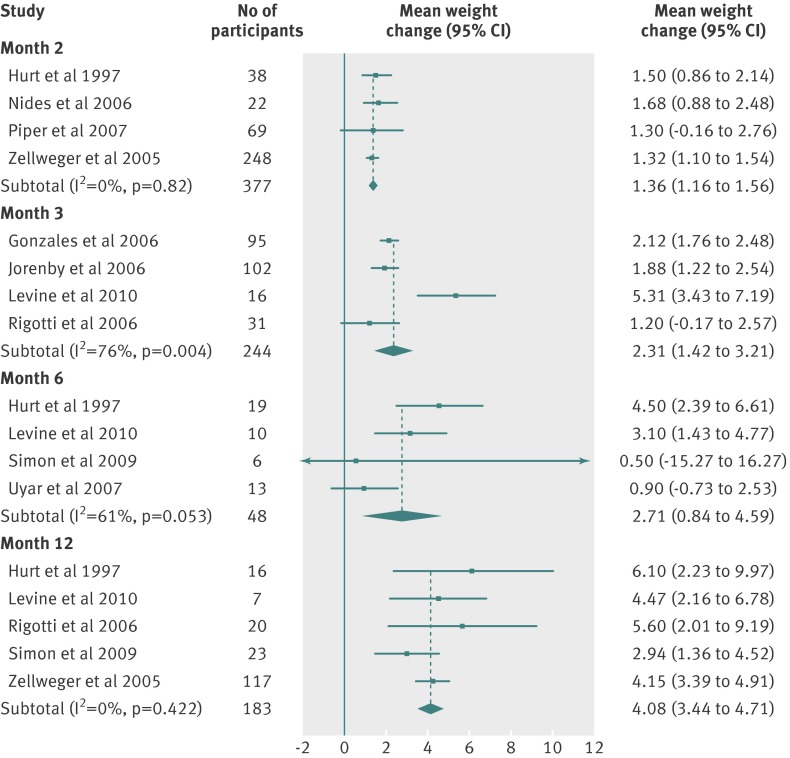
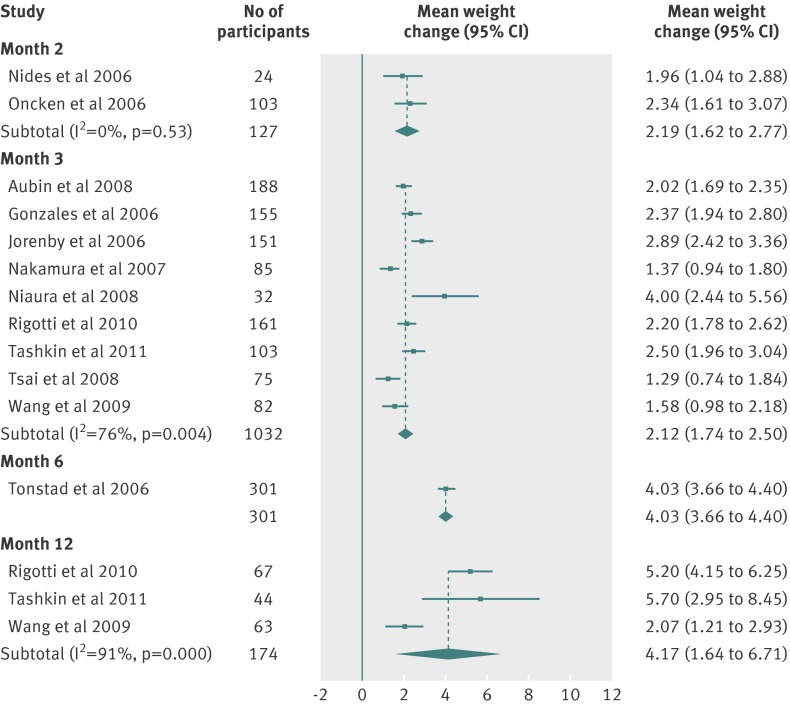
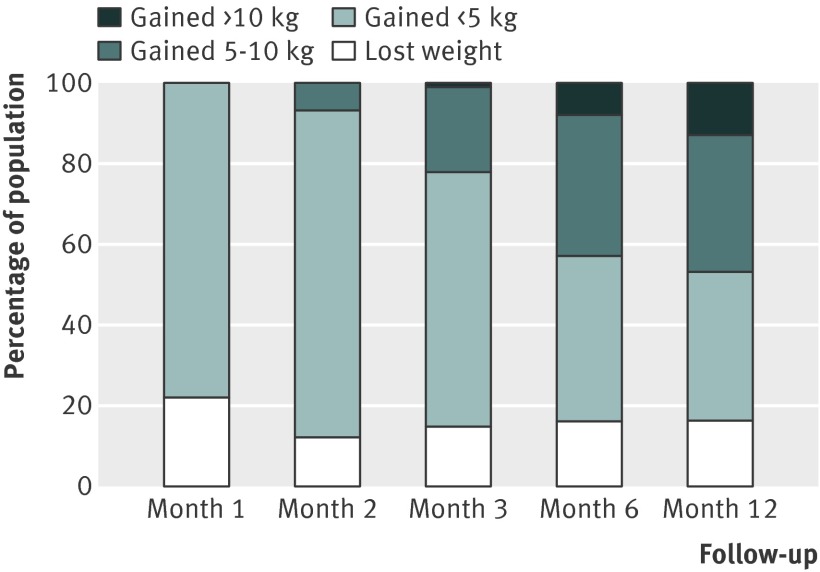
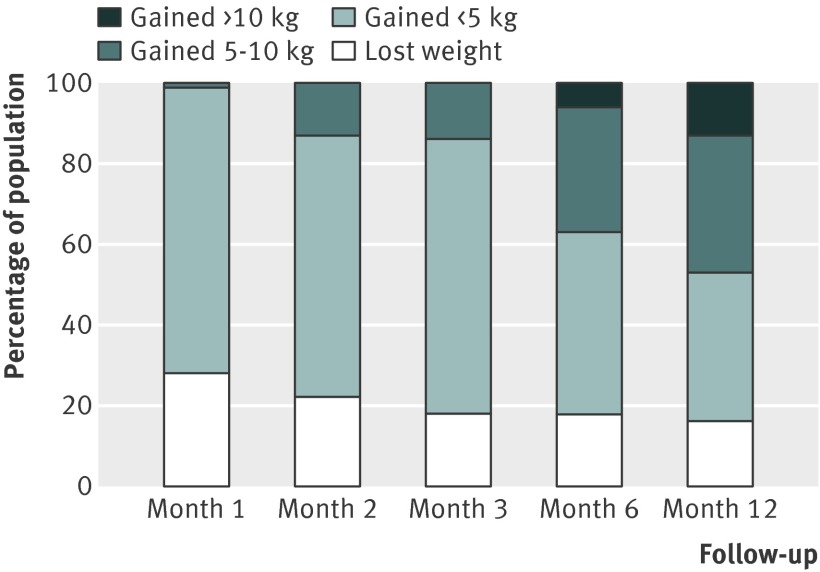
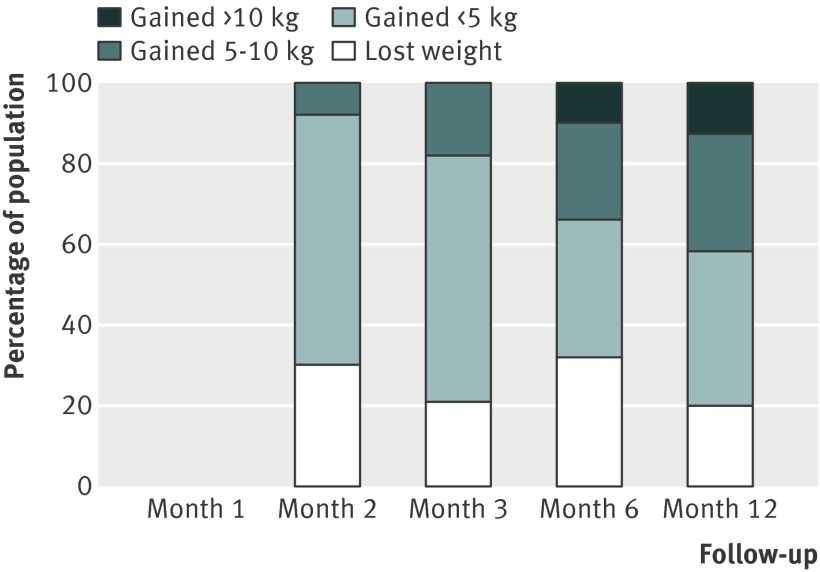
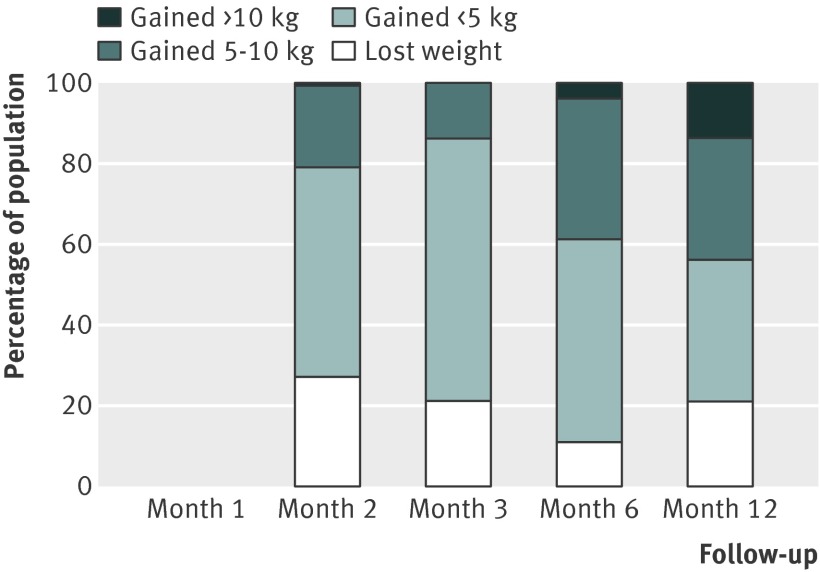
Results: 62 studies were included. In untreated quitters, mean weight gain was 1.12 kg (95% confidence interval 0.76 to 1.47), 2.26 kg (1.98 to 2.54), 2.85 kg (2.42 to 3.28), 4.23 kg (3.69 to 4.77), and 4.67 kg (3.96 to 5.38) at one, two, three, six, and 12 months after quitting, respectively. Using the means and weighted standard deviations, we calculated that at 12 months after cessation, 16%, 37%, 34%, and 13% of untreated quitters lost weight, and gained less than 5 kg, gained 5-10 kg, and gained more than 10 kg, respectively. Estimates of weight gain were similar for people using different pharmacotherapies to support cessation. Estimates were also similar between people especially concerned about weight gain and those not concerned.
Conclusion: Smoking cessation is associated with a mean increase of 4-5 kg in body weight after 12 months of abstinence, and most weight gain occurs within three months of quitting. Variation in weight change is large, with about 16% of quitters losing weight and 13% gaining more than 10 kg.
Conflict of interest statement
Competing interests: All authors have completed the Unified Competing Interest form at
Figures
Comment in
-
Quitting smoking and gaining weight: the odd couple.BMJ. 2012 Jul 10;345:e4544. doi: 10.1136/bmj.e4544. BMJ. 2012. PMID: 22782849 No abstract available.
References
-
- Klesges RC, Meyers AW, Klesges LM, La Vasque ME. Smoking, body weight, and their effects on smoking behavior: a comprehensive review of the literature. Psychol Bull 1989;106:204-30. - PubMed
-
- Fidler JA, West R, Van Jaarsveld CH, Jarvis MJ, Wardle J. Does smoking in adolescence affect body mass index, waist or height? Findings from a longitudinal study. Addiction 2007;102:1493-501. - PubMed
-
- Filozof C, Fernandez Pinilla MC, Fernandez-Cruz A. Smoking cessation and weight gain. Obes Rev 2004;5:95-103. - PubMed
-
- Froom P, Melamed S, Benbassat J. Smoking cessation and weight gain. J Fam Pract 1998;46:460-4. - PubMed
-
- Perkins KA. Weight gain following smoking cessation. J Consult Clin Psychol 1993;61:768-77. - PubMed
Publication types
MeSH terms
Grants and funding
LinkOut - more resources
Full Text Sources
Other Literature Sources
Medical