


Capacity for clinical research on herbal medicines in Africa
- PMID: 22784350
- PMCID: PMC3390968
- DOI: 10.1089/acm.2011.0963
Capacity for clinical research on herbal medicines in Africa
Abstract
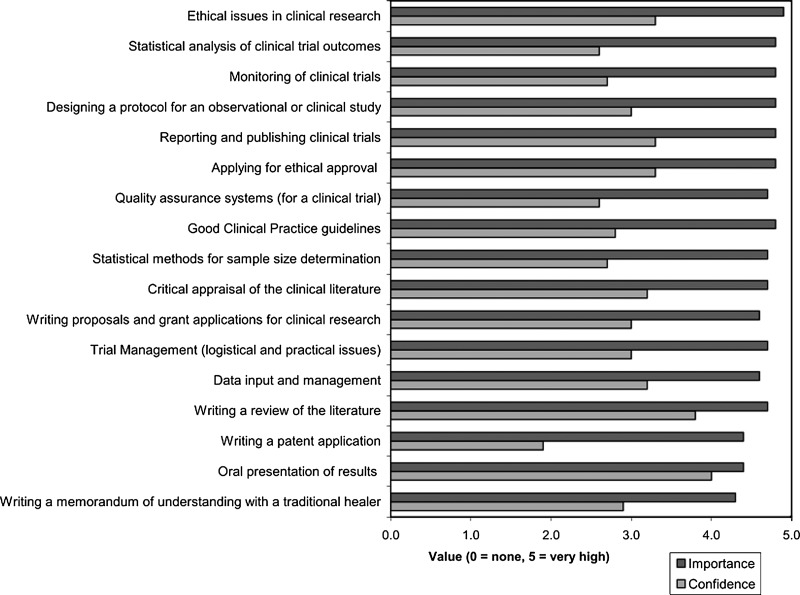
An electronic survey was used to assess the training needs of clinical and public health researchers who have been involved, and/or plan to become involved, in clinical trials of herbal medicines in Africa. Over 90 researchers were contacted through pre-existing networks, of whom 58 (64%) responded, from 35 institutions in 14 African countries. Over half (57%) had already been involved in a clinical trial of an herbal medicine, and gave information about a total of 23 trials that have already been completed. Of these, only five had been published, and only one had resulted in a licensed product. Fifty-four (54) of the researchers were planning to conduct a clinical trial of an herbal medicine in the future, and gave information about 54 possible trials. Respondents outlined the following most commonly encountered difficulties when conducting clinical trials: resource constraints (including lack of funding, equipment, staff, and infrastructure); social acceptance of the clinical trial (including difficulty recruiting enough patients, poor rapport with traditional healers, and willingness of biomedical staff to be involved); herbal medicine supply (including insufficient cultivation, production, and quality control); lack of trained staff; and logistical issues in conducting trials. The topics in which researchers were least confident were Intellectual Property Rights issues, statistical issues, and issues related to Good Clinical Practice guidelines.
Figures
References
-
- Handema R. Terunuma H. Kasolo F. A prospective study of Agaricus blazei mycelia compound administration in asymptomatic HIV-infected patients in Lusaka, Zambia. Med J Zambia. 2007;8:1–4.
-
- Wambebe C, et al. Double-blind, placebo-controlled, randomised cross-over clinical trial of niprisan in patients with sickle cell disorder. Phytomedicine. 2001;8:252–261. - PubMed
-
- Mesia K, et al. Assessment of the short-term safety and tolerability of a quantified 80% ethanol extract from the stem bark of Nauclea pobeguinii (PR 259 CT1) in healthy volunteers: A clinical phase I study. Planta Med. 2011;77:111–116. - PubMed
Publication types
MeSH terms
Substances
LinkOut - more resources
Full Text Sources
Medical
