


Patient-reported impact of symptoms in myotonic dystrophy type 1 (PRISM-1)
- PMID: 22786587
- PMCID: PMC3400095
- DOI: 10.1212/WNL.0b013e318260cbe6
Patient-reported impact of symptoms in myotonic dystrophy type 1 (PRISM-1)
Erratum in
- Neurology. 2012 Sep 25;79(13):1411
Abstract
Objective: To determine the most critical symptoms in a national myotonic dystrophy type 1 (DM1) population and to identify the modifying factors that have the greatest effect on the severity of these symptoms.
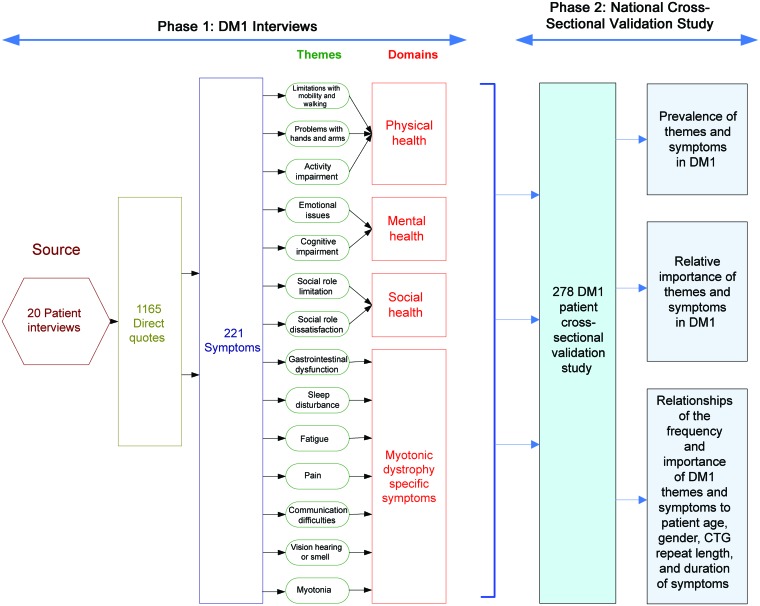
Methods: We performed a cross-sectional study of 278 adult patients with DM1 from the national registry of patients with DM1 between April and August 2010. We assessed the prevalence and relative significance of 221 critical DM1 symptoms and 14 disease themes. These symptoms and themes were chosen for evaluation based on prior interviews with patients with DM1. Responses were categorized by age, CTG repeat length, gender, and duration of symptoms.
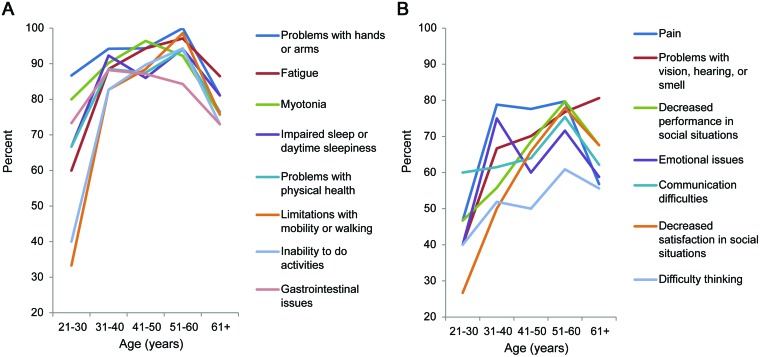
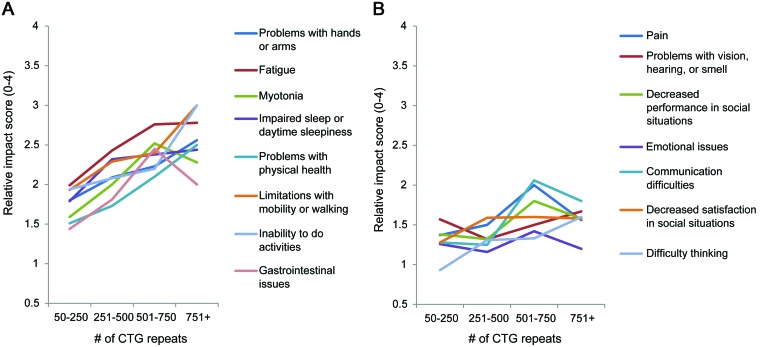
Results: Participants with DM1 provided symptom rating survey responses to address the relative frequency and importance of each DM1 symptom. The symptomatic themes with the highest prevalence in DM1 were problems with hands or arms (93.5%), fatigue (90.8%), myotonia (90.3%), and impaired sleep or daytime sleepiness (87.9%). Participants identified fatigue and limitations in mobility as the symptomatic themes that have the greatest effect on their lives. We found an association between age and the average prevalence of all themes (p < 0.01) and between CTG repeat length and the average effect of all symptomatic themes on participant lives (p < 0.01).
Conclusions: There are a wide range of symptoms that significantly affect the lives of patients with DM1. These symptoms, some previously underrecognized, have varying levels of importance in the DM1 population and are nonlinearly dependent on patient age and CTG repeat length.
Figures
References
-
- Fu YH, Pizzuti A, Fenwick R, Jr, et al. An unstable triplet repeat in a gene related to myotonic muscular dystrophy. Science 1992;255:1256–1258 - PubMed
-
- Mahadevan M, Tsilfidis C, Sabourin L, et al. Myotonic dystrophy mutation: an unstable CTG repeat in the 3′ untranslated region of the gene. Science 1992;255:1253–1255 - PubMed
-
- Brook JD, McCurrach ME, Harley HG, et al. Molecular basis of myotonic dystrophy: expansion of a trinucleotide (CTG) repeat at the 3′ end of a transcript encoding a protein kinase family member. Cell 1992;68:799–808 - PubMed
-
- Harper P. Myotonic Dystrophy. Philadelphia: WB Saunders; 2001
-
- Heatwole CR, Miller J, Martens B, Moxley RT., 3rd. Laboratory abnormalities in ambulatory patients with myotonic dystrophy type 1. Arch Neurol 2006;63:1149–1153 - PubMed
Publication types
MeSH terms
Grants and funding
LinkOut - more resources
Full Text Sources
Other Literature Sources
Medical
Miscellaneous
