


Community strategies that improve care and retention along the prevention of mother-to-child transmission of HIV cascade: a review
- PMID: 22789647
- PMCID: PMC3499877
- DOI: 10.7448/IAS.15.4.17394
Community strategies that improve care and retention along the prevention of mother-to-child transmission of HIV cascade: a review
Abstract
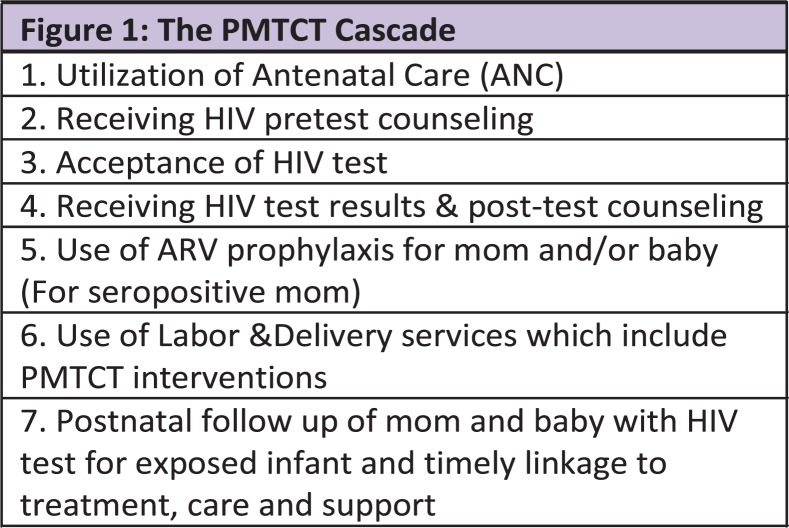
Introduction: While biomedical innovations have made it possible to prevent the vertical transmission of HIV from mother to child, poor retention along the prevention of mother-to-child transmission (PMTCT) cascade continues to limit the impact of programmes, especially in low-resourced settings. In many of the regions with the highest burden of HIV and the greatest number of new paediatric cases, the uptake of facility-based care by pregnant women remains low. In such settings, the continuum of care for pregnant women and other women of reproductive age necessarily relies on the community. There is no recent review capturing effective, promising practices that are community-based and/or employ community-oriented groups to improve outcomes for the prevention of vertical transmission. This review summarizes those studies demonstrating that community-based and community-oriented interventions significantly influence retention and related outcomes along the PMTCT cascade.
Methods: Literature on retention within prevention of vertical transmission programmes available on PubMed, Psych Info and MEDLINE was searched and manuscripts reporting on key prevention of vertical transmission outcomes were identified. Short-listed studies that captured significant PMTCT outcome improvements resulting from community-based interventions or facility-based employment of community cohorts (e.g. lay counsellors, community volunteers, etc.) were selected for review.
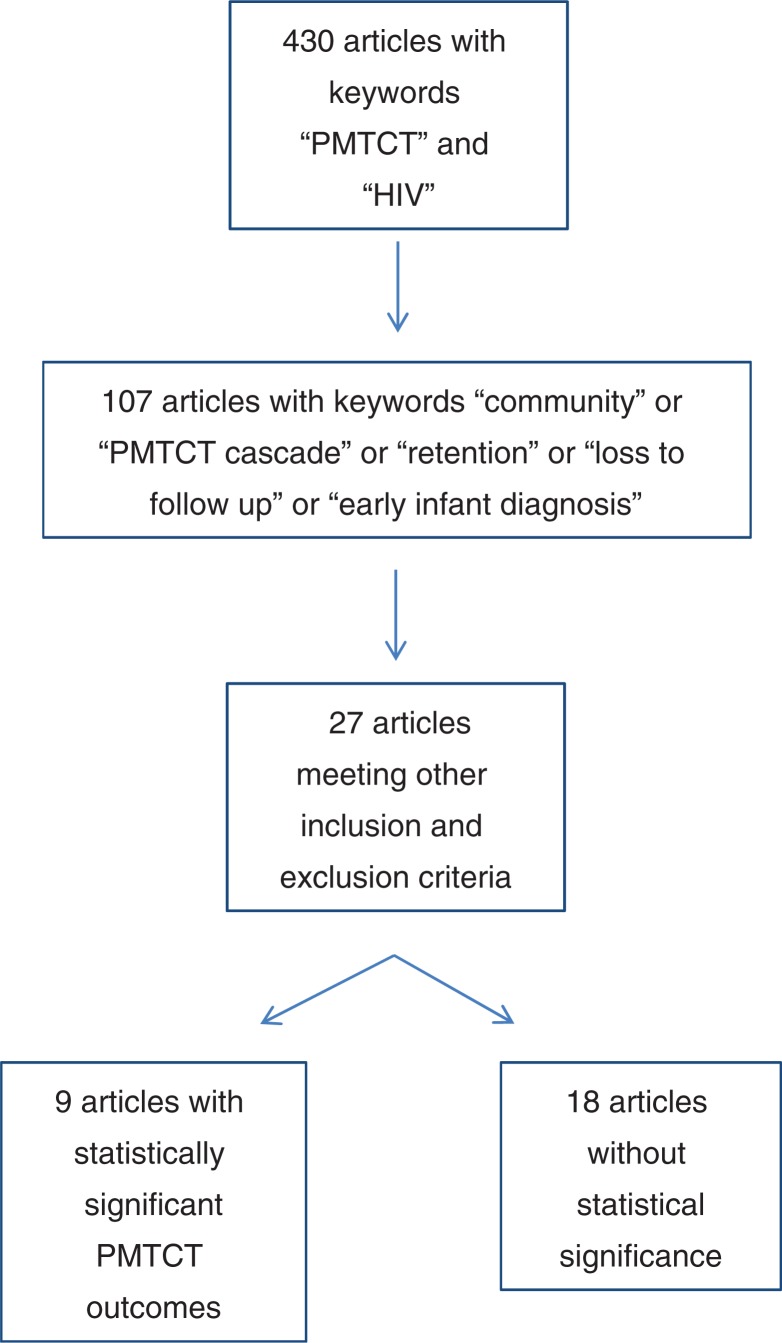
Results: The initial search (using terms "HIV" and "PMTCT") yielded 430 articles. These results were further narrowed using terminology relevant to community prevention of vertical transmission strategies addressing retention: "community," "PMTCT cascade," "retention," "loss to follow up" and "early infant diagnosis." Nine of these reported statistically significant improvements in key prevention of vertical transmission outcomes while meeting other review criteria. Short-listed articles reflect diverse study designs and a variety of effective interventions. Two interventions occurred exclusively in the community and four effectively employed community groups within facilities. The remaining three integrated community- and facility-based components. The outcomes of the included studies focus on knowledge (n=3) and retention along the PMTCT cascade (n=6).
Conclusions: This review captures an array of promising community-based and community-oriented interventions that demonstratively improve key prevention of vertical transmission outcomes. Though the strategies captured here show that such interventions work, the limited number of rigorous studies identified make it clear that expansion of community approaches and complementary reporting and related research are sorely needed.
Figures
References
-
- UNAIDS. Geneva: UNAIDS; 2010. Report on the Global AIDS Epidemic 2010.
-
- Mofensen L. Prevention in neglected subpopulations: prevention of mother-to-child transmission of HIV infection. Clin Infect Dis. 2010;50(3):S130–48. - PubMed
-
- UNICEF. New York: UNICEF; 2010. Preventing Mother-to-Child Transmission (PMTCT) of HIV factsheets on the status of national PMTCT responses in the most affected countries.
-
- Towle M, Lende DH. Community approaches to preventing mother-to-child HIV transmission: perspectives from rural Lesotho. Afr J AIDS Res. 2008;7(2):219–28. - PubMed
-
- Theuring S, Mbezi P, Luvanda H, Jordan-Harder B, Kunz A, Harms G. Male involvement in PMTCT services in Mbeya region, Tanzania. AIDS Behav. 2009;13:S92–102. - PubMed
Publication types
MeSH terms
LinkOut - more resources
Full Text Sources
Medical
