


Piezo1: properties of a cation selective mechanical channel
- PMID: 22790400
- PMCID: PMC3508900
- DOI: 10.4161/chan.21050
Piezo1: properties of a cation selective mechanical channel
Abstract
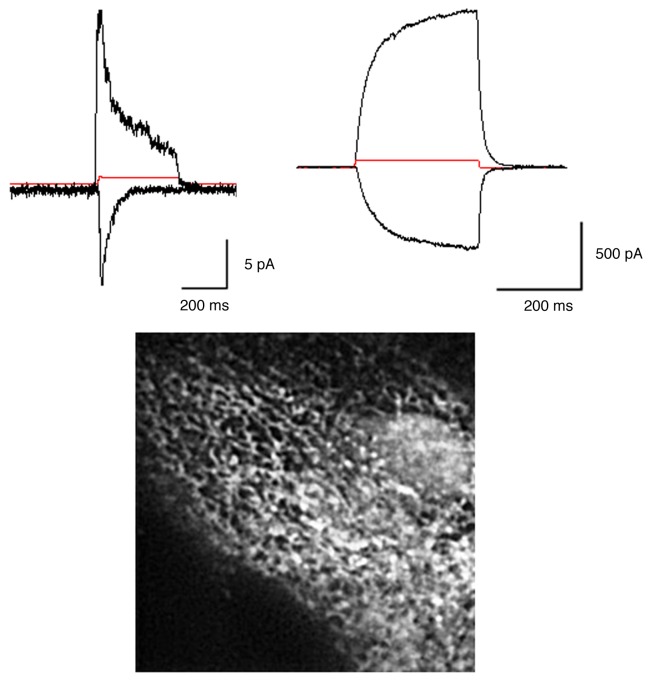
Piezo ion channels have been found to be essential for mechanical responses in cells. These channels were first shown to exist in Neuro2A cells, and the gene was identified by siRNAs that diminished the mechanical response. Piezo channels are approximately 2500 amino acids long, have between 24-32 transmembrane regions, and appear to assemble into tetramers and require no other proteins for activity. They have a reversal potential around 0 mV and show voltage dependent inactivation. The channel is constitutively active in liposomes, indicating that no cytoskeletal elements are required. Heterologous expression of the Piezo protein can create mechanical sensitivity in otherwise insensitive cells. Piezo1 currents in outside-out patches were blocked by the extracellular MSC inhibitor peptide GsMTx4. Both enantiomeric forms of GsMTx4 inhibited channel activity in a manner similar to endogenous mechanical channels. Piezo1 can adopt a tonic (non-inactivating) form with repeated stimulation. The transition to the non-inactivating form generally occurs in large groups of channels, indicating that the channels exist in domains, and once the domain is compromised, the members simultaneously adopt new properties. Piezo proteins are associated with physiological responses in cells, such as the reaction to noxious stimulus of Drosophila larvae. Recent work measuring cell crowding, shows that Piezo1 is essential for the removal of extra cells without apoptosis. Piezo1 mutations have also been linked to the pathological response of red blood cells in a genetic disease called Xerocytosis. These finding suggest that Piezo1 is a key player in cells' responses to mechanical stimuli.
Figures
References
Publication types
MeSH terms
Substances
Supplementary concepts
LinkOut - more resources
Full Text Sources
Other Literature Sources
Molecular Biology Databases
