


Chronic Care Model Decision Support and Clinical Information Systems interventions for people living with HIV: a systematic review
- PMID: 22790615
- PMCID: PMC3539016
- DOI: 10.1007/s11606-012-2145-y
Chronic Care Model Decision Support and Clinical Information Systems interventions for people living with HIV: a systematic review
Abstract
Background: The Chronic Care Model is an effective framework for improving chronic disease management. There is scarce literature describing this model for people living with HIV. Decision Support (DS) and Clinical Information Systems (CIS) are two components of this model that aim to improve care by changing health care provider behavior.
Objective: Our aim was to assess the effectiveness of DS and CIS interventions for individuals with HIV, through a systematic literature review.
Design: We performed systematic electronic searches from 1996 to February 2011 of the medical (E.g. Medline, EMBASE, CINAHL) and grey literature. Effectiveness was measured by the frequency of statistically significant outcome improvement. Data and key equity indicator extraction and synthesis was completed.
Participants and interventions: We included comparative studies of people living with HIV that examined the impact of DS or CIS interventions on outcomes.
Main measures: The following measures were assessed: outcome (immunological/virological, medical, psychosocial, economic measures) and health care process/performance measures.
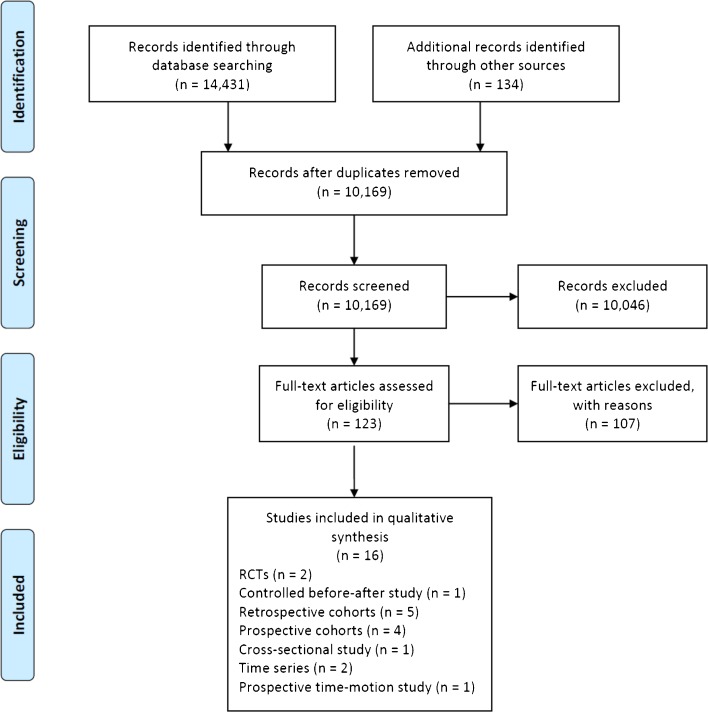
Key results: Records were screened for relevance (n = 10,169), full-text copies of relevant studies were obtained (n = 123), and 16 studies were included in the review. Overall, 5/9 (55.6%) and 17/41 (41.5%) process measures and 5/12 (41.7%) and 3/9 (33.3%) outcome measures for DS and CIS interventions, respectively, were statistically significantly improved. DS-explicit mention of implementation of guidelines and CIS-reminders showed the most frequent improvement in outcomes. DS-only interventions were more effective than CIS-only interventions in improving both process and outcome measures. Clinical, statistical and methodological heterogeneity among studies precluded meta-analysis. Primary studies were methodologically weak and often included multifaceted interventions that made assessment of effectiveness challenging.
Conclusions: Overall, DS and CIS interventions may modestly improve care for people living with HIV, having a greater impact on process measures compared to outcome measures. These interventions should be considered as part of strategies to improve HIV care through changing provider performance.
Conflict of interest statement
The authors declare that they have no conflicts.
References
-
- Unaids. Report on the Global AIDS Epidemic2008 Contract No.: Report.
-
- Sackoff JE, Hanna DB, Pfeiffer MR, Torian LV. Causes of death among persons with AIDS in the era of highly active antiretroviral therapy: New York City. Ann Intern Med. 2006;145(6):397–406. - PubMed
-
- Aberg JA, Kaplan JE, Libman H, Emmanuel P, Anderson JR, Stone VE, et al. Primary care guidelines for the management of persons infected with human immunodeficiency virus: 2009 update by the HIV medicine Association of the Infectious Diseases Society of America. Clinical Infectious Diseases: An Official Publication of the Infectious Diseases Society of America. 2009;49(5):651–681. doi: 10.1086/605292. - DOI - PubMed
Publication types
MeSH terms
Grants and funding
LinkOut - more resources
Full Text Sources
Medical
