


Obesity, diabetes, and exercise associated with sleep-related complaints in the American population
- PMID: 22791935
- PMCID: PMC3392306
- DOI: 10.1007/s10389-011-0398-2
Obesity, diabetes, and exercise associated with sleep-related complaints in the American population
Abstract
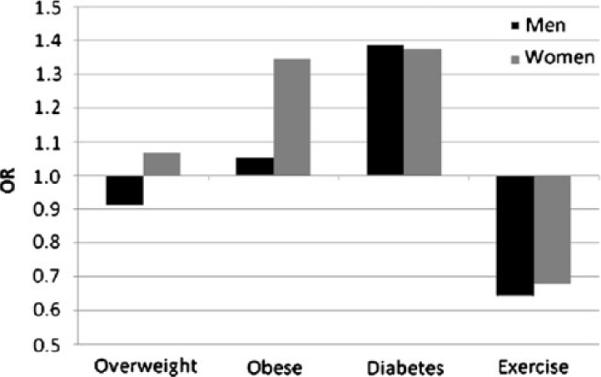
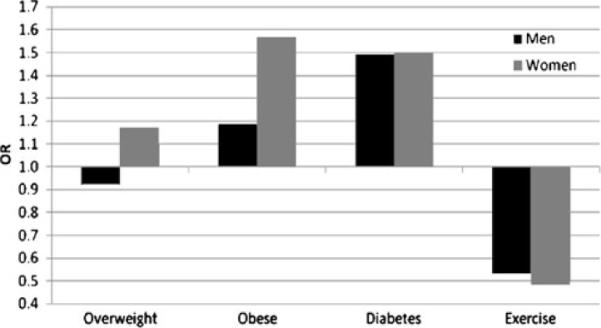
AIM: Previous studies have demonstrated relationships between sleep and both obesity and diabetes. Additionally, exercise may improve sleep and daytime function, in addition to weight and metabolic function. The present study extends these findings by examining how general sleep-related complaints are associated with body mass index (BMI), diabetes diagnosis, and exercise in a large, nationally representative sample. SUBJECT AND METHODS: Participants were respondents to the Behavioral Risk Factor Surveillance System (BRFSS). Sleep complaint (SC) was measured with "Over the last 2 weeks, how many days have you had trouble falling asleep or staying asleep or sleeping too much?" Daytime complaint (DC) was measured with "Over the last 2 weeks, how many days have you felt tired or had little energy?" Responses were dichotomized, with ≥6 days indicating complaint. Covariates included age, race/ethnicity, income, and education. RESULTS: Being overweight was associated with DC in women only. Obesity was significantly associated with SC and DC in women, and DC in men. Diabetes was associated with SC and DC in both genders. Any exercise in the past 30 days did not attenuate any BMI or diabetes relationships, but was independently associated with a decrease in SC and DC in both men and women. CONCLUSION: These results suggest that for both men and women diabetes is a significant predictor of sleep and daytime complaints, and there is a relationship between obesity and sleep and complaints for women to a greater extent than men. Finally, exercise was associated with much fewer sleep and daytime complaints in both genders.
Figures
References
-
- American Academy of Sleep Medicine. Winkelman JW, Kotagal S, Olson CM, Scammell T, Schenck C, Spielman A. The International Classification of Sleep Disorders. 2nd edn. American Academy of Sleep Medicine; Westchester: 2006.
-
- Barone MT, Menna-Barreto L. Diabetes and sleep: a complex cause-and-effect relationship. Diabetes Res Clin Pract. 2010 - PubMed
-
- Beihl DA, Liese AD, Haffner SM. Sleep duration as a risk factor for incident type 2 diabetes in a multiethnic cohort. Ann Epidemiol. 2009;19(5):351–357. - PubMed
Grants and funding
LinkOut - more resources
Full Text Sources
Miscellaneous