


Calcofluor white combination antifungal treatments for Trichophyton rubrum and Candida albicans
- PMID: 22792174
- PMCID: PMC3391284
- DOI: 10.1371/journal.pone.0039405
Calcofluor white combination antifungal treatments for Trichophyton rubrum and Candida albicans
Abstract
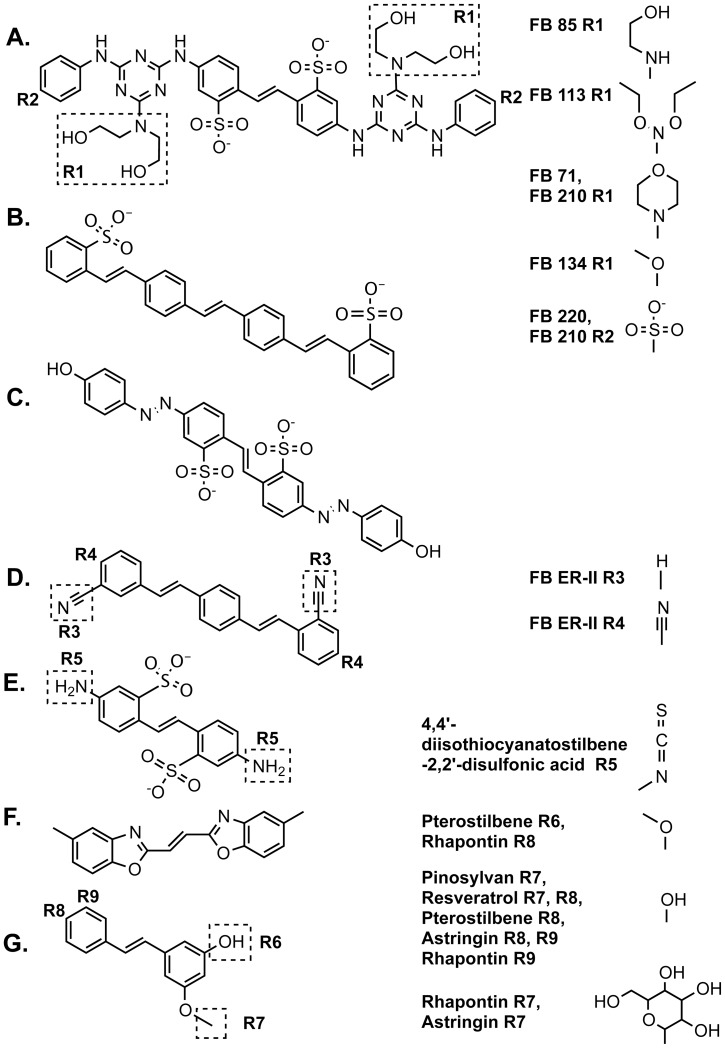
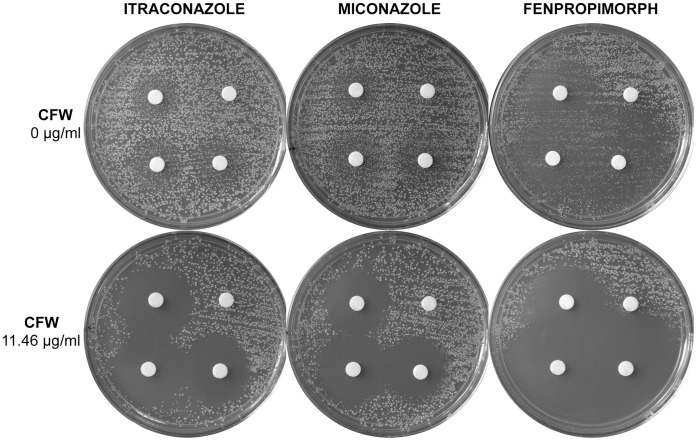
Superficial mycoses caused by dermatophyte fungi are among the most common infections worldwide, yet treatment is restricted by limited effective drugs available, drug toxicity, and emergence of drug resistance. The stilbene fluorescent brightener calcofluor white (CFW) inhibits fungi by binding chitin in the cell wall, disrupting cell wall integrity, and thus entails a different mechanism of inhibition than currently available antifungal drugs. To identify novel therapeutic options for the treatment of skin infections, we compared the sensitivity of representative strains of the dermatophyte Trichophyton rubrum and Candida albicans to CFW and a panel of fluorescent brighteners and phytoalexin compounds. We identified the structurally related stilbene fluorescent brighteners 71, 85, 113 and 134 as fungicidal to both T. rubrum and C. albicans to a similar degree as CFW, and the stilbene phytoalexins pinosylvan monomethyl ether and pterostilbene inhibited to a lesser degree, allowing us to develop a structure-activity relationship for fungal inhibition. Given the abilities of CFW to absorb UV(365 nm) and bind specifically to fungal cell walls, we tested whether CFW combined with UV(365 nm) irradiation would be synergistic to fungi and provide a novel photodynamic treatment option. However, while both treatments individually were cytocidal, UV(365 nm) irradiation reduced sensitivity to CFW, which we attribute to CFW photoinactivation. We also tested combination treatments of CFW with other fungal inhibitors and identified synergistic interactions between CFW and some ergosterol biosynthesis inhibitors in C. albicans. Therefore, our studies identify novel fungal inhibitors and drug interactions, offering promise for combination topical treatment regimes for superficial mycoses.
Conflict of interest statement
Figures
References
-
- Aly R. Ecology and epidemiology of dermatophyte infections. J Am Acad Dermatol. 1994;31:S21–25. - PubMed
-
- Djeridane A, Djeridane Y, Ammar-Khodja A. Epidemiological and aetiological study on tinea pedis and onychomycosis in Algeria. Mycoses. 2006;49:190–196. - PubMed
-
- Welsh O, Vera-Cabrera L, Welsh E. Onychomycosis. Clin Dermatol. 2010;28:151–159. - PubMed
-
- Haneke E, Roseeuw D. The scope of onychomycosis: epidemiology and clinical features. Int J Dermatol. 1999;38:7–12. - PubMed
-
- Gupta AK, Scher RK. Oral antifungal agents for onychomycosis. Lancet. 1998;351:541–542. - PubMed
Publication types
MeSH terms
Substances
Grants and funding
LinkOut - more resources
Full Text Sources
Other Literature Sources
