. 2012;7(7):e40370.
doi: 10.1371/journal.pone.0040370. Epub 2012 Jul 9.

Clustering of resting state networks

Affiliations

Clustering of resting state networks

Megan H Lee et al. PLoS One. 2012.

Abstract

Background: The goal of the study was to demonstrate a hierarchical structure of resting state activity in the healthy brain using a data-driven clustering algorithm.

Methodology/principal findings: The fuzzy-c-means clustering algorithm was applied to resting state fMRI data in cortical and subcortical gray matter from two groups acquired separately, one of 17 healthy individuals and the second of 21 healthy individuals. Different numbers of clusters and different starting conditions were used. A cluster dispersion measure determined the optimal numbers of clusters. An inner product metric provided a measure of similarity between different clusters. The two cluster result found the task-negative and task-positive systems. The cluster dispersion measure was minimized with seven and eleven clusters. Each of the clusters in the seven and eleven cluster result was associated with either the task-negative or task-positive system. Applying the algorithm to find seven clusters recovered previously described resting state networks, including the default mode network, frontoparietal control network, ventral and dorsal attention networks, somatomotor, visual, and language networks. The language and ventral attention networks had significant subcortical involvement. This parcellation was consistently found in a large majority of algorithm runs under different conditions and was robust to different methods of initialization.

Conclusions/significance: The clustering of resting state activity using different optimal numbers of clusters identified resting state networks comparable to previously obtained results. This work reinforces the observation that resting state networks are hierarchically organized.


Conflict of interest statement

Competing Interests: The authors have declared that no competing interests exist.

Figures

Figure 1
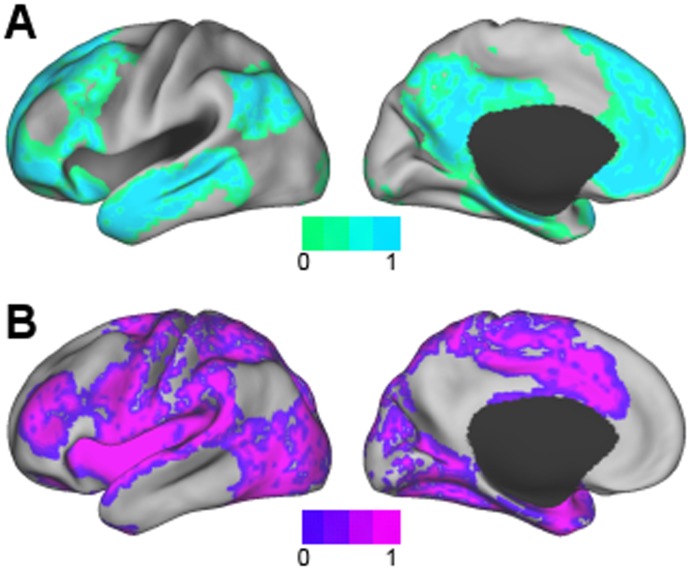
Figure 1. The two cluster result found the A) task-negative and B) task-positive systems.
Figure 2
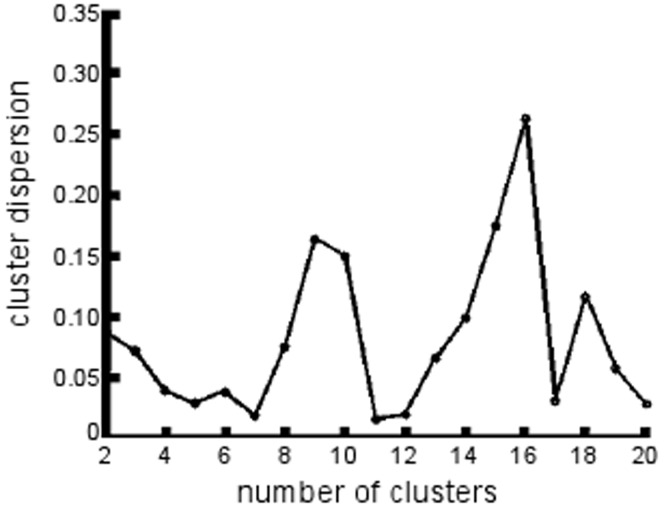
Figure 2. The cluster dispersion metric (Equation 4) for different numbers of clusters.
Cluster dispersion was minimized for seven, eleven, and seventeen clusters.
Figure 3
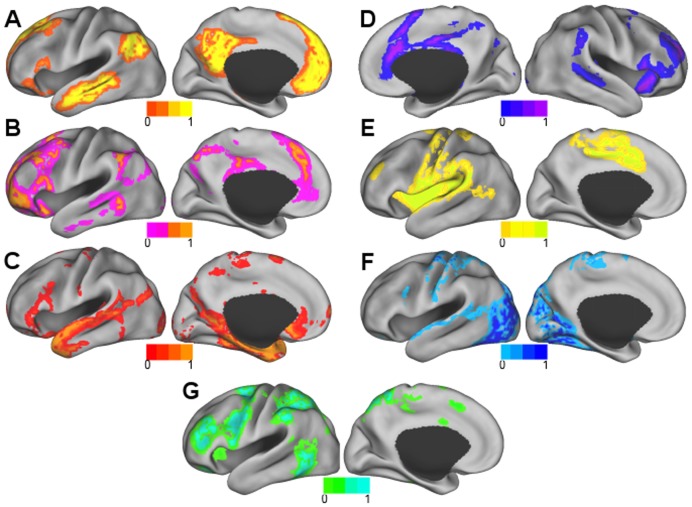
Figure 3. The seven cluster result.
A) DMN, B) FPC network, C) LAN network, D) VAN, E) SMN, F) VIS network, and G) DAN. The right hemisphere is displayed for the VAN because it was right lateralized.
Figure 4
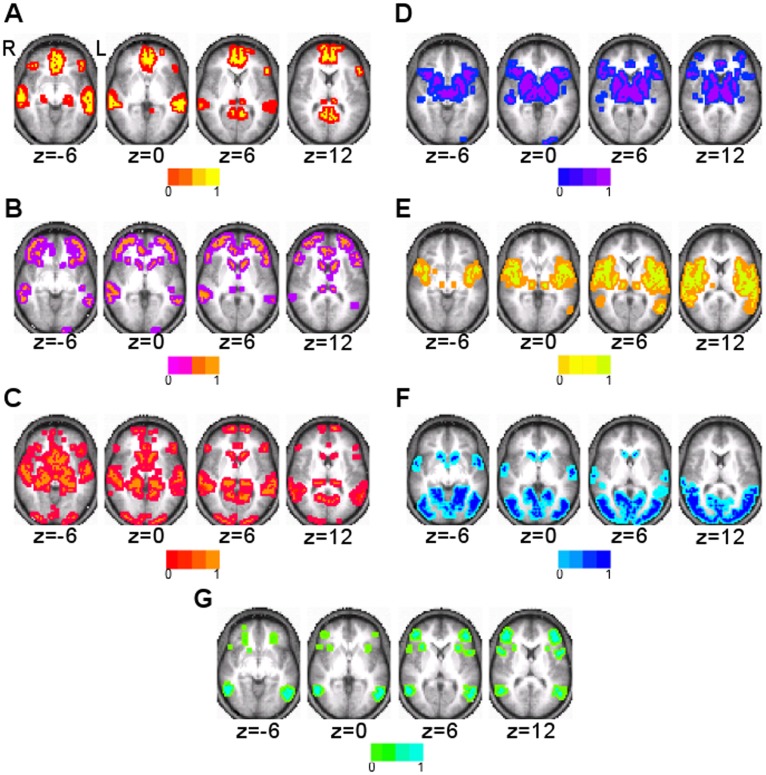
Figure 4. Subcortical involvement of the seven cluster result.
Axial slices are shown in radiologic convention. A) DMN, B) FPC network, C) LAN network, D) VAN, E) SMN, F) VIS network, and G) DAN.
Figure 5
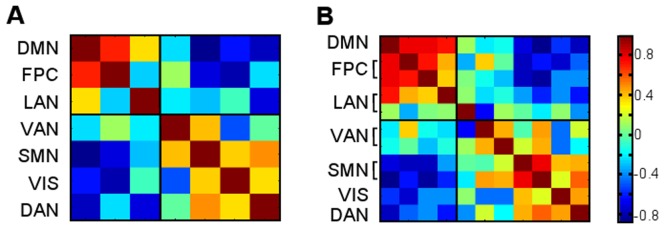
Figure 5. Temporal inner products (Equation 6) between centroids from the A) seven cluster result and B) eleven cluster result.
Figure 6
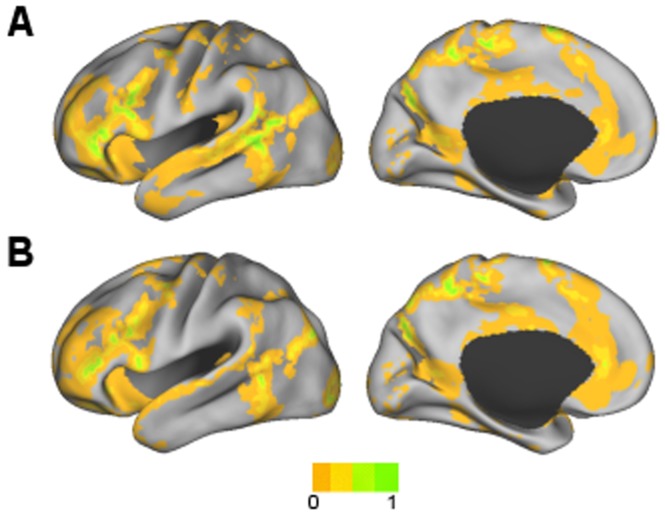
Figure 6. The degree of uncertainty (Equation 7) as shown by the geometric mean of weights for each voxel in the A) seven cluster result and B) eleven cluster result.
Figure 7
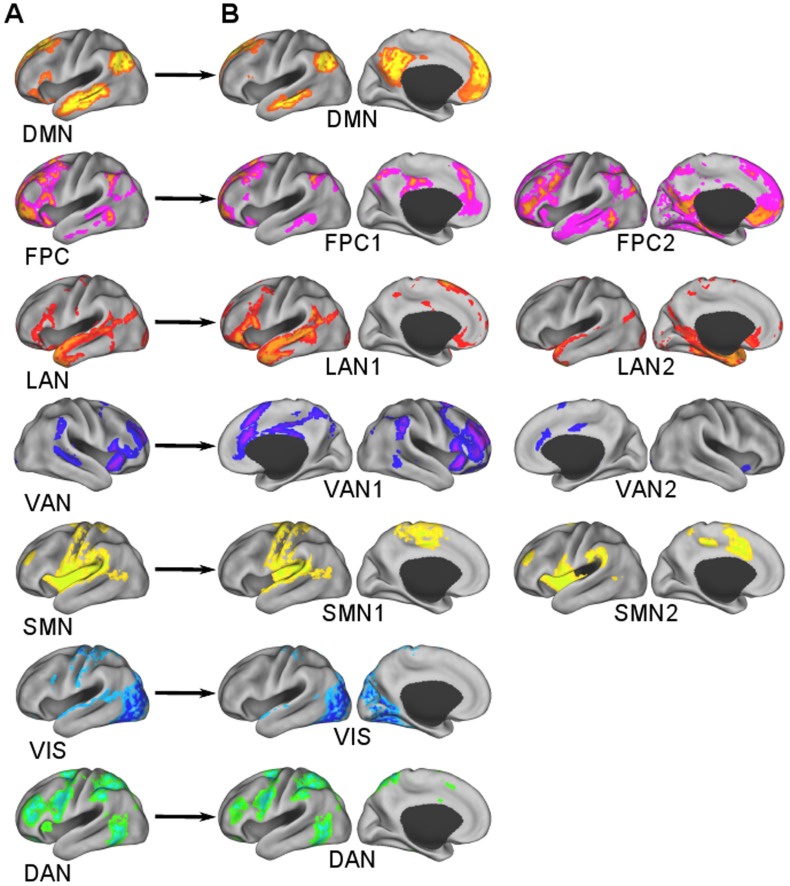
Figure 7. Some RSNs from the A) seven cluster result were subdivided in the B) eleven cluster result.
The right hemisphere is displayed for the VAN and its subdivisions because they were right lateralized.
Figure 8
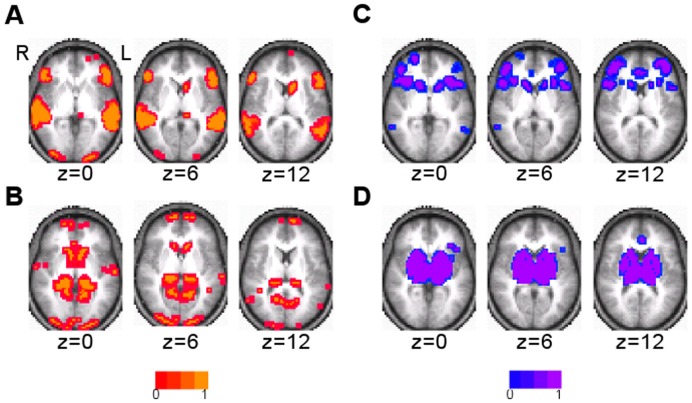
Figure 8. In the eleven cluster solution, the LAN network and VAN were divided into approximately cortical and subcortical clusters.
Axial slices are shown in radiological convention of A) LAN1, B) LAN2, C) VAN1, D) VAN2.
Figure 9
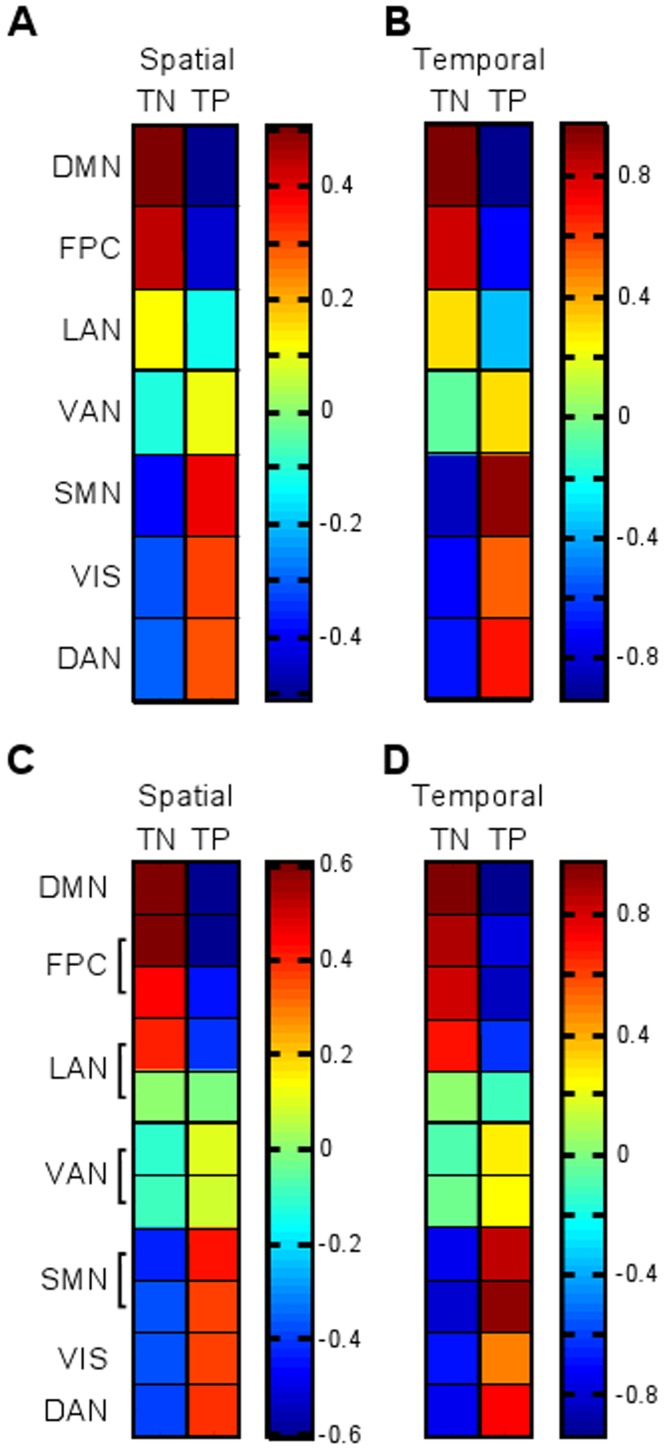
Figure 9. The relationships between the seven and eleven cluster results and the task-negative (TN) and task-positive (TP) systems from the two cluster result.
The A) spatial (Equation 5) and B) temporal (Equation 6) inner products between the two cluster and seven cluster results. The C) spatial (Equation 5) and D) temporal (Equation 6) inner products between the two cluster and eleven cluster results.

References

    1. Biswal B, Yetkin FZ, Haughton VM, Hyde JS. Functional connectivity in the motor cortex of resting human brain using echo-planar MRI. Magn Reson Med. 1995;34:537–541. - PubMed
    1. Raichle ME, MacLeod AM, Snyder AZ, Powers WJ, Gusnard DA, et al. A default mode of brain function. Proc Natl Acad Sci U S A. 2001;98:676–682. - PMC - PubMed
    1. Greicius MD, Krasnow B, Reiss AL, Menon V. Functional connectivity in the resting brain: a network analysis of the default mode hypothesis. Proc Natl Acad Sci U S A. 2003;100:253–258. - PMC - PubMed
    1. Beckmann CF, DeLuca M, Devlin JT, Smith SM. Investigations into resting-state connectivity using independent component analysis. Philos Trans R Soc Lond B Biol Sci. 2005;360:1001–1013. - PMC - PubMed
    1. Damoiseaux JS, Rombouts SA, Barkhof F, Scheltens P, Stam CJ, et al. Consistent resting-state networks across healthy subjects. Proc Natl Acad Sci U S A. 2006;103:13848–13853. - PMC - PubMed

Publication types