


Resistance to paclitaxel in a cisplatin-resistant ovarian cancer cell line is mediated by P-glycoprotein
- PMID: 22792399
- PMCID: PMC3394717
- DOI: 10.1371/journal.pone.0040717
Resistance to paclitaxel in a cisplatin-resistant ovarian cancer cell line is mediated by P-glycoprotein
Abstract
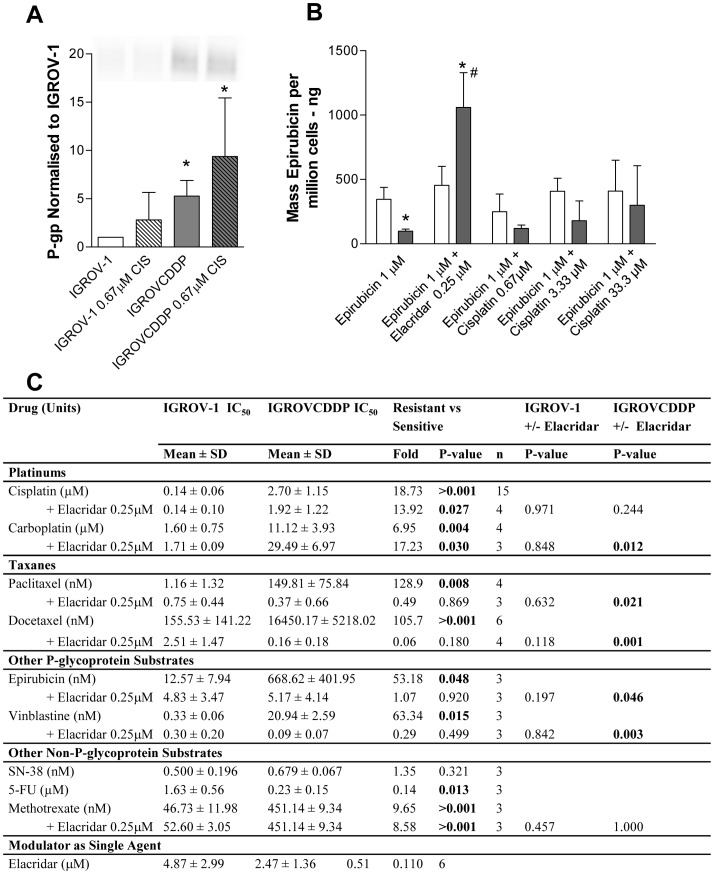
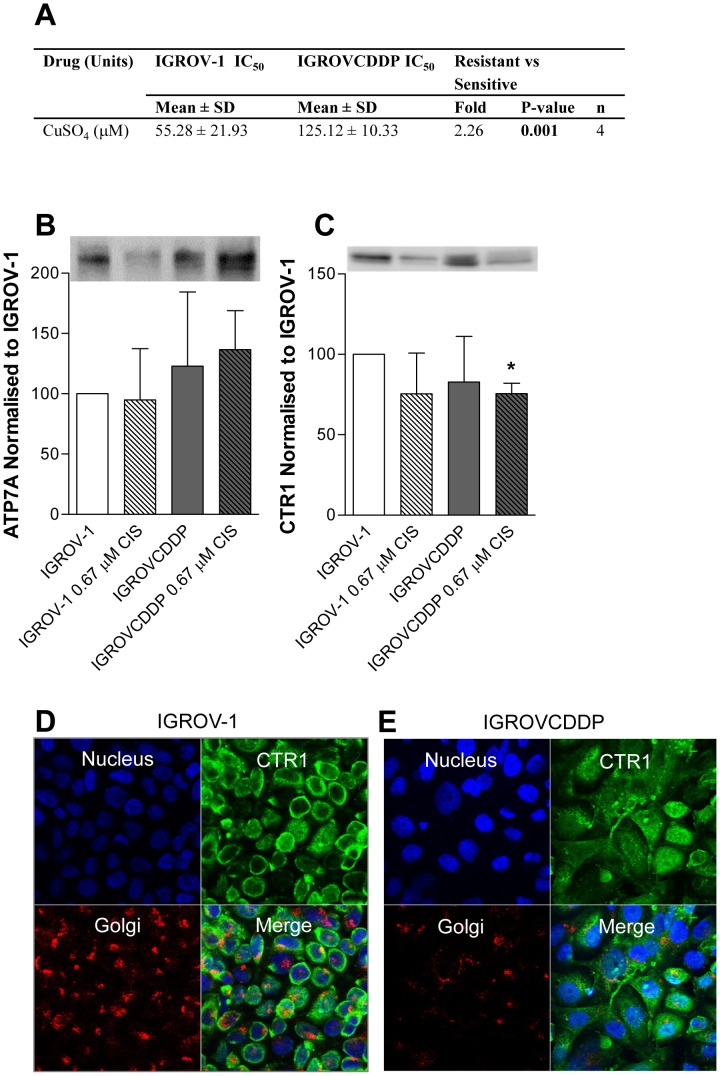
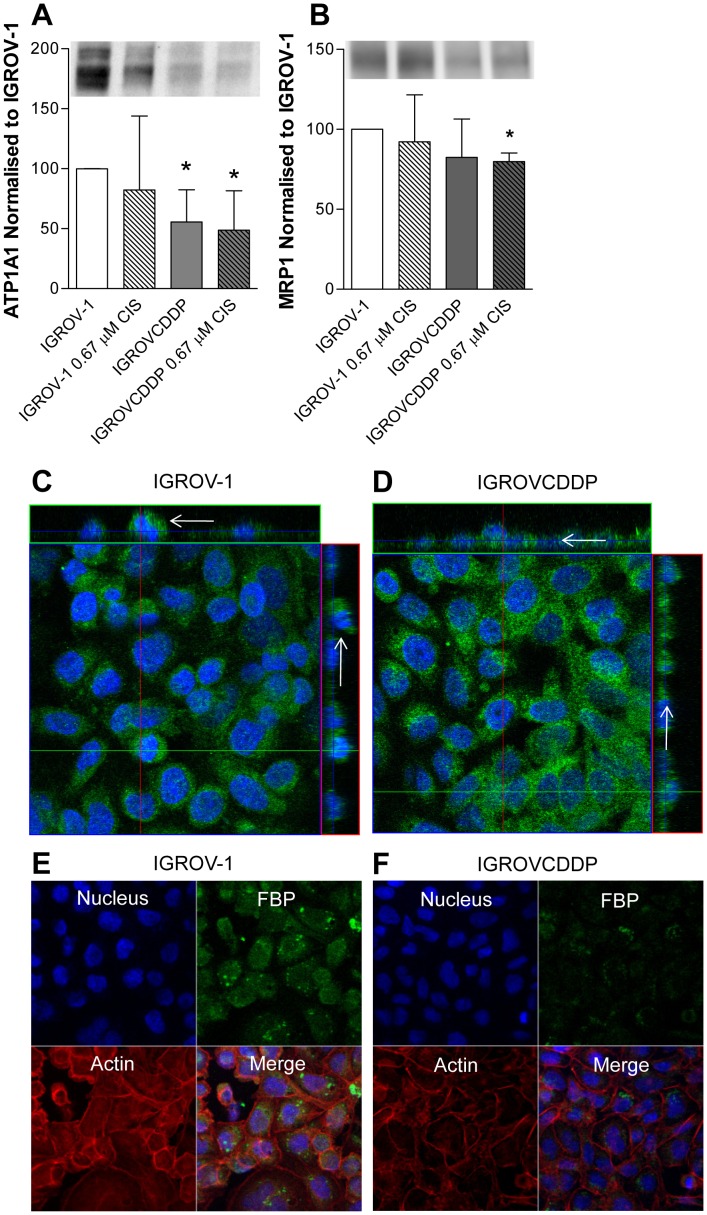
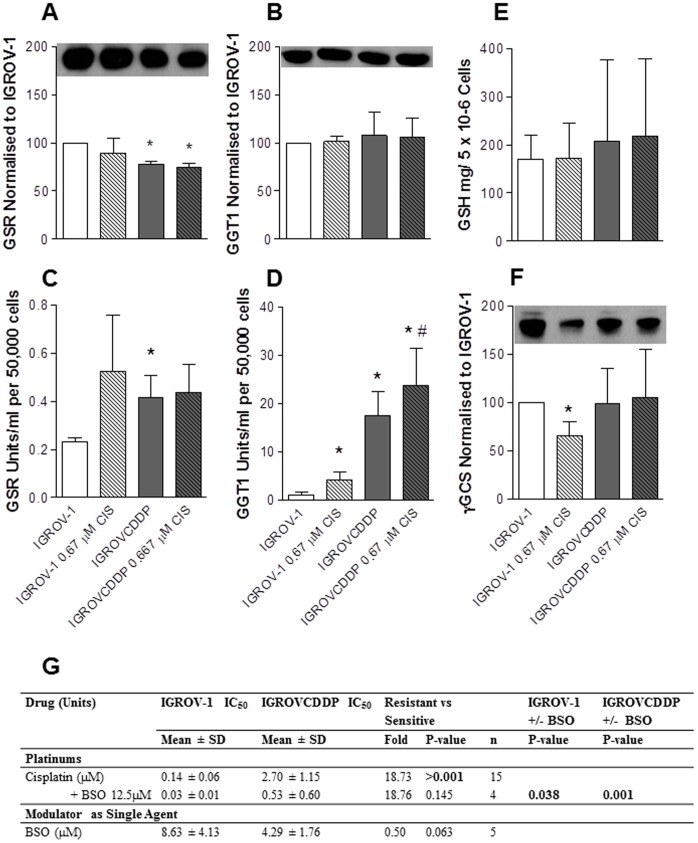
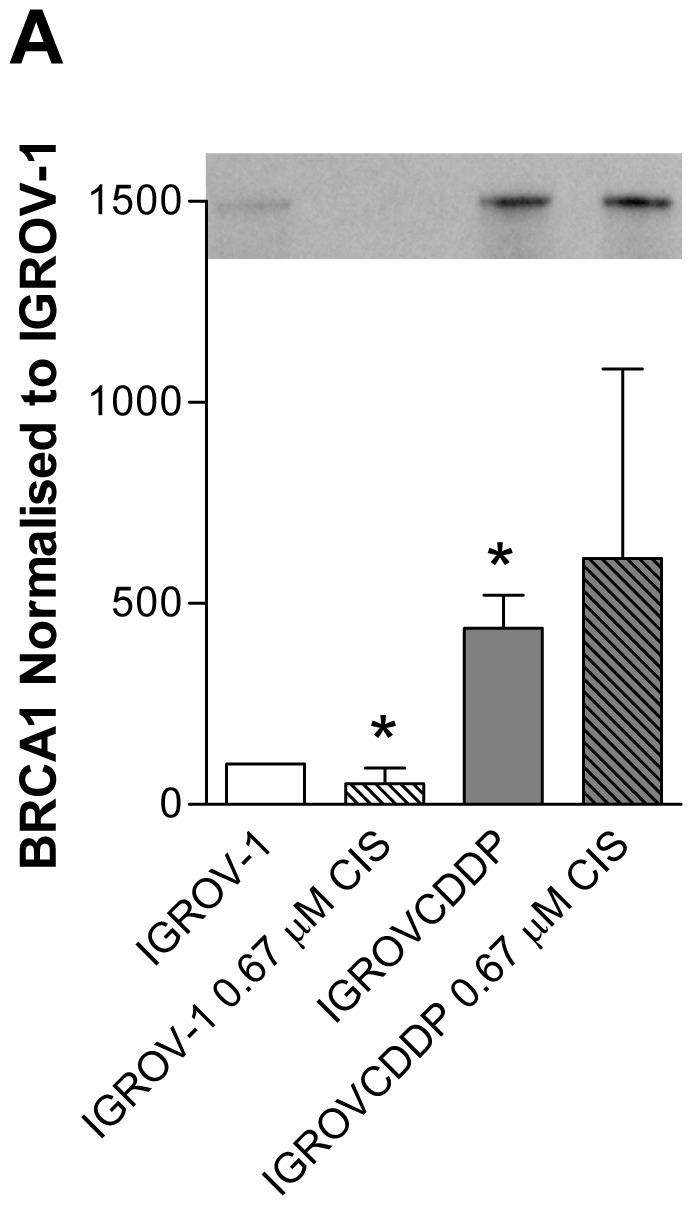
The IGROVCDDP cisplatin-resistant ovarian cancer cell line is also resistant to paclitaxel and models the resistance phenotype of relapsed ovarian cancer patients after first-line platinum/taxane chemotherapy. A TaqMan low-density array (TLDA) was used to characterise the expression of 380 genes associated with chemotherapy resistance in IGROVCDDP cells. Paclitaxel resistance in IGROVCDDP is mediated by gene and protein overexpression of P-glycoprotein and the protein is functionally active. Cisplatin resistance was not reversed by elacridar, confirming that cisplatin is not a P-glycoprotein substrate. Cisplatin resistance in IGROVCDDP is multifactorial and is mediated in part by the glutathione pathway and decreased accumulation of drug. Total cellular glutathione was not increased. However, the enzyme activity of GSR and GGT1 were up-regulated. The cellular localisation of copper transporter CTR1 changed from membrane associated in IGROV-1 to cytoplasmic in IGROVCDDP. This may mediate the previously reported accumulation defect. There was decreased expression of the sodium potassium pump (ATP1A), MRP1 and FBP which all have been previously associated with platinum accumulation defects in platinum-resistant cell lines. Cellular localisation of MRP1 was also altered in IGROVCDDP shifting basolaterally, compared to IGROV-1. BRCA1 was also up-regulated at the gene and protein level. The overexpression of P-glycoprotein in a resistant model developed with cisplatin is unusual. This demonstrates that P-glycoprotein can be up-regulated as a generalised stress response rather than as a specific response to a substrate. Mechanisms characterised in IGROVCDDP cells may be applicable to relapsed ovarian cancer patients treated with frontline platinum/taxane chemotherapy.
Conflict of interest statement
Figures
References
-
- Hennessy BT, Coleman RL, Markman M. Ovarian cancer. Lancet. 2009;374:1371–1382. - PubMed
-
- Stordal B, Pavlakis N, Davey R. A systematic review of platinum and taxane resistance from bench to clinic: an inverse relationship. Cancer Treatment Reviews. 2007;33:688–703. - PubMed
-
- Ma J, Maliepaard M, Kolker HJ, Verweij J, Schellens JH. Abrogated energy-dependent uptake of cisplatin in a cisplatin-resistant subline of the human ovarian cancer cell line IGROV-1. Cancer Chemotherapy & Pharmacology. 1998;41:186–192. - PubMed
-
- Ma J, Maliepaard M, Nooter K, Boersma AW, Verweij J, et al. Synergistic cytotoxicity of cisplatin and topotecan or SN-38 in a panel of eight solid-tumor cell lines in vitro. Cancer Chemotherapy & Pharmacology. 1998;41:307–316. - PubMed
-
- Martin A, Clynes M. Comparison of 5 microplate colorimetric assays for in vitro cytotoxicity testing and cell proliferation assays. Cytotechnology. 1993;11:49–58. - PubMed
Publication types
MeSH terms
Substances
Grants and funding
LinkOut - more resources
Full Text Sources
Medical
Research Materials
Miscellaneous
