


Effects of statins on cardiorenal syndrome
- PMID: 22792467
- PMCID: PMC3390040
- DOI: 10.1155/2012/162545
Effects of statins on cardiorenal syndrome
Abstract
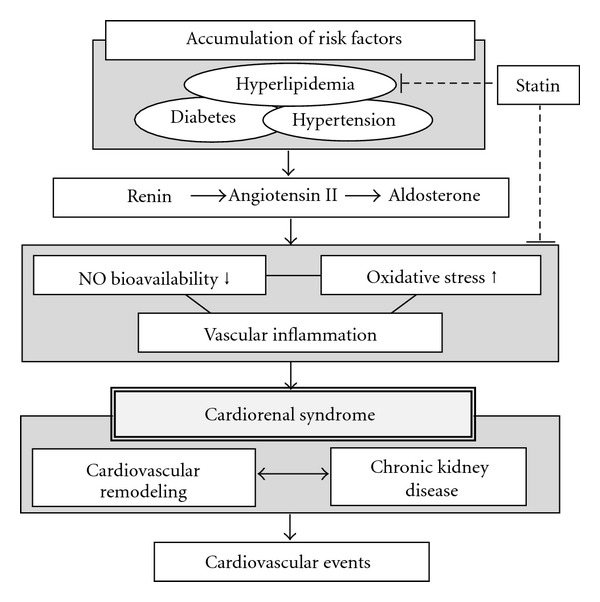
Cardiovascular disease and renal disease have a close relationship that forms a vicious cycle as a cardiorenal syndrome (CRS). Oxidative stress, endothelial dysfunction, and vascular inflammation could be therapeutic targets when the renin-angiotensin-aldosterone system is activated by accumulation of conventional cardiovascular risk factors; however, a strategy for management of CRS has not been established yet. Statins, HMG-CoA reductase inhibitors, have not only cholesterol-lowering effects but also pleiotropic effects on cardiovascular systems, including anti-inflammatory and antioxidant effects and improvement of nitric oxide bioavailability. Since recent studies have indicated that statins have beneficial effects on chronic kidney disease and heart failure as well as coronary artery disease in cholesterol-lowering-dependent/independent manners, treatment with statins might be a successful strategy for preventing deterioration of CRS.
Figures
References
-
- Bongartz LG, Cramer MJ, Doevendans PA, Joles JA, Braam B. The severe cardiorenal syndrome: ’Guyton revisited’. European Heart Journal. 2005;26(1):11–17. - PubMed
-
- Wassmann S, Laufs U, Müller K, et al. Cellular antioxidant effects of atorvastatin in vitro and in vivo. Arteriosclerosis, Thrombosis, and Vascular Biology. 2002;22(2):300–305. - PubMed
-
- Wolfrum S, Jensen KS, Liao JK. Endothelium-dependent effects of statins. Arteriosclerosis, Thrombosis, and Vascular Biology. 2003;23(5):729–736. - PubMed
-
- Laufs U, Custodis F, Böhm M. HMG-CoA reductase inhibitors in chronic heart failure: potential mechanisms of benefit and risk. Drugs. 2006;66(2):145–154. - PubMed
LinkOut - more resources
Full Text Sources
