


TBC1D7 is a third subunit of the TSC1-TSC2 complex upstream of mTORC1
- PMID: 22795129
- PMCID: PMC3693578
- DOI: 10.1016/j.molcel.2012.06.009
TBC1D7 is a third subunit of the TSC1-TSC2 complex upstream of mTORC1
Abstract
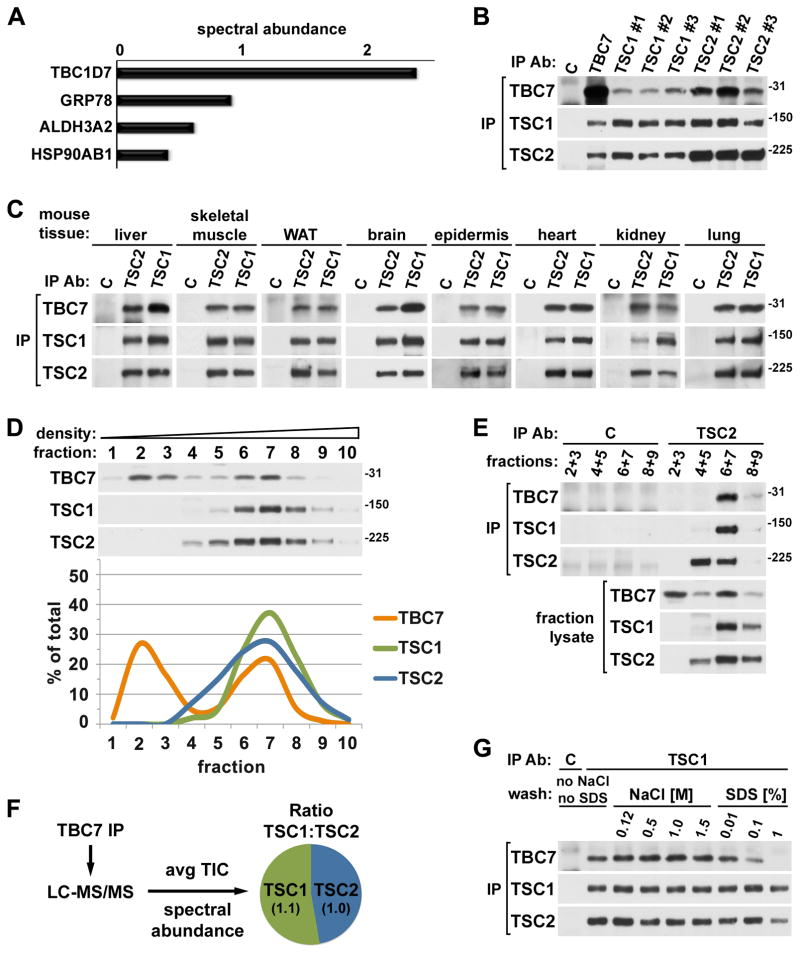
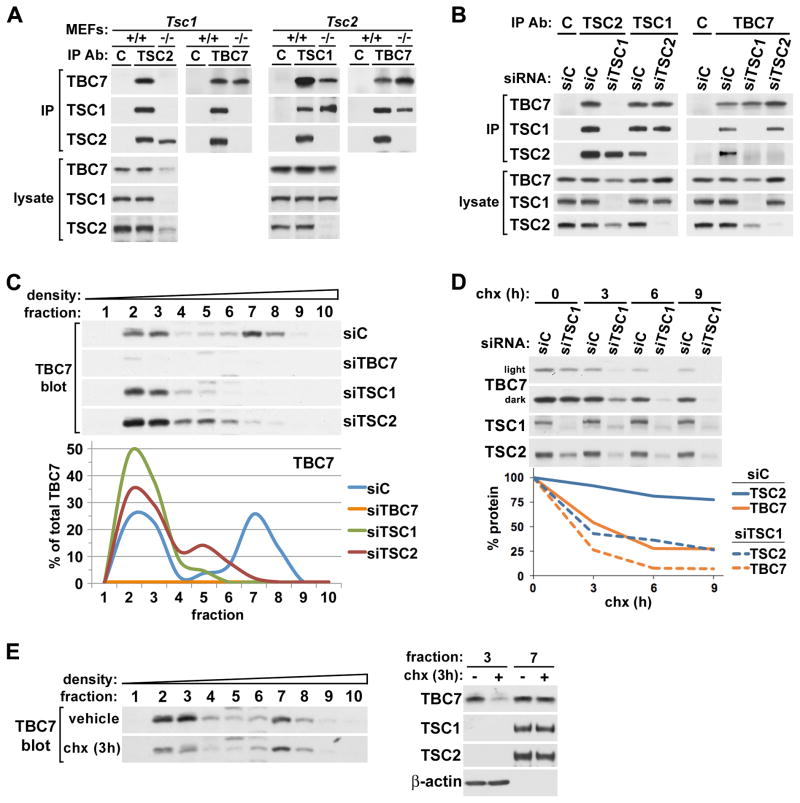
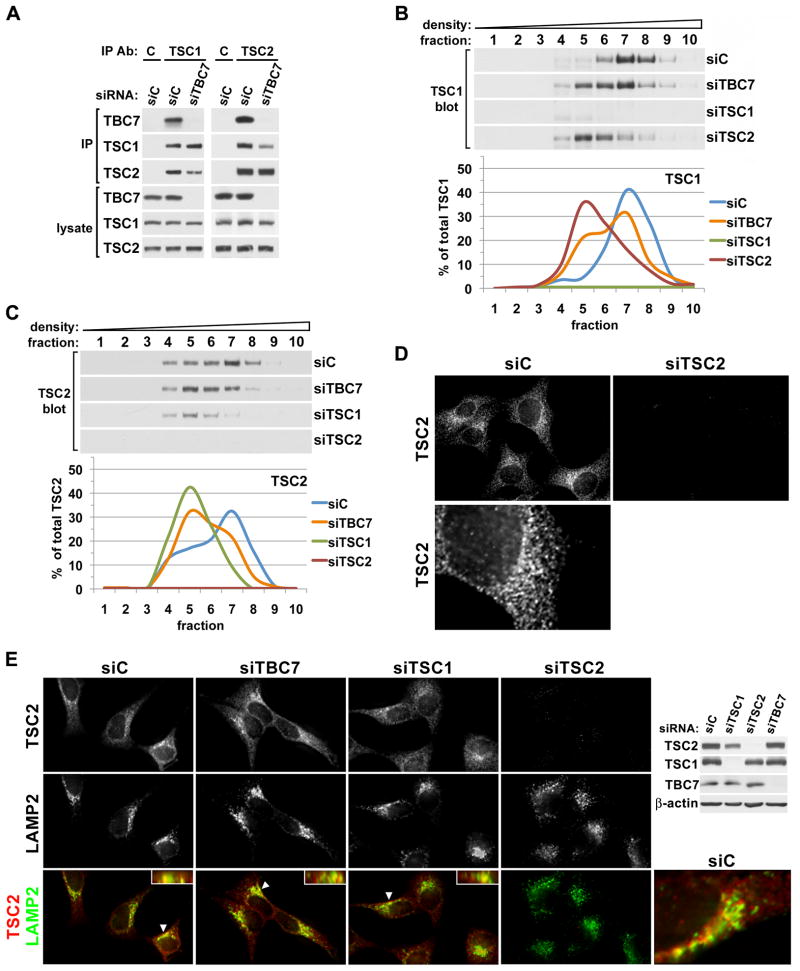
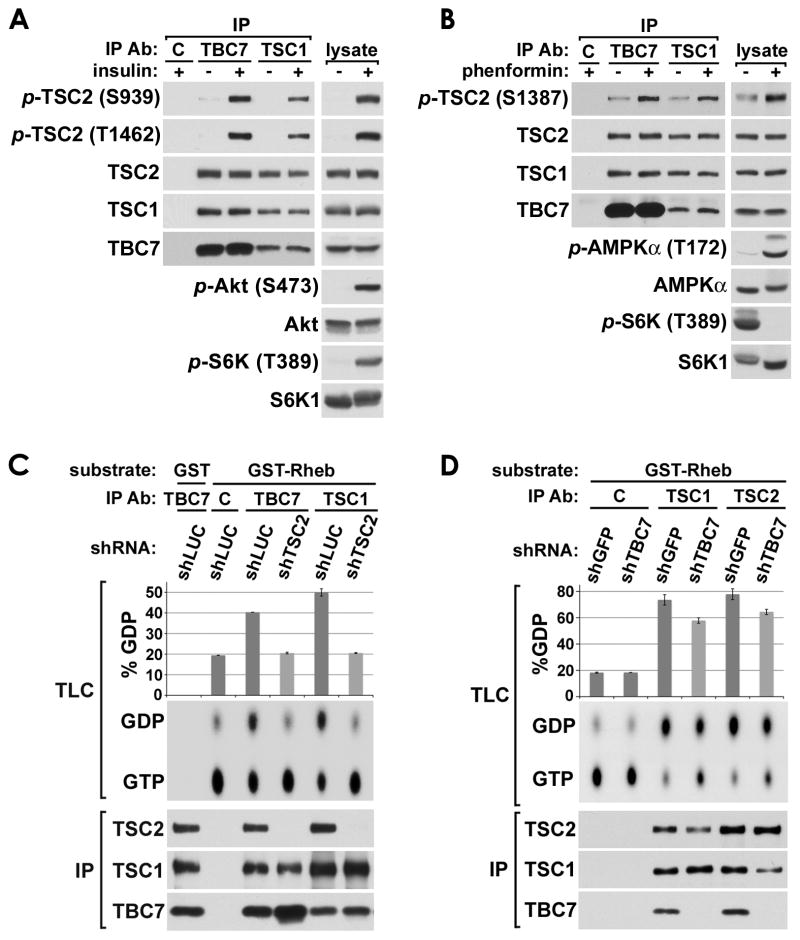
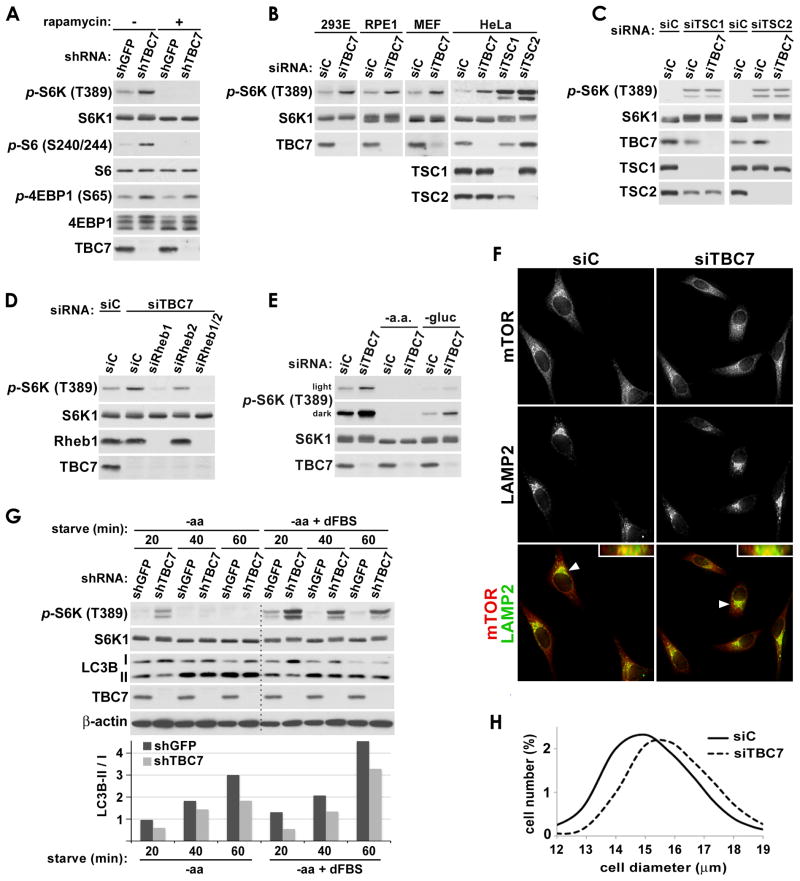
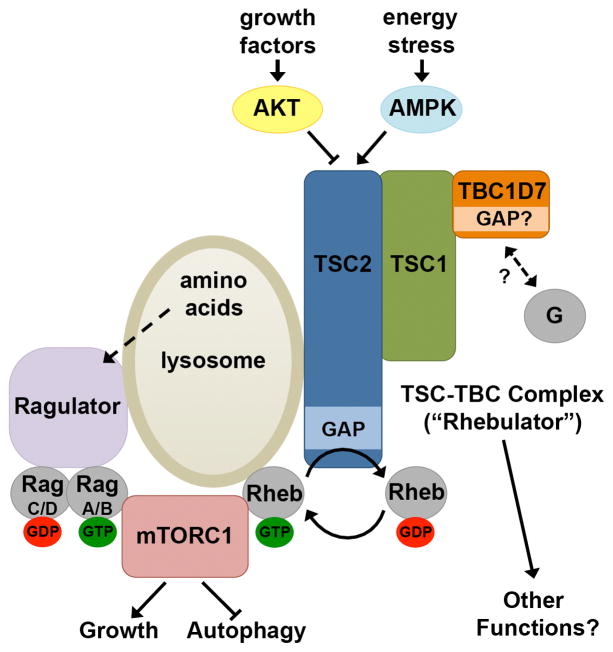
The tuberous sclerosis complex (TSC) tumor suppressors form the TSC1-TSC2 complex, which limits cell growth in response to poor growth conditions. Through its GTPase-activating protein (GAP) activity toward Rheb, this complex inhibits the mechanistic target of rapamycin (mTOR) complex 1 (mTORC1), a key promoter of cell growth. Here, we identify and biochemically characterize TBC1D7 as a stably associated and ubiquitous third core subunit of the TSC1-TSC2 complex. We demonstrate that the TSC1-TSC2-TBC1D7 (TSC-TBC) complex is the functional complex that senses specific cellular growth conditions and possesses Rheb-GAP activity. Sequencing analyses of samples from TSC patients suggest that TBC1D7 is unlikely to represent TSC3. TBC1D7 knockdown decreases the association of TSC1 and TSC2 leading to decreased Rheb-GAP activity, without effects on the localization of TSC2 to the lysosome. Like the other TSC-TBC components, TBC1D7 knockdown results in increased mTORC1 signaling, delayed induction of autophagy, and enhanced cell growth under poor growth conditions.
Copyright © 2012 Elsevier Inc. All rights reserved.
Figures
References
-
- Benvenuto G, Li S, Brown SJ, Braverman R, Vass WC, Cheadle JP, Halley DJ, Sampson JR, Wienecke R, DeClue JE. The tuberous sclerosis-1 (TSC1) gene product hamartin suppresses cell growth and augments the expression of the TSC2 product tuberin by inhibiting its ubiquitination. Oncogene. 2000;19:6306–6316. - PubMed
-
- Crino PB, Nathanson KL, Henske EP. The tuberous sclerosis complex. N Engl J Med. 2006;355:1345–1356. - PubMed
Publication types
MeSH terms
Substances
Grants and funding
LinkOut - more resources
Full Text Sources
Other Literature Sources
Molecular Biology Databases
Miscellaneous
