


Targeted delivery of EV peptide to tumor cell cytoplasm using lipid coated calcium carbonate nanoparticles
- PMID: 22796364
- PMCID: PMC3496799
- DOI: 10.1016/j.canlet.2012.07.011
Targeted delivery of EV peptide to tumor cell cytoplasm using lipid coated calcium carbonate nanoparticles
Abstract
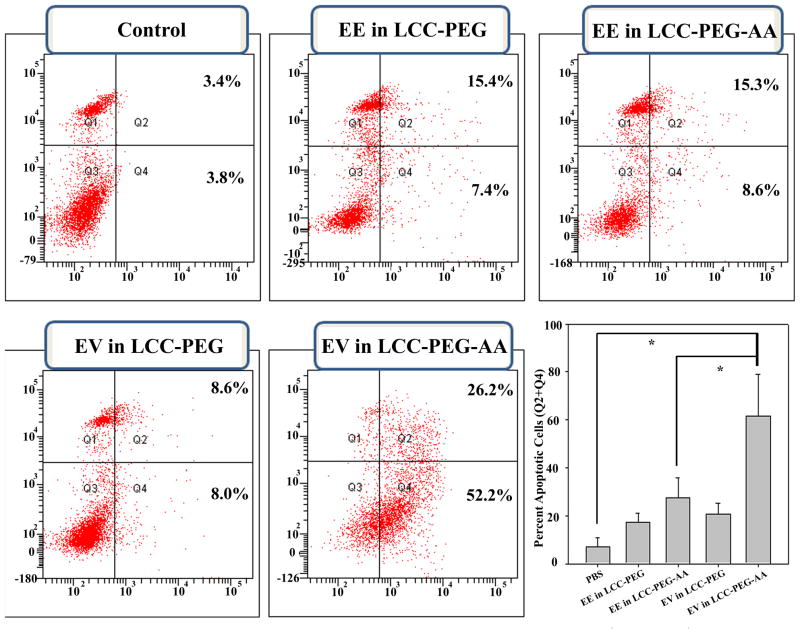
Intracellular-acting peptide drugs are effective for inhibiting cytoplasmic protein targets, yet face challenges with penetrating the cancer cell membrane. We have developed a lipid nanoparticle formulation that utilizes a pH-sensitive calcium carbonate complexation mechanism to enable the targeted delivery of the intracellular-acting therapeutic peptide EEEEpYFELV (EV) into lung cancer cells. Lipid-calcium-carbonate (LCC) nanoparticles were conjugated with anisamide, a targeting ligand for the sigma receptor which is expressed on lung cancer cells. LCC EV nanoparticle treatment provoked severe apoptotic effects in H460 non-small cell lung cancer cells in vitro. LCC NPs also mediated the specific delivery of Alexa-488-EV peptide to tumor tissue in vivo, provoking a high tumor growth retardation effect with minimal uptake by external organs and no toxic effects.
Copyright © 2012 Elsevier Ireland Ltd. All rights reserved.
Conflict of interest statement
None
Figures




References
-
- Kumar S, Blake SM, Emery JG. Intracellular signaling pathways as a target for the treatment of rheumatoid arthritis. Curr Opin Pharmacol. 2001;1:307–313. - PubMed
-
- Matter A. Tumor angiogenesis as a therapeutic target. Drug Discov Today. 2001;6:1005–1024. - PubMed
-
- Lark MW, Morrison KE. Musculoskeletal diseases: novel targets for therapeutic intervention. Curr Opin Pharmacol. 2002;2:287–290.
-
- Bidwell GL, III, Raucher D. Therapeutic peptides for cancer therapy. Part I peptide inhibitors of signal transduction cascades. Expert Opin Drug Deliv. 2009;6(10):1033–1047. - PubMed
Publication types
MeSH terms
Substances
Grants and funding
LinkOut - more resources
Full Text Sources
Other Literature Sources
