


Intestinal epithelial Toll-like receptor 4 regulates goblet cell development and is required for necrotizing enterocolitis in mice
- PMID: 22796522
- PMCID: PMC3584415
- DOI: 10.1053/j.gastro.2012.05.053
Intestinal epithelial Toll-like receptor 4 regulates goblet cell development and is required for necrotizing enterocolitis in mice
Abstract
Background & aims: Little is known about factors that regulate intestinal epithelial differentiation; microbial recognition receptors such as Toll-like receptor (TLR)4 might be involved. We investigated whether intestinal TLR4 regulates epithelial differentiation and is involved in development of necrotizing enterocolitis (NEC) of the immature intestine.
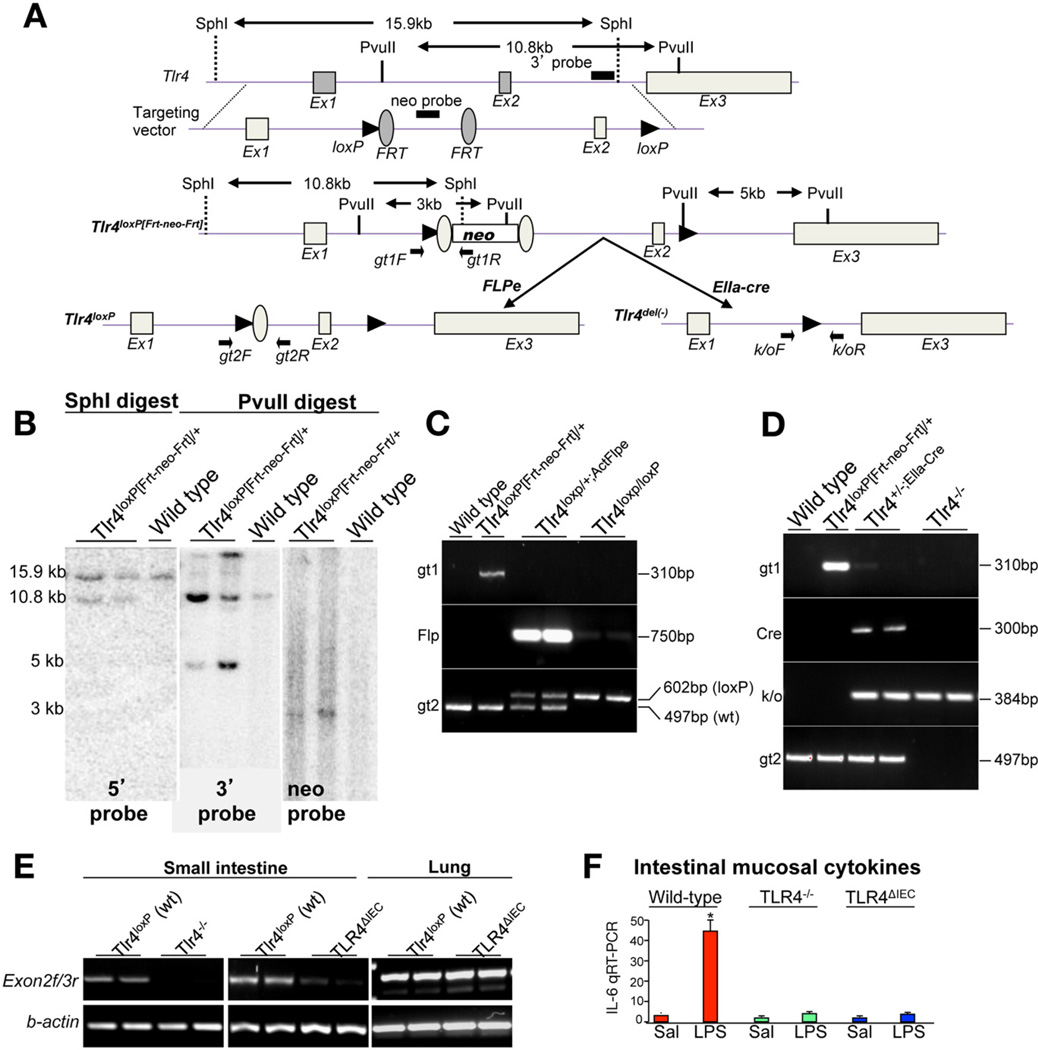
Methods: Mice with conditional disruption of TLR4 in the intestinal epithelium and TLR4 knockout (TLR4(-/-)) mice were generated by breeding TLR4(loxp/loxp) mice with villin-cre and Ella-cre, respectively. Enterocytes that did not express or overexpressed TLR4 were created by lentiviral or adenoviral transduction. Intestinal organoids were cultured on tissue matrices. Bile acids were measured by colorimetric assays, and microbial composition was determined by 16S pyrosequencing. NEC was induced in 7- to 10-day-old mice by induction of hypoxia twice daily for 4 days.
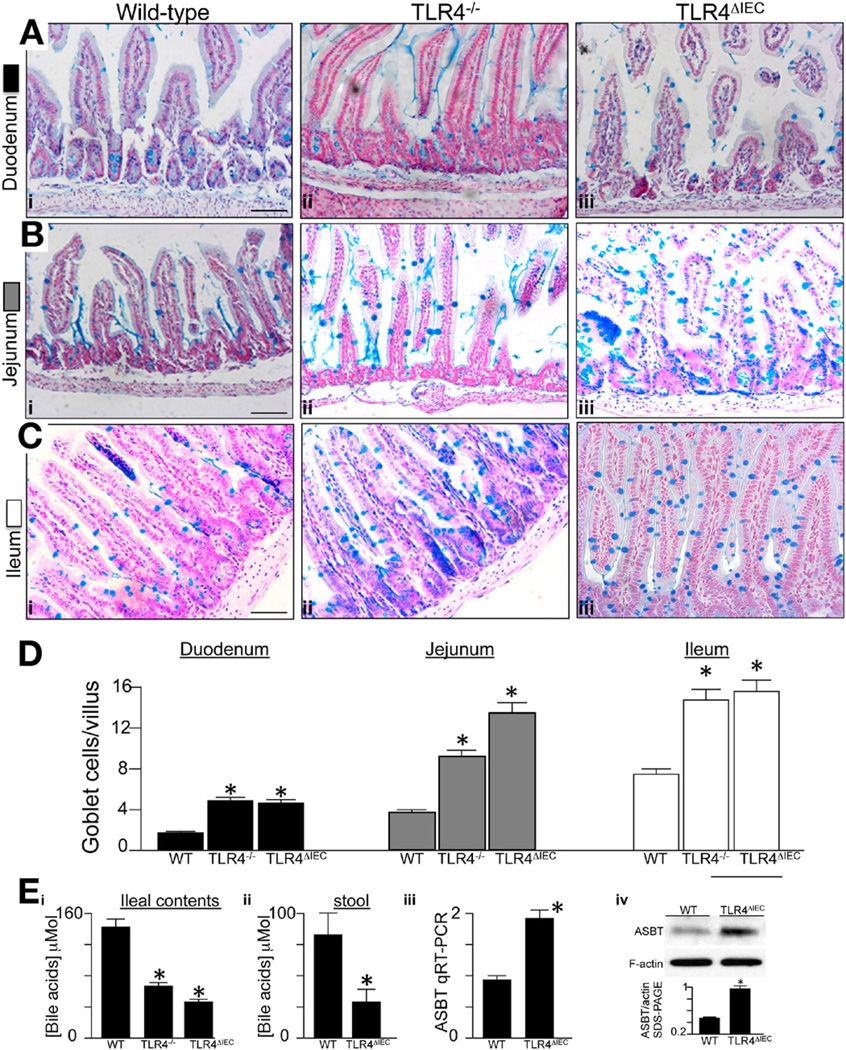
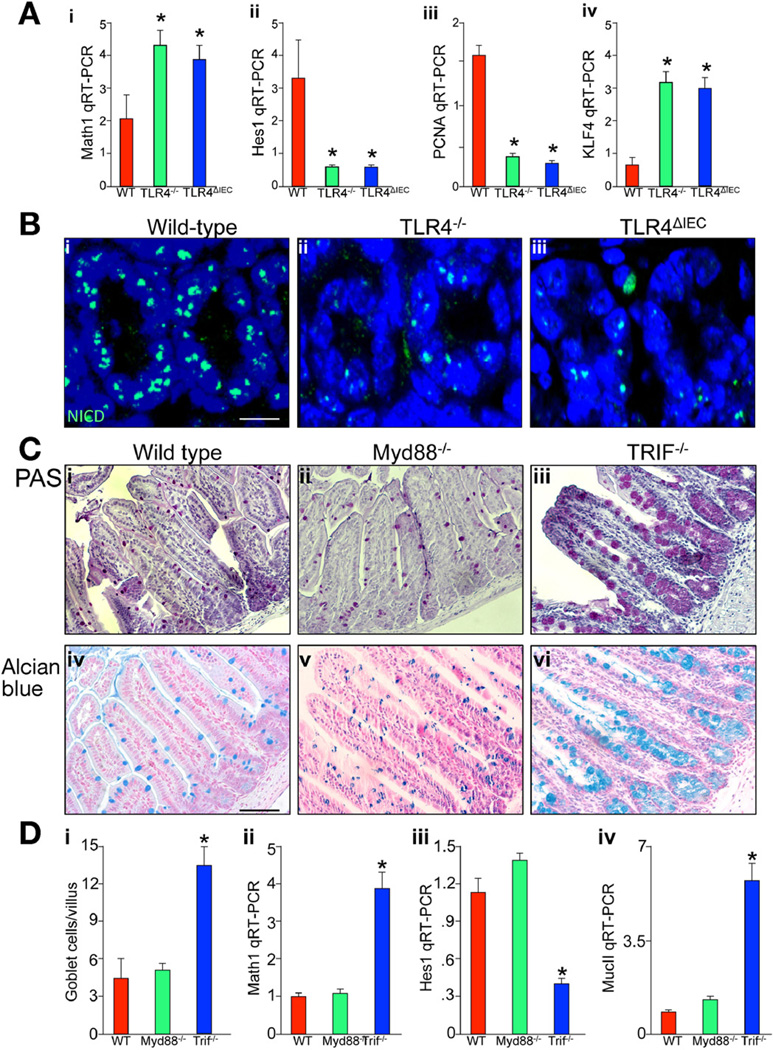
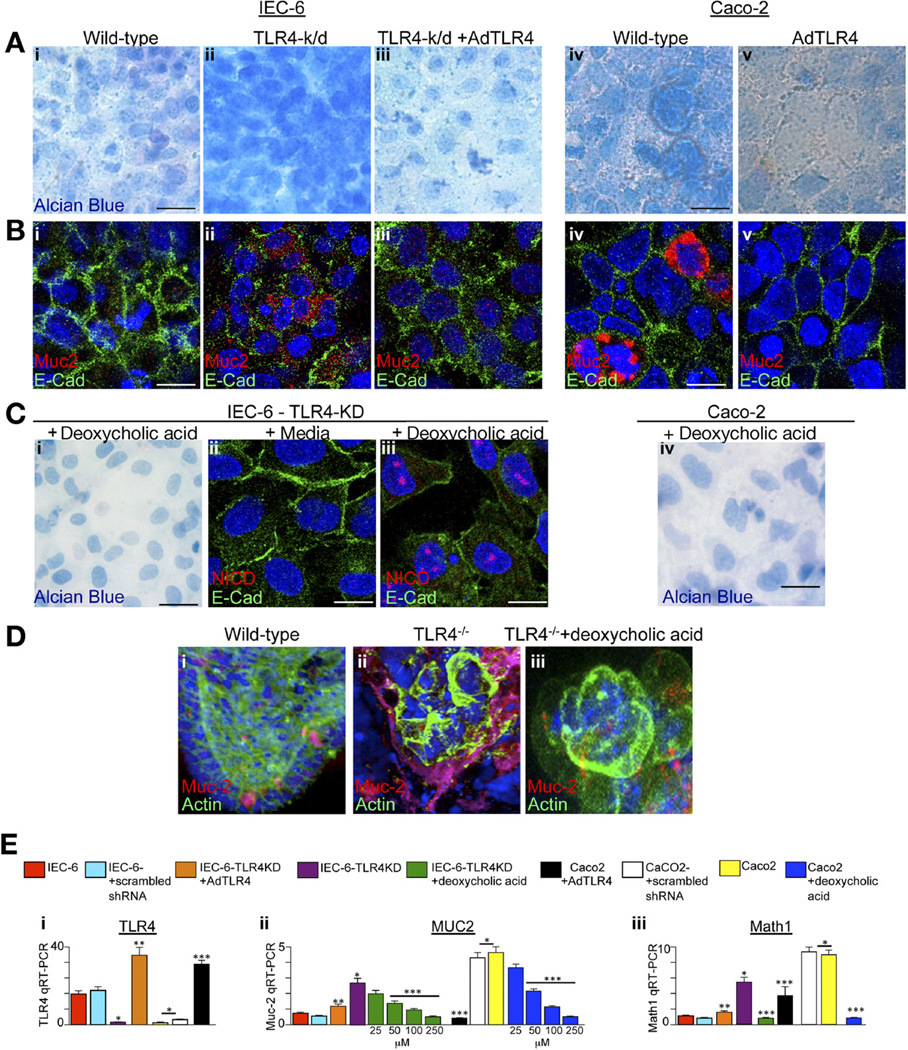
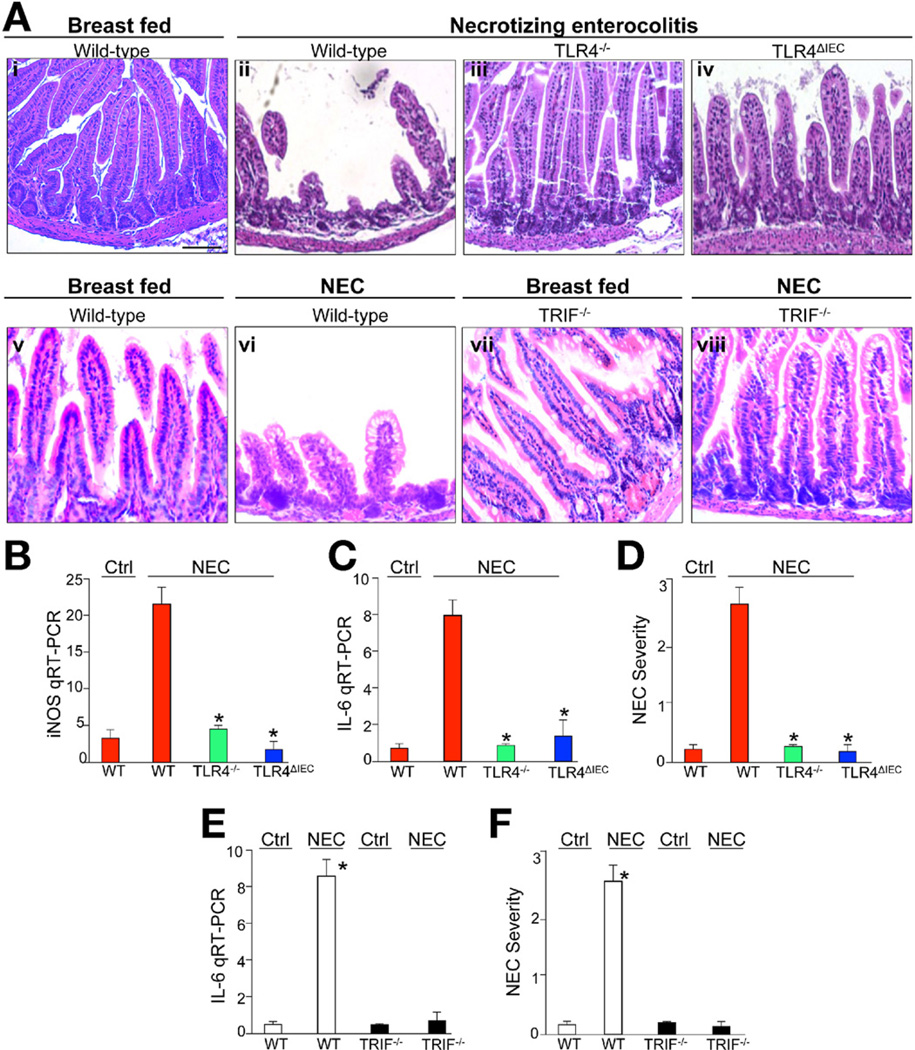
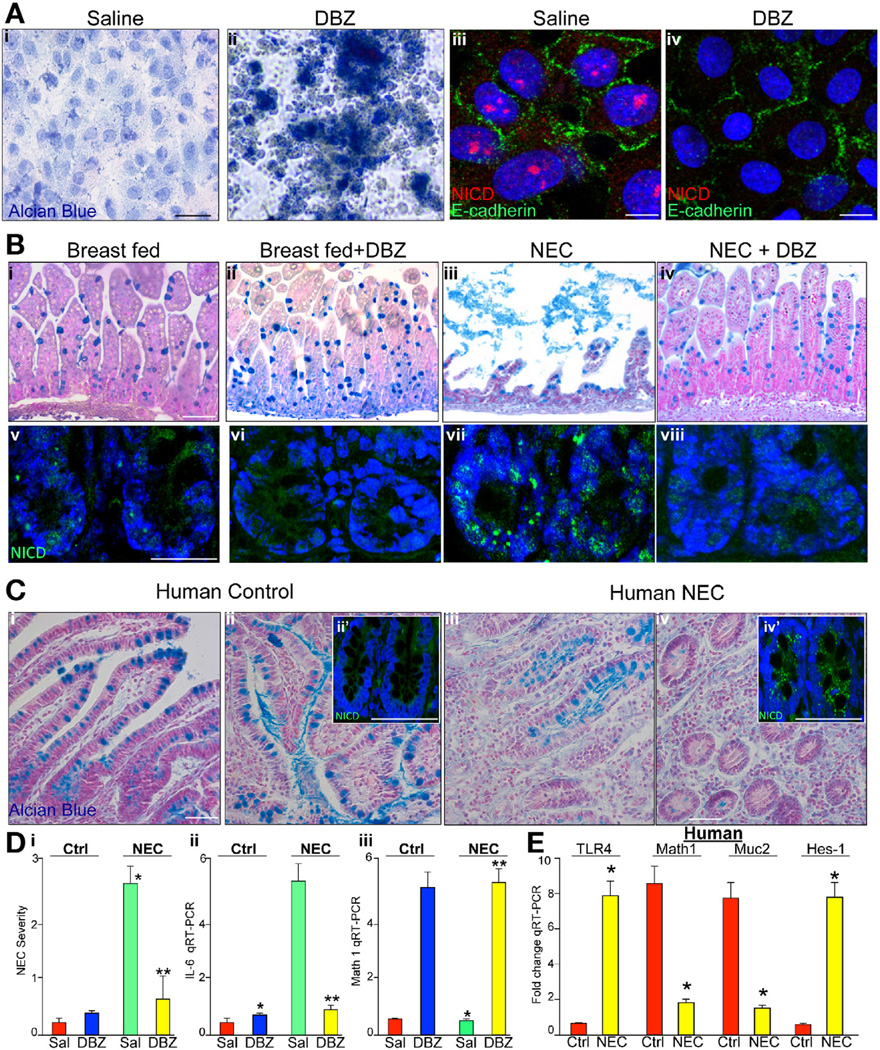
Results: TLR4(-/-) mice and mice with enterocyte-specific deletion of TLR4 were protected from NEC; epithelial differentiation into goblet cells was increased via suppressed Notch signaling in the small intestinal epithelium. TLR4 also regulates differentiation of goblet cells in intestinal organoid and enterocyte cell cultures; differentiation was increased on deletion of TLR4 and restored when TLR4 was expressed ectopically. TLR4 signaling via Notch was increased in intestinal tissue samples from patients with NEC, and numbers of goblet cells were reduced. 16S pyrosequencing revealed that wild-type and TLR4-deficient mice had similar microbial profiles; increased numbers of goblet cells were observed in mice given antibiotics. TLR4 deficiency reduced levels of luminal bile acids in vivo, and addition of bile acids to TLR4-deficient cell cultures prevented differentiation of goblet cells.
Conclusions: TLR4 signaling and Notch are increased in intestinal tissues of patients with NEC and required for induction of NEC in mice. TLR4 prevents goblet cell differentiation, independently of the microbiota. Bile acids might initiate goblet cell development.
Copyright © 2012 AGA Institute. Published by Elsevier Inc. All rights reserved.
Conflict of interest statement
Conflicts of interest
The authors disclose no conflicts.
Figures
References
-
- van der Flier LG, Clevers H. Stem cells, self-renewal, and differentiation in the intestinal epithelium. Annu Rev Physiol. 2009;71:241–260. - PubMed
-
- Neal MD, Leaphart C, Levy R, et al. Enterocyte TLR4 mediates phagocytosis and translocation of bacteria across the intestinal barrier. J Immunol. 2006;176:3070–3079. - PubMed
-
- Cario E, Rosenberg IM, Brandwein SL, et al. Lipopolysaccharide activates distinct signaling pathways in intestinal epithelial cell lines expressing Toll-like receptors. J Immunol. 2000;164:966–972. - PubMed
Publication types
MeSH terms
Substances
Grants and funding
- UL1 TR000005/TR/NCATS NIH HHS/United States
- UL1 RR024153/RR/NCRR NIH HHS/United States
- R01DK08752/DK/NIDDK NIH HHS/United States
- R01 DK083752/DK/NIDDK NIH HHS/United States
- P50 GM053789/GM/NIGMS NIH HHS/United States
- K12 HD052892/HD/NICHD NIH HHS/United States
- R01GM078238/GM/NIGMS NIH HHS/United States
- R01 GM078238/GM/NIGMS NIH HHS/United States
- F30 DK085930/DK/NIDDK NIH HHS/United States
- P50GM053789/GM/NIGMS NIH HHS/United States
- R01 DK083541/DK/NIDDK NIH HHS/United States
- R01-1DK083541/DK/NIDDK NIH HHS/United States
LinkOut - more resources
Full Text Sources
Other Literature Sources
Molecular Biology Databases
