


Identification of soybean seed developmental stage-specific and tissue-specific miRNA targets by degradome sequencing
- PMID: 22799740
- PMCID: PMC3410764
- DOI: 10.1186/1471-2164-13-310
Identification of soybean seed developmental stage-specific and tissue-specific miRNA targets by degradome sequencing
Abstract
Background: MicroRNAs (miRNAs) regulate the expression of target genes by mediating gene silencing in both plants and animals. The miRNA targets have been extensively investigated in Arabidopsis and rice using computational prediction, experimental validation by overexpression in transgenic plants, and by degradome or PARE (parallel analysis of RNA ends) sequencing. However, miRNA targets mostly remain unknown in soybean (Glycine max). More specifically miRNA mediated gene regulation at different seed developmental stages in soybean is largely unexplored. In order to dissect miRNA guided gene regulation in soybean developing seeds, we performed a transcriptome-wide experimental method using degradome sequencing to directly detect cleaved miRNA targets.
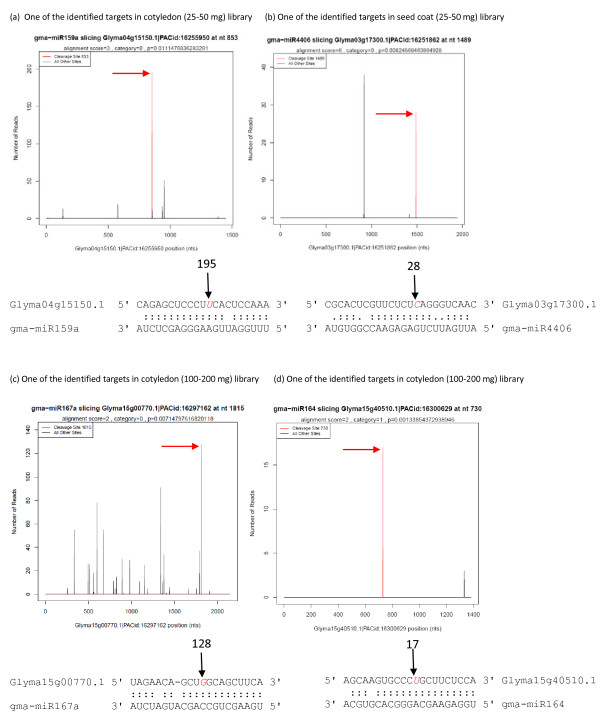
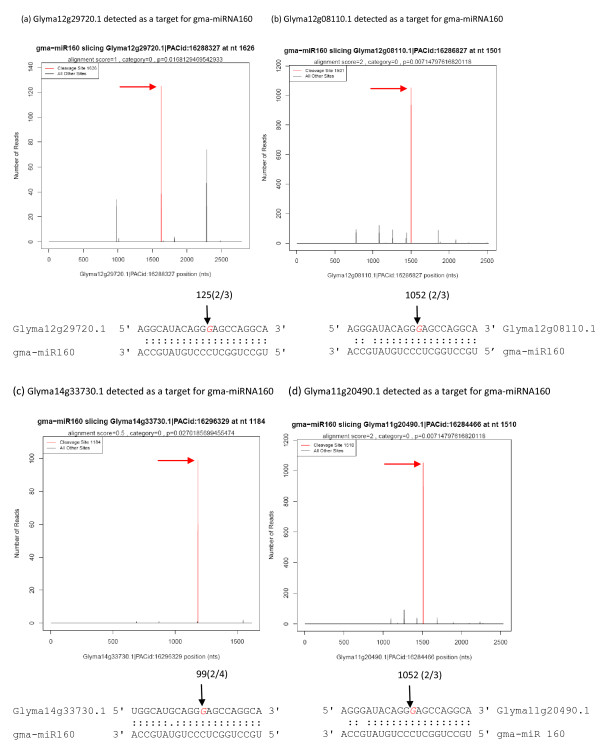
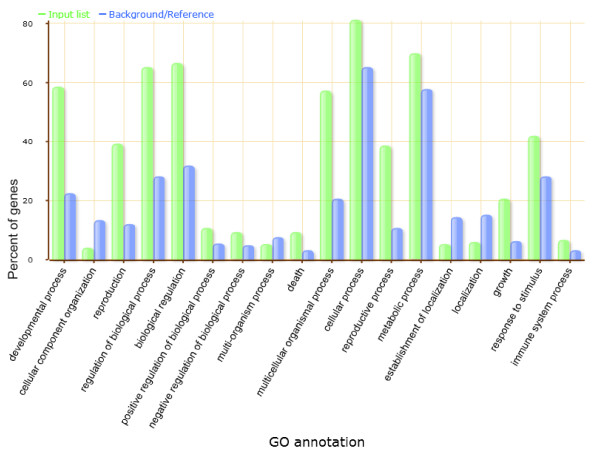
Results: In this study, degradome libraries were separately prepared from immature soybean cotyledons representing three stages of development and from seed coats of two stages. Sequencing and analysis of 10 to 40 million reads from each library resulted in identification of 183 different targets for 53 known soybean miRNAs. Among these, some were found only in the cotyledons representing cleavage by 25 miRNAs and others were found only in the seed coats reflecting cleavage by 12 miRNAs. A large number of targets for 16 miRNAs families were identified in both tissues irrespective of the stage. Interestingly, we identified more miRNA targets in the desiccating cotyledons of late seed maturation than in immature seed. We validated four different auxin response factor genes as targets for gma-miR160 via RNA ligase mediated 5' rapid amplification of cDNA ends (RLM-5'RACE). Gene Ontology (GO) analysis indicated the involvement of miRNA target genes in various cellular processes during seed development.
Conclusions: The miRNA targets in both the cotyledons and seed coats of several stages of soybean seed development have been elucidated by experimental evidence from comprehensive, high throughput sequencing of the enriched fragments resulting from miRNA-guided cleavage of messenger RNAs. Nearly 50% of the miRNA targets were transcription factors in pathways that are likely important in setting or maintaining the developmental program leading to high quality soybean seeds that are one of the dominant sources of protein and oil in world markets.
Figures
References
-
- Mallory AC, Vaucheret H. Functions of microRNAs and related small RNAs in plants. Nat Genet. 2006;38(Suppl):S31–S36. - PubMed
Publication types
MeSH terms
Substances
LinkOut - more resources
Full Text Sources
Molecular Biology Databases
