


Kinetics of mast cell, basophil, and oral food challenge responses in omalizumab-treated adults with peanut allergy
- PMID: 22800401
- PMCID: PMC3935509
- DOI: 10.1016/j.jaci.2012.05.039
Kinetics of mast cell, basophil, and oral food challenge responses in omalizumab-treated adults with peanut allergy
Abstract
Background: Monoclonal antibodies directed at IgE demonstrate clinical efficacy in subjects with peanut allergy, but previous studies have not addressed the kinetics of the clinical response or the role of mast cells and basophils in the food-induced allergic response.
Objective: We sought to determine the kinetics of the clinical response to omalizumab and whether clinical improvement is associated with either mast cell or basophil suppression.
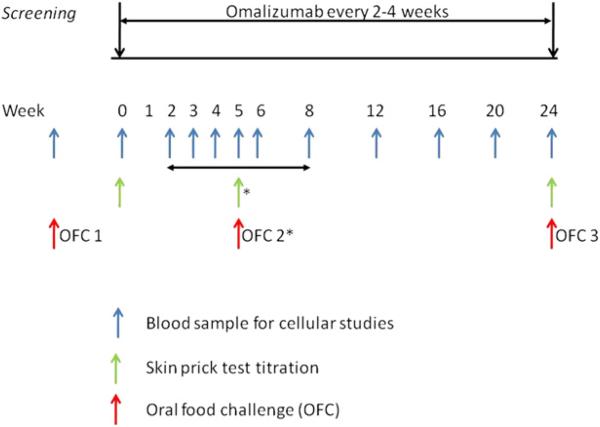
Methods: Subjects with peanut allergy were treated with omalizumab for 6 months and assessed for clinical and cellular responses. At baseline, subjects had a double-blind, placebo-controlled oral food challenge (OFC), skin prick test titration (SPTT), and basophil histamine release (BHR) to peanut. BHR was repeated at week 2 and then weekly until it decreased to less than 20% of baseline values. The OFCs and SPTTs were repeated after the BHR reduction (or at week 8 if BHR did not decrease) and again at 6 months.
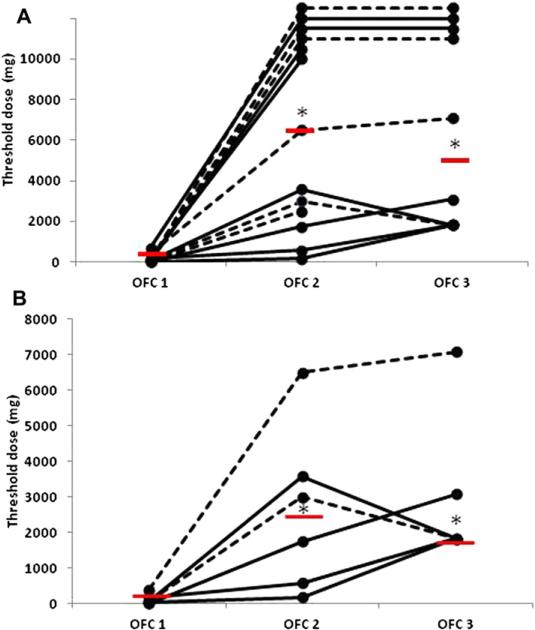
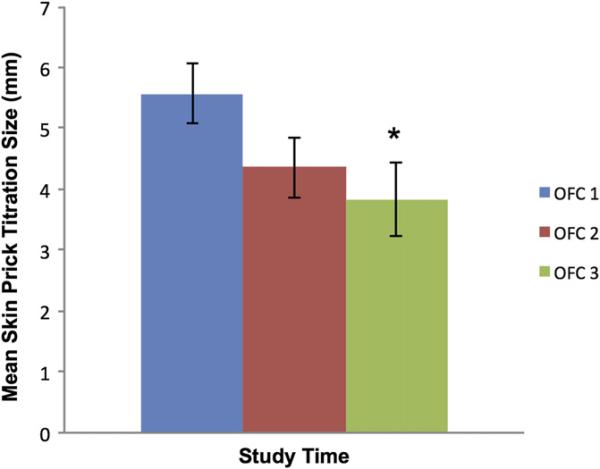
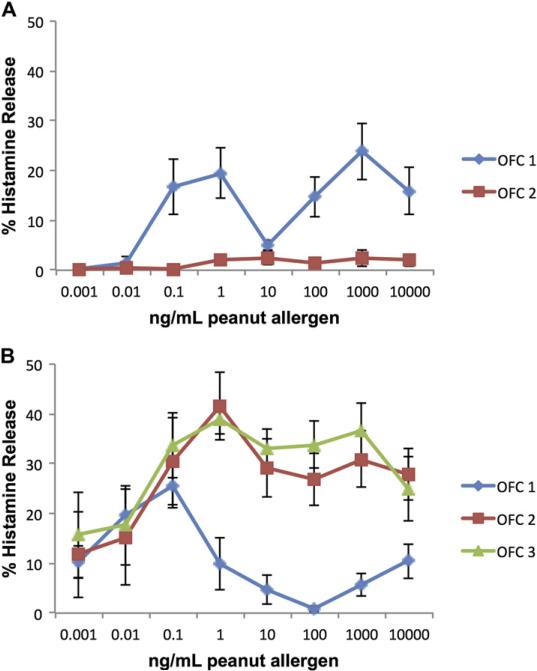
Results: Fourteen subjects enrolled in the study. At the second food challenge, there was a significant increase in the threshold dose of peanut inducing allergic symptoms (80 to 6500 mg, P < .01). Peanut-induced BHR was either completely suppressed (n = 5) or 10-fold more allergen was required to induce maximal BHR (n = 9), and SPTT responses were not significantly changed from baseline. After 6 months of omalizumab, further changes in the OFC threshold dose or BHR were not observed, but a significant suppression in SPTTs was identified.
Conclusions: The clinical response to omalizumab occurs early in treatment when the basophil, but not the mast cell, is suppressed, supporting a role for the basophil in acute food reactions.
Copyright © 2012 American Academy of Allergy, Asthma & Immunology. Published by Mosby, Inc. All rights reserved.
Figures
References
-
- Beck LA, Marcotte GV, MacGlashan JD, Togias A, Saini S. Omalizumab-induced reductions in mast cell FcεRI expression and function. J Allergy Clin Immunol. 2004;114:527–30. - PubMed
-
- Leung DY, Sampson HA, Yunginger JW, Burks AW, Jr, Schneider LC, Wortel CH, et al. Effect of anti-IgE therapy in patients with peanut allergy. N Engl J Med. 2003;348:986–93. - PubMed
-
- Sampson HA, Leung DY, Burks AW, Lack G, Bahna SL, Jones SM, et al. A phase II, randomized, double blind, parallel group, placebo controlled oral food challenge trial of Xolair (omalizumab) in peanut allergy. J Allergy Clin Immunol. 2011;127:1309–10. - PubMed
-
- Vonakis BM, Vasagar K, Gibbons JSP, Gober L, Sterba PM, Chang H, et al. Basophil FcεRI histamine release parallels expression of Src-homology 2-containing inositol phosphatases in chronic idiopathic urticaria. JAllergy Clin Immunol. 2007;119:441–8. - PubMed
Publication types
MeSH terms
Substances
Grants and funding
LinkOut - more resources
Full Text Sources
Other Literature Sources
