


Pathogenic disruption of DISC1-serine racemase binding elicits schizophrenia-like behavior via D-serine depletion
- PMID: 22801410
- PMCID: PMC3475769
- DOI: 10.1038/mp.2012.97
Pathogenic disruption of DISC1-serine racemase binding elicits schizophrenia-like behavior via D-serine depletion
Abstract
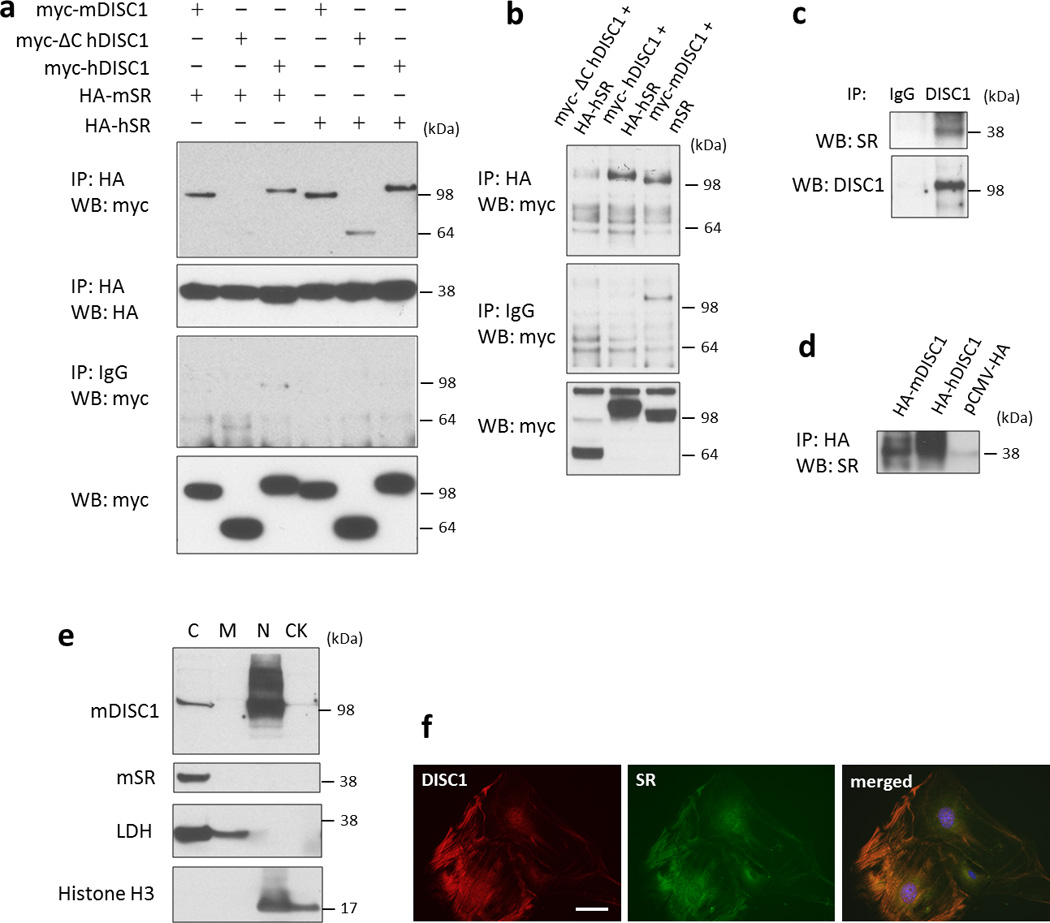
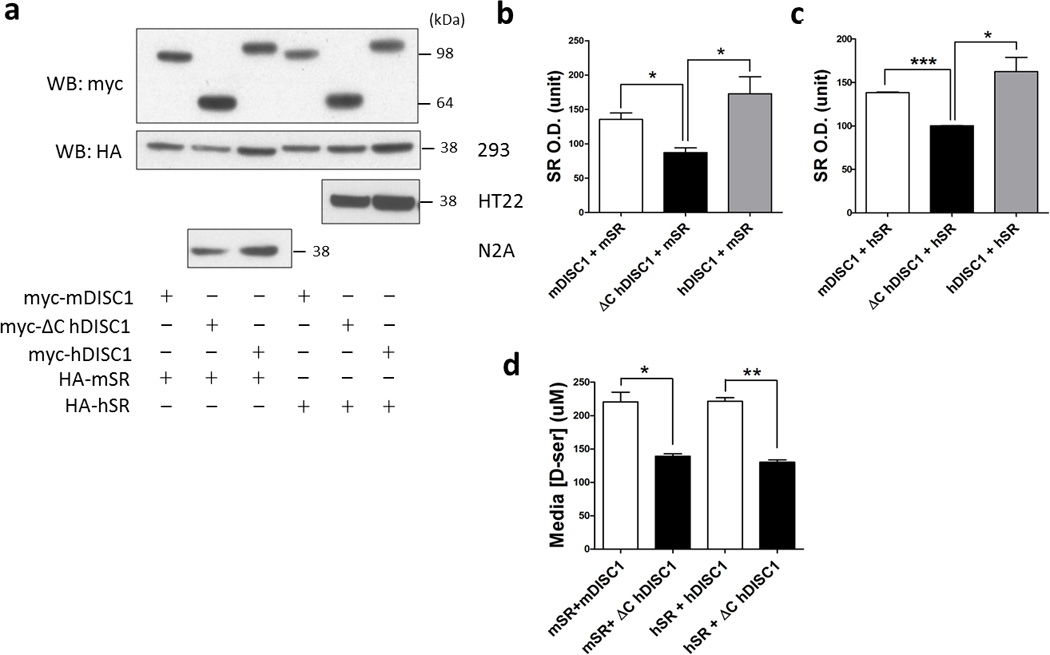
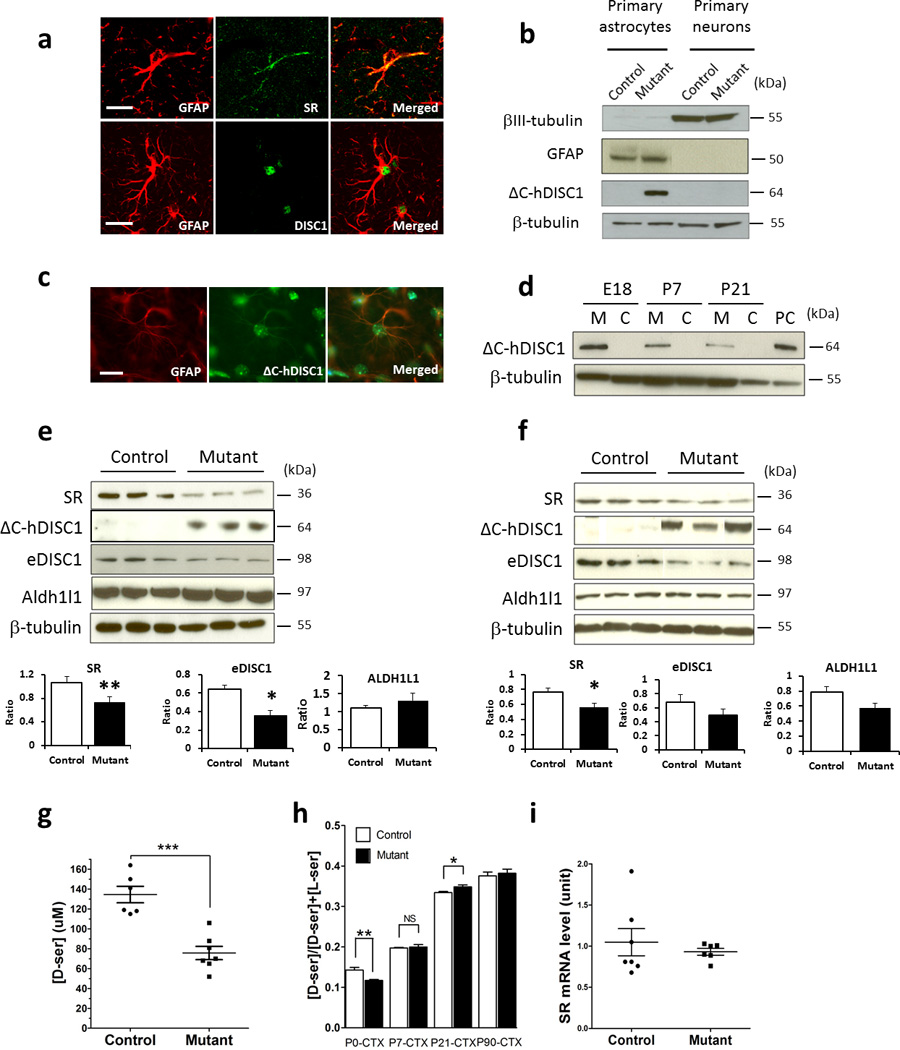
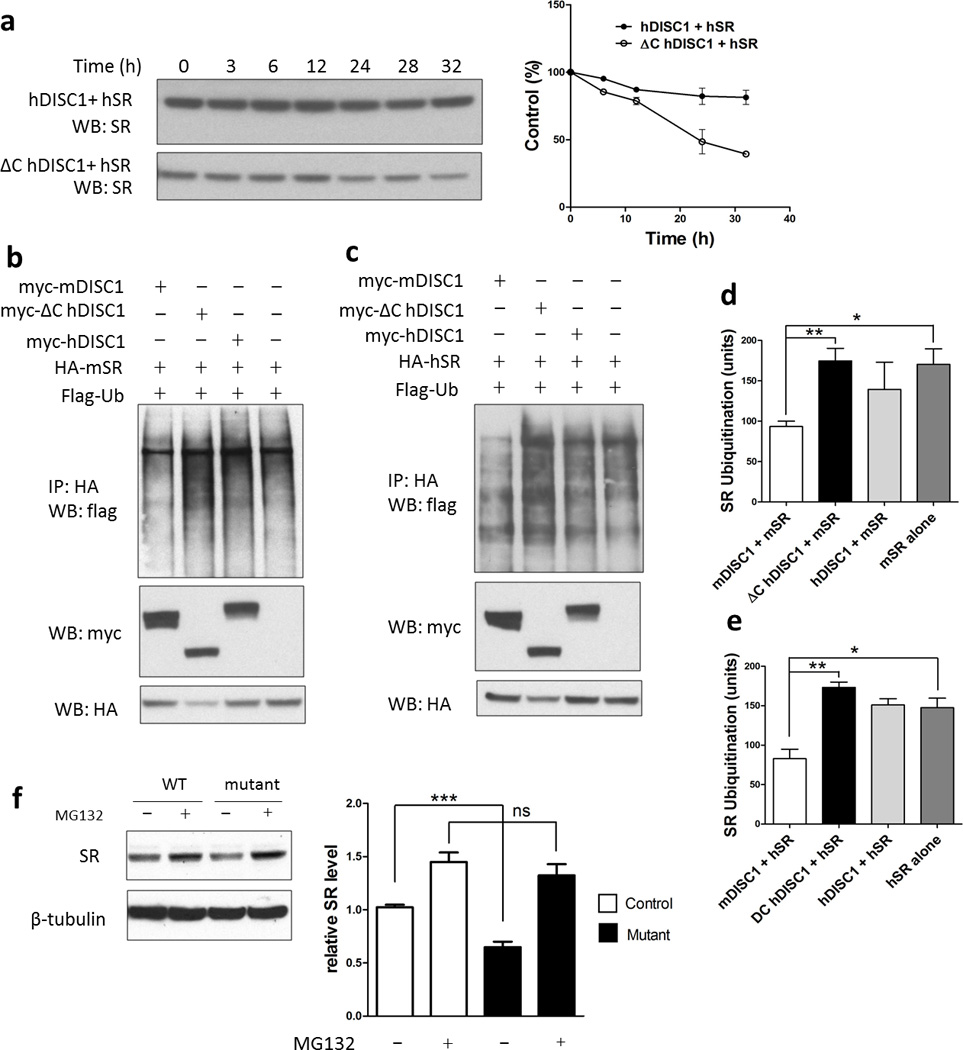
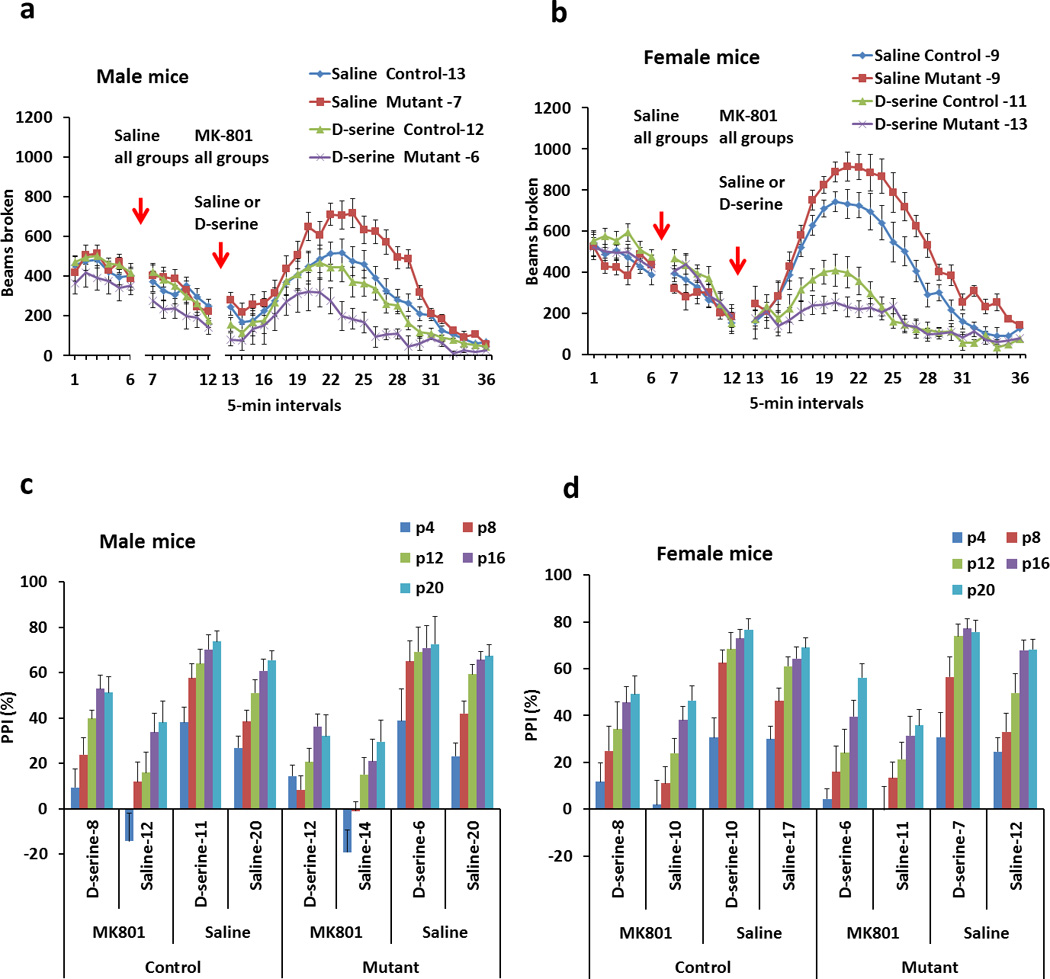
Perturbation of Disrupted-In-Schizophrenia-1 (DISC1) and D-serine/NMDA receptor hypofunction have both been implicated in the pathophysiology of schizophrenia and other psychiatric disorders. In the present study, we demonstrate that these two pathways intersect with behavioral consequences. DISC1 binds to and stabilizes serine racemase (SR), the enzyme that generates D-serine, an endogenous co-agonist of the NMDA receptor. Mutant DISC1 fails to bind to SR, facilitating ubiquitination and degradation of SR and a decrease in D-serine production. To elucidate DISC1-SR interactions in vivo, we generated a mouse model of selective and inducible expression of mutant DISC1 in astrocytes, the main source of D-serine in the brain. Expression of mutant DISC1 downregulates endogenous DISC1 and decreases protein but not mRNA levels of SR, resulting in diminished production of D-serine. In contrast, mutant DISC1 does not alter levels of ALDH1L1, connexins, GLT-1 or binding partners of DISC1 and SR, LIS1 or PICK1. Adult male and female mice with lifelong expression of mutant DISC1 exhibit behavioral abnormalities consistent with hypofunction of NMDA neurotransmission. Specifically, mutant mice display greater responses to an NMDA antagonist, MK-801, in open field and pre-pulse inhibition of the acoustic startle tests and are significantly more sensitive to the ameliorative effects of D-serine. These findings support a model wherein mutant DISC1 leads to SR degradation via dominant negative effects, resulting in D-serine deficiency that diminishes NMDA neurotransmission thus linking DISC1 and NMDA pathophysiological mechanisms in mental illness.
Conflict of interest statement
The authors declare no conflict of interest.
Figures
References
-
- Goff DC, Coyle JT. The emerging role of glutamate in the pathophysiology and treatment of schizophrenia. The American journal of psychiatry. 2001;158(9):1367–1377. - PubMed
-
- Javitt DC, Zukin SR. Recent advances in the phencyclidine model of schizophrenia. The American journal of psychiatry. 1991;148(10):1301–1308. - PubMed
-
- Panatier A, Theodosis DT, Mothet JP, Touquet B, Pollegioni L, Poulain DA, et al. Glia-derived D-serine controls NMDA receptor activity and synaptic memory. Cell. 2006;125(4):775–784. - PubMed
Publication types
MeSH terms
Substances
Grants and funding
- R21 MH085226/MH/NIMH NIH HHS/United States
- R37 MH018501/MH/NIMH NIH HHS/United States
- MH084020/MH/NIMH NIH HHS/United States
- RC1 MH088753/MH/NIMH NIH HHS/United States
- R01 MH092443/MH/NIMH NIH HHS/United States
- P20 MH084018/MH/NIMH NIH HHS/United States
- MH083728/MH/NIMH NIH HHS/United States
- P50 MH094268/MH/NIMH NIH HHS/United States
- P50 MH084020/MH/NIMH NIH HHS/United States
- R01 MH069853/MH/NIMH NIH HHS/United States
- R01 MH083728/MH/NIMH NIH HHS/United States
- MH18501/MH/NIMH NIH HHS/United States
- R01 MH018501/MH/NIMH NIH HHS/United States
LinkOut - more resources
Full Text Sources
Medical
Molecular Biology Databases
Research Materials
Miscellaneous
