. 2012;7(7):e39817.
doi: 10.1371/journal.pone.0039817. Epub 2012 Jul 3.

Volatile organic compounds enhance allergic airway inflammation in an experimental mouse model

Affiliations

Volatile organic compounds enhance allergic airway inflammation in an experimental mouse model

Ulrike Bönisch et al. PLoS One. 2012.

Abstract

Background: Epidemiological studies suggest an association between exposure to volatile organic compounds (VOCs) and adverse allergic and respiratory symptoms. However, whether VOCs exhibit a causal role as adjuvants in asthma development remains unclear.

Methods: To investigate the effect of VOC exposure on the development of allergic airway inflammation Balb/c mice were exposed to VOCs emitted by new polyvinylchloride (PVC) flooring, sensitized with ovalbumin (OVA) and characterized in acute and chronic murine asthma models. Furthermore, prevalent evaporated VOCs were analyzed and mice were exposed to selected single VOCs.

Results: Exposure of mice to PVC flooring increased eosinophilic lung inflammation and OVA-specific IgE serum levels compared to un-exposed control mice. The increased inflammation was associated with elevated levels of Th2-cytokines. Long-term exposure to PVC flooring exacerbated chronic airway inflammation. VOCs with the highest concentrations emitted by new PVC flooring were N-methyl-2-pyrrolidone (NMP) and 2,2,4-trimethyl-1,3-pentanediol diisobutyrate (TXIB). Exposure to NMP or TXIB also increased the allergic immune response in OVA-sensitized mice. In vitro or in vivo exposure to NMP or TXIB reduced IL-12 production in maturing dendritic cells (DCs) and enhanced airway inflammation after adoptive DC transfer into Balb/c mice. At higher concentrations both VOCs induced oxidative stress demonstrated by increased isoprostane and glutathione-S-transferase-pi1 protein levels in the lung of non-sensitized mice. Treatment of PVC flooring-exposed mice with N-acetylcysteine prevented the VOC-induced increase of airway inflammation.

Conclusions: Our results demonstrate that exposure to VOCs may increase the allergic immune response by interfering with DC function and by inducing oxidative stress and has therefore to be considerate as risk factor for the development of allergic diseases.


Conflict of interest statement

Competing Interests: The authors have declared that no competing interests exist.

Figures

Figure 1
Figure 1. Exposure to PVC flooring increases acute airway inflammation, antigen-specific IgE and Th2 cytokine levels and reduced IFN-γ production in OVA-sensitized Balb/c mice.
Balb/c mice were immunized with OVA (day 1 and 14) and then challenged with OVA on days 14 and 17–19. Mice were exposed to PVC flooring from day 0 to day 20. Effect of PVC flooring on inflammation (H&E, x200, A), verified by an objective, investigator-independent computer-based quantification of lung inflammation (B), on total cell numbers in the BAL fluid (C), OVA-specific IgE levels (D), lung resistance (E), lung compliance (F) and Th2 cytokine levels in the supernatant of OVA-re-stimulated splenocytes (G) or mediastinal lymphnodes (H). Data are expressed as mean ± SEM, n ≥ 9 animals per group; *p<0.05 vs. OVA.
Figure 2
Figure 2. Long-term exposure to PVC flooring exacerbates chronic airway inflammation.
To induce a chronic asthma phenotype mice were immunized with OVA (day 1 and 14) and then challenged with the antigen twice per week for 8 weeks. Effect of exposure to PVC flooring on inflammation of lung tissues (A), total cell numbers in BAL fluid (B), IgE levels (C), lung resistance (D), dynamic compliance (E), total lung collagen (F), and α-SMA- and PCNA-stained lung sections (G, H). Data are expressed as mean ± SEM, n ≥ 9 animals per group; *P<0.05 OVA + PVC vs. OVA; #P<0.05 Alum + PVC vs. Alum.
Figure 3
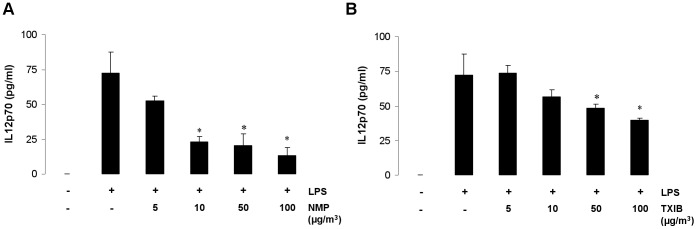
Figure 3. NMP and TXIB inhibit IL-12 production in LPS-stimulated murine DCs in vitro.
Effect of exposure of LPS-stimulated BMDCs to NMP (A) and TXIB (B) on IL-12 production. Data are expressed as mean ± SEM; n = 4–5/group. *P<0.05 vs. LPS.
Figure 4
Figure 4. Exposure to NMP and TXIB enhances the asthma-like phenotype in OVA-sensitized Balb/c mice.
Balb/c mice were immunized with OVA (day 1 and 14) and then challenged with OVA on days 14 and 17–19. Mice were exposed to NMP or TXIB from day 0 to day 20. Effect of NMP and TXIB on lung inflammation (A), total cell numbers in BAL fluid (B), IgE levels (C), lung resistance (D), and Th2 cytokine levels in the supernatant of OVA-re-stimulated splenocytes (E) or mediastinal lymphnodes (F) compared to the unexposed group. Data are expressed as mean ± SEM, n ≥ 9 animals per group; *p<0.05 vs. OVA.
Figure 5
Figure 5. NMP- or TXIB-induced increase of Th2 immune response is mediated by reduced IL-12 production by DCs.
BMDCs were pulsed for 24 h with OVA (200 µg/ml), some cells in the presence of NMP or TXIB (100 µg/m3), co-cultured with CD4+ T cells from DO11.10 mice or transferred into the trachea of naïve Balb/c mice. As control (CON) DCs only treated with LPS (100 ng/ml) was transferred. From day 10 onward, mice were challenged i.n. with OVA for 3 consecutive days. Cytokine production of DCs before transfer (A), cytokine production of DCs co-cultured with CD4+ T cells from DO11.10 mice (B) and effects of DC transfer on airway inflammation in H&E stained lung sections (C), total cell numbers in BAL fluid (D), lung resistance (E), and Th2 cytokine levels in the supernatant of OVA-re-stimulated mediastinal lymphnodes (F) are shown. Data are expressed as mean ± SEM, n ≥ 9 animals per group; *p<0.05 vs. OVA.
Figure 6
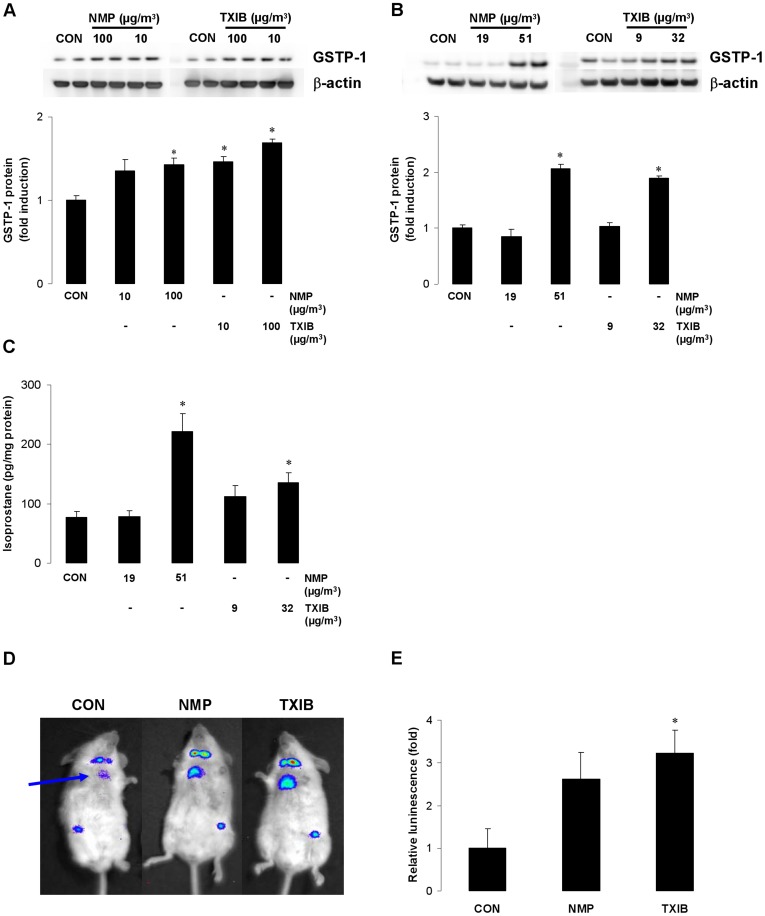
Figure 6. NMP and TXIB induce oxidative stress in vitro and in vivo.
A549 human lung epithelial cells were exposed to NMP or TXIB for 24 h. Expression of GSTP-1 was quantified by western blotting (A). Naïve mice were exposed to NMP or TXIB on two consecutive days for 6 hours, lung tissues were taken and GSTP-1 expression was quantified by western blotting (B) and 8-isoprostane (C) was measured as described in File S1. In the pseudoimages, the blue to red coloring represents the lowest to the highest light intensity in NMP (52 µg/m3)- or TXIB (31 µg/m3)-exposed NFκB/luciferase transgenic mice (D). Photon emission was quantified over the lung area (arrow) as mean fold of induction (E). Data are expressed as mean ± SEM from three independent experiments (A), n ≥ 9 animals per group (B, C) or n = 4 per group (D, E); *p<0.05 vs. CON.
Figure 7
Figure 7. Increased acute allergic immune response by PVC flooring is abrogated by the antioxidant NAC.
Treatment of Balb/c mice with NAC (1g/l) during exposure to PVC flooring reduced the enhanced acute airway inflammation (A), the number of eosinophils in the BAL fluid (B), OVA-specific IgE levels (C), IL-13 and IL-5 cytokine levels (D) and the production of 8-isoprostane in lung homogenates (E) compared to NAC-untreated mice. Data are expressed as mean ± SEM, n ≥ 9 animals per group; *P<0.05, PVC flooring vs. OVA; #P<0.05, PVC flooring vs. PVC flooring + NAC.

References

    1. Umetsu DT, McIntire JJ, Akbari O, Macaubas C, DeKruyff RH. Asthma: an epidemic of dysregulated immunity. Nat Immunol. 2002;3:715–720. - PubMed
    1. Pearce N, Douwes J. The global epidemiology of asthma in children. Int J Tuberc Lung Dis. 2006;10:125–132. - PubMed
    1. Leech JA, Nelson WC, Burnett RT, Aaron S, Raizenne ME. It’s about time: a comparison of Canadian and American time-activity patterns. J Expo Anal Environ Epidemiol. 2002;12:427–432. - PubMed
    1. Nielsen GD, Larsen ST, Olsen O, Lovik M, Poulsen LK, et al. Do indoor chemicals promote development of airway allergy? Indoor Air. 2007;17:236–255. - PubMed
    1. Cooke TF. Indoor air pollutants. A literature review. Rev Environ Health. 1991;9:137–160. - PubMed

Publication types

MeSH terms