


Sensitive and specific detection of Trypanosoma cruzi DNA in clinical specimens using a multi-target real-time PCR approach
- PMID: 22802973
- PMCID: PMC3389027
- DOI: 10.1371/journal.pntd.0001689
Sensitive and specific detection of Trypanosoma cruzi DNA in clinical specimens using a multi-target real-time PCR approach
Abstract
Background: The laboratory diagnosis of Chagas disease is challenging because the usefulness of different diagnostic tests will depend on the stage of the disease. Serology is the preferred method for patients in the chronic phase, whereas PCR can be successfully used to diagnose acute and congenital cases. Here we present data using a combination of three TaqMan PCR assays to detect T. cruzi DNA in clinical specimens.
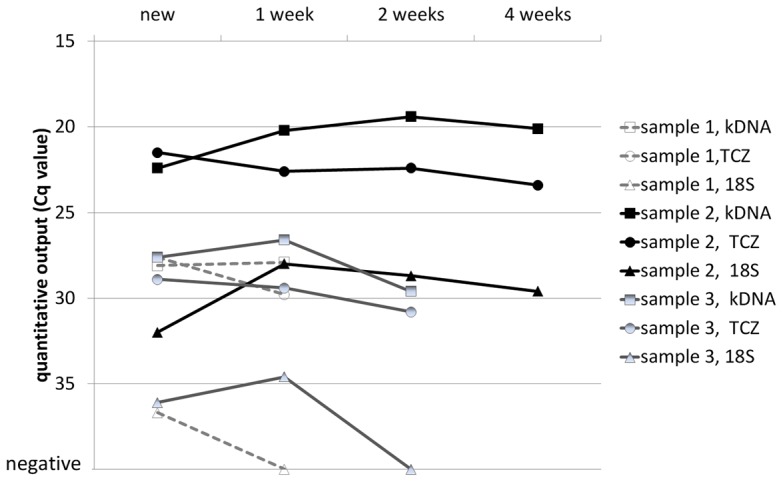
Methods/principal findings: Included in the analysis were DNA extracted from 320 EDTA blood specimens, 18 heart tissue specimens, 6 umbilical cord blood specimens, 2 skin tissue specimens and 3 CSF specimens. For the blood specimens both whole blood and buffy coat fraction were analyzed. The specimens were from patients living in the USA, with suspected exposure to T. cruzi through organ transplantation, contact with triatomine bugs or laboratory accidents, and from immunosuppressed patients with suspected Chagas disease reactivation. Real-time PCR was successfully used to diagnose acute and Chagas disease reactivation in 20 patients, including one case of organ-transmitted infection and one congenital case. Analysis of buffy coat fractions of EDTA blood led to faster diagnosis in six of these patients compared to whole blood analysis. The three real-time PCR assays produced identical results for 94% of the specimens. The major reason for discrepant results was variable sensitivity among the assays, but two of the real-time PCR assays also produced four false positive results.
Conclusions/significance: These data strongly indicate that at least two PCR assays with different performances should be combined to increase the accuracy. This evaluation also highlights the benefit of extracting DNA from the blood specimen's buffy coat to increase the sensitivity of PCR analysis.
Conflict of interest statement
The authors have declared that no competing interests exist.
Figures
References
-
- Rassi A, Jr, Rassi A, Marin-Neto JA. Chagas disease. Lancet. 2010;375:1388–1402. - PubMed
-
- Prata A. Clinical and epidemiological aspects of Chagas disease. Lancet Infect Dis. 2001;1:92–100. - PubMed
-
- Bern C, Montgomery SP, Herwaldt BL, Rassi A, Jr, Marin-Neto JA, et al. Evaluation and treatment of chagas disease in the United States: a systematic review. JAMA. 2007;298:2171–2181. - PubMed
-
- Diez M, Favaloro L, Bertolotti A, Burgos JM, Vigliano C, et al. Usefulness of PCR strategies for early diagnosis of Chagas' disease reactivation and treatment follow-up in heart transplantation. Am J Transplant. 2007;7:1633–1640. - PubMed
-
- Gomes YM, Lorena VM, Luquetti AO. Diagnosis of Chagas disease: what has been achieved? What remains to be done with regard to diagnosis and follow up studies? Mem Inst Oswaldo Cruz. 2009;104(Suppl 1):115–121. - PubMed
Publication types
MeSH terms
Substances
LinkOut - more resources
Full Text Sources
Medical
