


Wiskott-Aldrich syndrome protein controls antigen-presenting cell-driven CD4+ T-cell motility by regulating adhesion to intercellular adhesion molecule-1
- PMID: 22804504
- PMCID: PMC3461399
- DOI: 10.1111/j.1365-2567.2012.03620.x
Wiskott-Aldrich syndrome protein controls antigen-presenting cell-driven CD4+ T-cell motility by regulating adhesion to intercellular adhesion molecule-1
Abstract
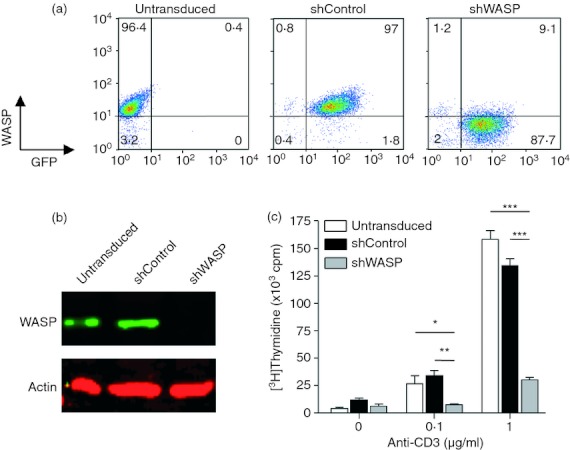
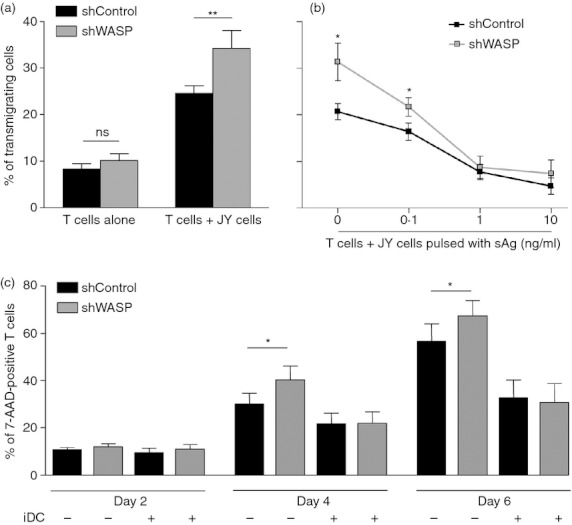
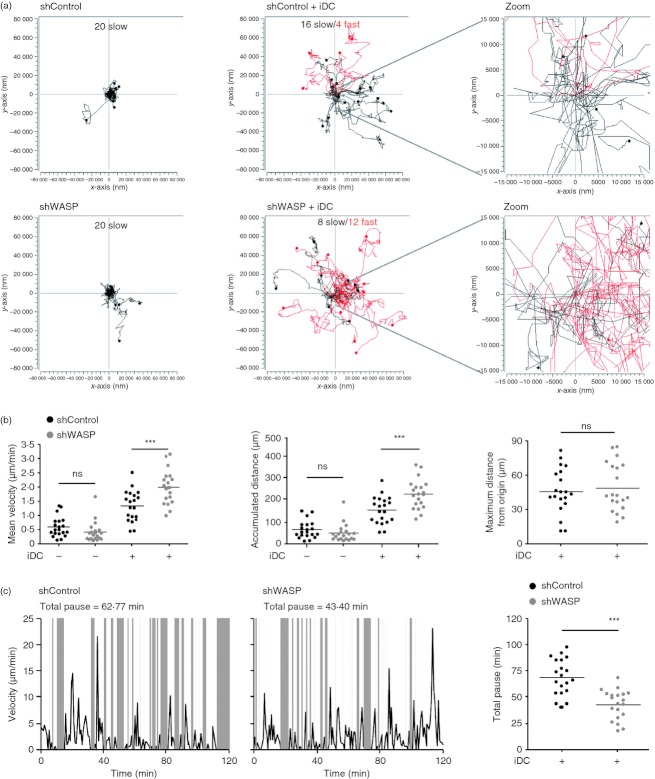
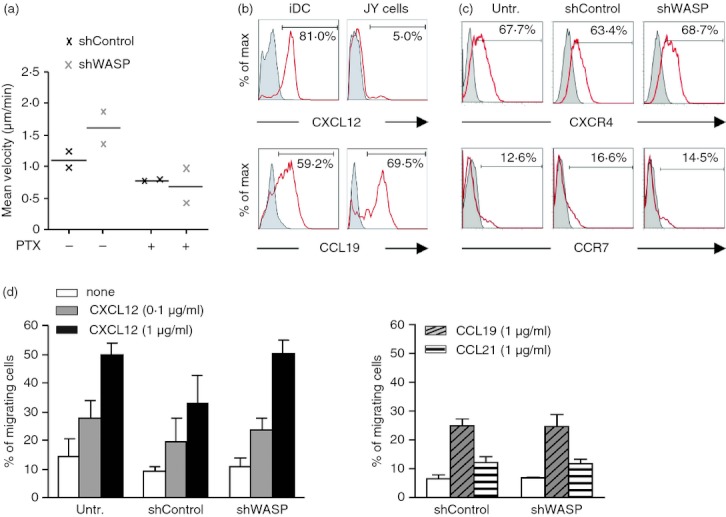
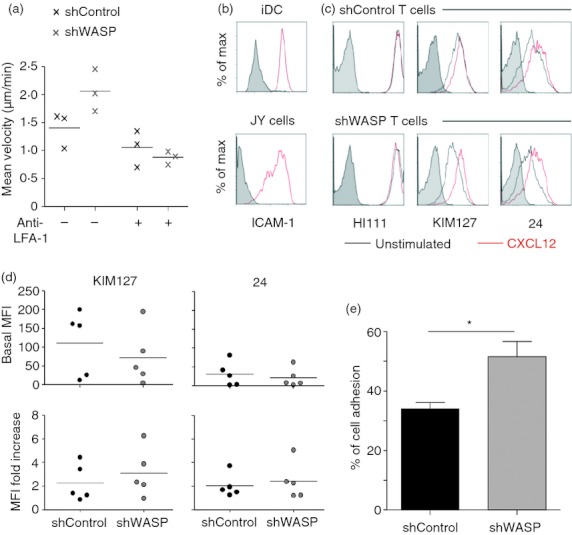
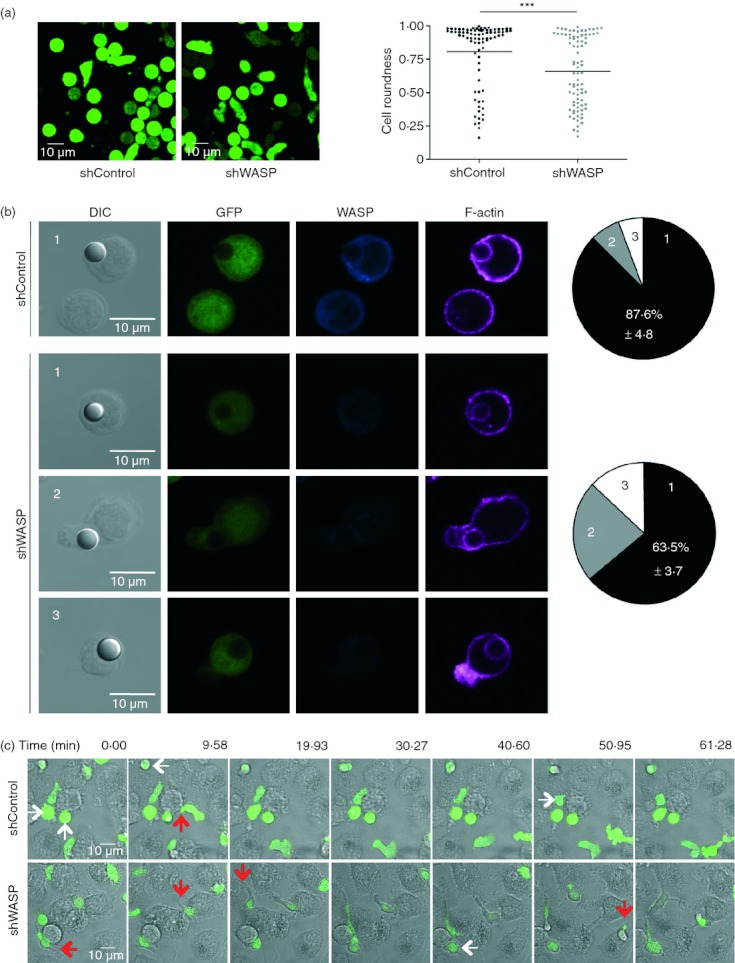
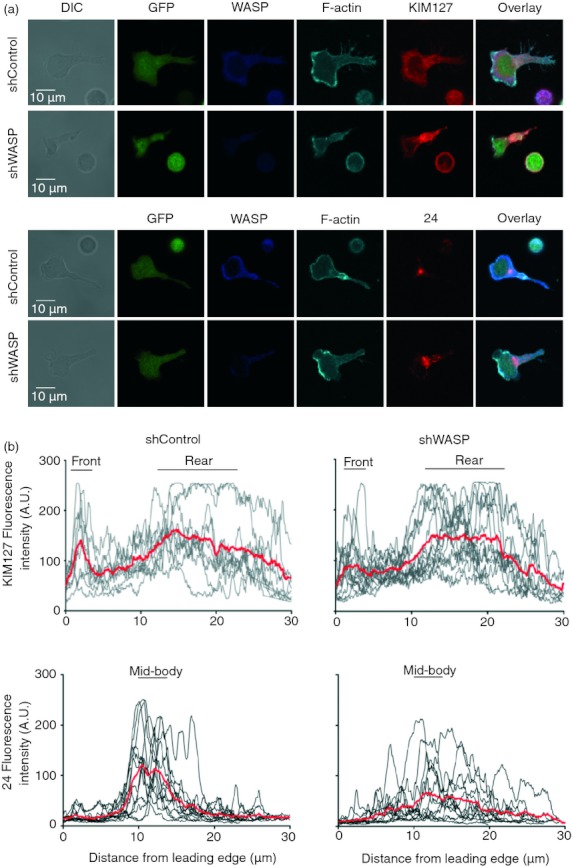
T-cell scanning for antigen-presenting cells (APC) is a finely tuned process. Whereas non-cognate APC trigger T-cell motility via chemokines and intercellular adhesion molecule-1 (ICAM-1), cognate APC deliver a stop signal resulting from antigen recognition. We tested in vitro the contribution of the actin cytoskeleton regulator Wiskott-Aldrich syndrome protein (WASP) to the scanning activity of primary human CD4(+) T cells. WASP knock-down resulted in increased T-cell motility upon encounter with non-cognate dendritic cells or B cells and reduced capacity to stop following antigen recognition. The high motility of WASP-deficient T cells was accompanied by a diminished ability to round up and to stabilize pauses. WASP-deficient T cells migrated in a normal proportion towards CXCL12, CCL19 and CCL21, but displayed an increased adhesion and elongation on ICAM-1. The elongated morphology of WASP-deficient T cells was related to a reduced confinement of high-affinity lymphocyte function-associated antigen 1 to the mid-cell zone. Our data therefore indicate that WASP controls CD4(+) T-cell motility upon APC encounter by regulating lymphocyte function-associated antigen 1 spatial distribution.
© 2012 The Authors. Immunology © 2012 Blackwell Publishing Ltd.
Figures
References
Publication types
MeSH terms
Substances
LinkOut - more resources
Full Text Sources
Molecular Biology Databases
Research Materials
Miscellaneous
