


Activated K-Ras and INK4a/Arf deficiency promote aggressiveness of pancreatic cancer by induction of EMT consistent with cancer stem cell phenotype
- PMID: 22806240
- PMCID: PMC3777743
- DOI: 10.1002/jcp.24162
Activated K-Ras and INK4a/Arf deficiency promote aggressiveness of pancreatic cancer by induction of EMT consistent with cancer stem cell phenotype
Erratum in
- J Cell Physiol. 2014 Aug;229(8):1118
Retraction in
-
Retraction: "Activated K-Ras and INK4a/Arf Deficiency Promote Aggressiveness of Pancreatic Cancer by Induction of EMT Consistent With Cancer Stem Cell Phenotype" by Wang et al.J Cell Physiol. 2016 Oct;231(10):2304. doi: 10.1002/jcp.25417. J Cell Physiol. 2016. PMID: 27315162 Free PMC article.
Abstract
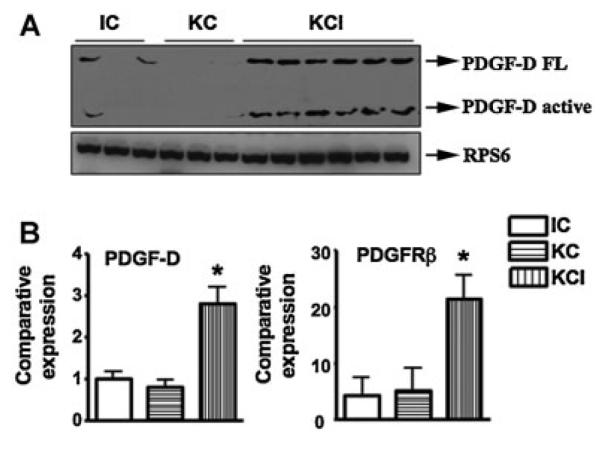
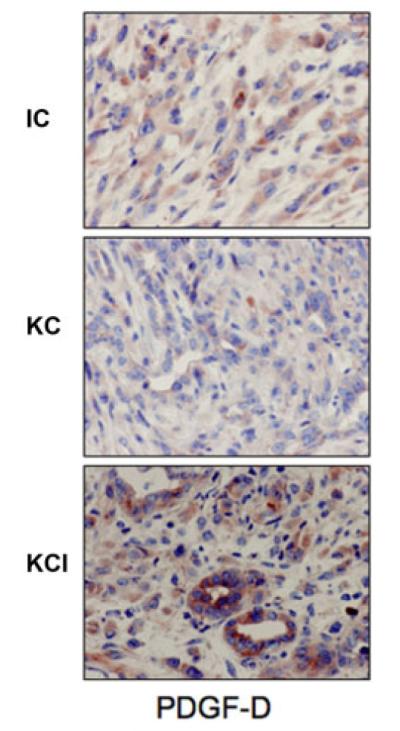
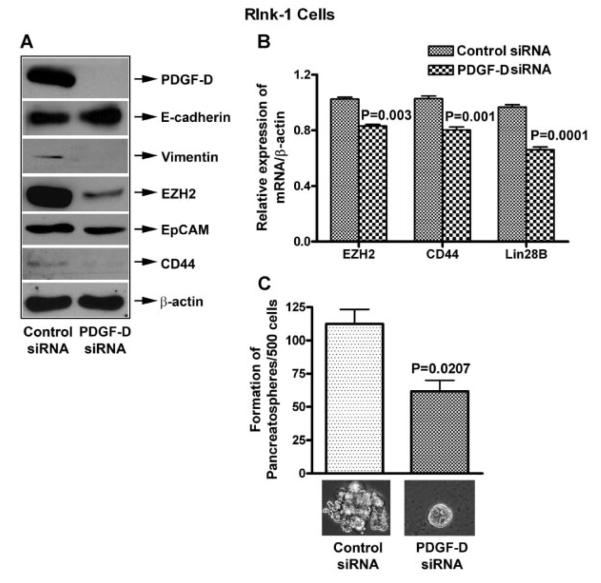
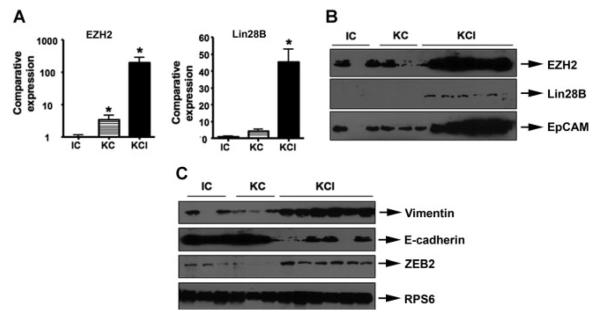
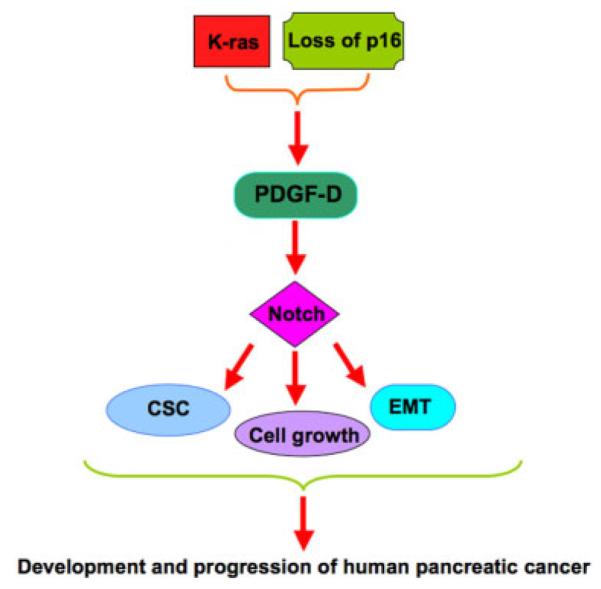
Pancreatic ductal adenocarcinoma (PDAC) is one of the most frequently diagnosed cancers and the fourth leading cause of cancer-related death in the United States, suggesting that there is an urgent need to design novel strategies for achieving better treatment outcome of patients diagnosed with PDAC. Our previous study has shown that activation of Notch and NF-κB play a critical role in the development of PDAC in the compound K-Ras(G12D) and Ink4a/Arf deficient transgenic mice. However, the exact molecular mechanism by which mutated K-Ras and Ink4a/Arf deficiency contribute to progression of PDAC remains largely elusive. In the present study, we used multiple methods, such as real-time RT-PCR, Western blotting assay, and immunohistochemistry to gain further mechanistic insight. We found that the deletion of Ink4a/Arf in K-Ras(G12D) expressing mice led to high expression of PDGF-D signaling pathway in the tumor and tumor-derived cell line (RInk-1 cells). Furthermore, PDGF-D knock-down in RInk-1 cells resulted in the inhibition of pancreatosphere formation and down-regulation of EZH2, CD44, EpCAM, and vimentin. Moreover, we demonstrated that epithelial-mesenchymal transition (EMT) was induced in the compound mice, which is linked with aggressiveness of PDAC. In addition, we demonstrated that tumors from compound transgenic mice have higher expression of cancer stem cell (CSC) markers. These results suggest that the acquisition of EMT phenotype and induction of CSC characteristics could be linked with the aggressiveness of PDAC mediated in part through the activation of PDGF-D, signaling.
Copyright © 2012 Wiley Periodicals, Inc.
Figures
References
-
- Ahmad A, Wang Z, Kong D, Ali R, Ali S, Banerjee S, Sarkar FH. Platelet-derived growth factor-D contributes to aggressiveness of breast cancer cells by up-regulating Notch and NF-kappaB signaling pathways. Breast Cancer Res Treat. 2011;126:15–25. - PubMed
Publication types
MeSH terms
Substances
Grants and funding
LinkOut - more resources
Full Text Sources
Medical
Miscellaneous
