


Utilizing a handheld electrode array for localized muscle impedance measurements
- PMID: 22806375
- PMCID: PMC3400114
- DOI: 10.1002/mus.23307
Utilizing a handheld electrode array for localized muscle impedance measurements
Abstract
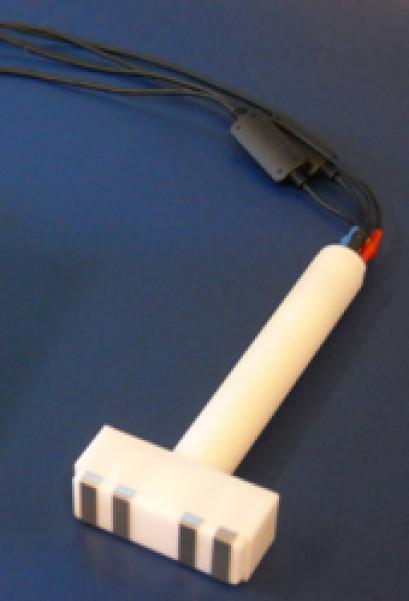
Introduction: Electrical impedance myography (EIM) is a noninvasive technique used for assessment of muscle health in which a high-frequency, low-amplitude electric current is applied to the skin overlying a muscle, and the resulting surface voltage is measured. We have previously used adhesive electrodes, application of which is inconvenient. We present data using a handheld electrode array (HEA) that we devised to expedite the EIM procedure in a clinical setting.
Methods: Thirty-four healthy volunteers and 24 radiculopathy subjects underwent EIM testing using the HEA and adhesive electrodes.
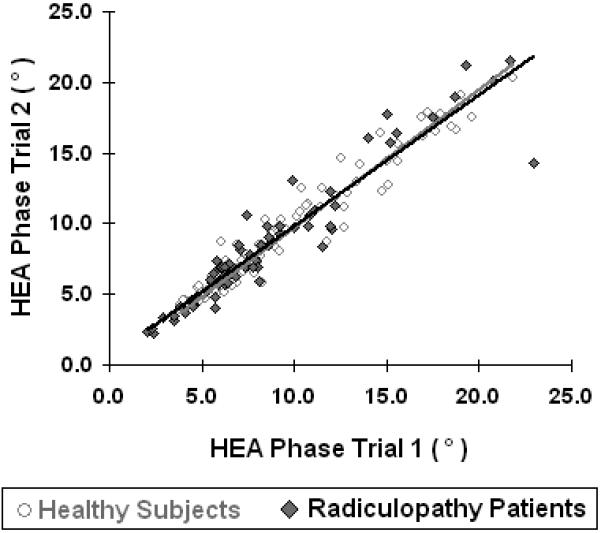
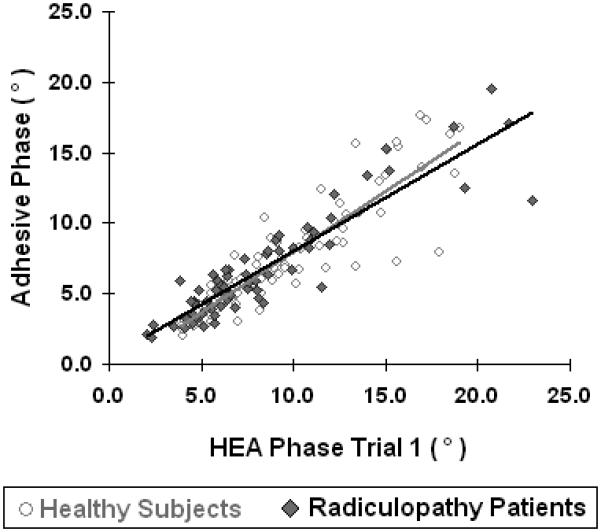
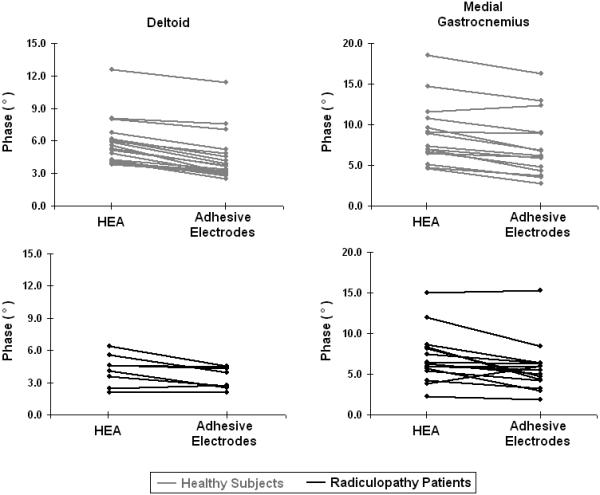
Results: The HEA was shown to have good test-retest reproducibility, with intraclass correlation coefficients as high as 0.99. HEA data correlated strongly with data from adhesive electrodes, ρ = 0.85 in healthy volunteers (P < 0.001) and ρ = 0.75 in radiculopathy subjects (P < 0.001).
Conclusions: These data support the potential use of a handheld array for performing rapid localized surface impedance measurements.
Copyright © 2012 Wiley Periodicals, Inc.
Figures
References
-
- Rutkove SB, Aaron R, Shiffman CA. Localized bioimpedance analysis in the evaluation of neuromuscular disease. Muscle Nerve. 2002;25:390–397. - PubMed
-
- Shiffman CA, Aaron R, Amoss V, Therrien J, Coomler K. Resistivity and phase in localized BIA. Phys Med Biol. 1999;44:2409–2429. - PubMed
-
- Rutkove SB, Esper GJ, Lee KS, Aaron R, Shiffman CA. Electrical impedance myography in the detection of radiculopathy. Muscle Nerve. 2005;32:335–341. - PubMed
-
- Tarulli A, Esper GJ, Lee KS, Aaron R, Shiffman CA, Rutkove SB. Electrical impedance myography in the bedside assessment of inflammatory myopathy. Neurology. 2005;65:451–452. - PubMed
Publication types
MeSH terms
Grants and funding
LinkOut - more resources
Full Text Sources
