. 2012;7(7):e39929.
doi: 10.1371/journal.pone.0039929. Epub 2012 Jul 11.

Four loci explain 83% of size variation in the horse

Affiliations

Four loci explain 83% of size variation in the horse

Shokouh Makvandi-Nejad et al. PLoS One. 2012.

Abstract

Horse body size varies greatly due to intense selection within each breed. American Miniatures are less than one meter tall at the withers while Shires and Percherons can exceed two meters. The genetic basis for this variation is not known. We hypothesize that the breed population structure of the horse should simplify efforts to identify genes controlling size. In support of this, here we show with genome-wide association scans (GWAS) that genetic variation at just four loci can explain the great majority of horse size variation. Unlike humans, which are naturally reproducing and possess many genetic variants with weak effects on size, we show that horses, like other domestic mammals, carry just a small number of size loci with alleles of large effect. Furthermore, three of our horse size loci contain the LCORL, HMGA2 and ZFAT genes that have previously been found to control human height. The LCORL/NCAPG locus is also implicated in cattle growth and HMGA2 is associated with dog size. Extreme size diversification is a hallmark of domestication. Our results in the horse, complemented by the prior work in cattle and dog, serve to pinpoint those very few genes that have played major roles in the rapid evolution of size during domestication.


Conflict of interest statement

Competing Interests: The authors have declared that no competing interests exist.

Figures

Figure 1
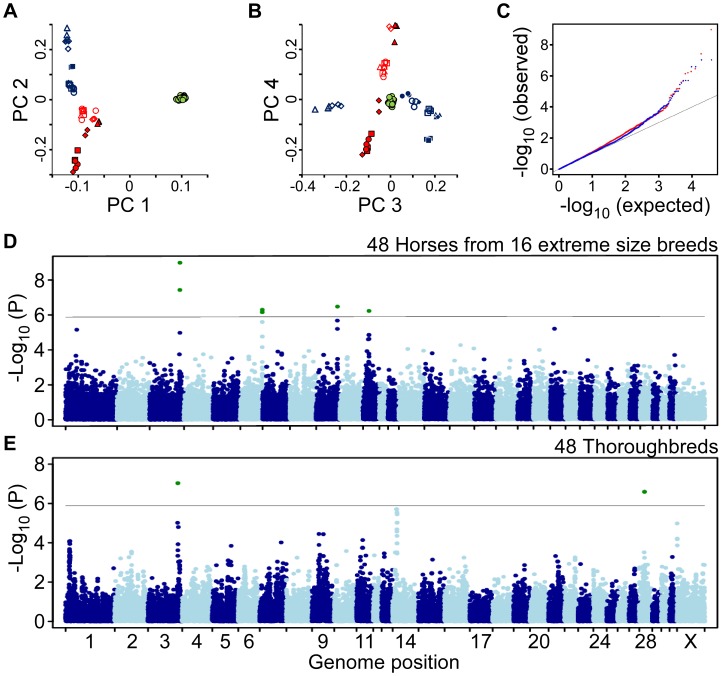
Figure 1. Two genome-wide association scans for size identify five significantly associated loci.
(A) Horse breed phylogenetic relationships were inferred using a principal components analysis of SNP genotypes collected from 48 horses from 16 extreme size breeds plus 48 Thoroughbreds. Thoroughbreds (filled green circles) and other breeds have distinct genetic signatures. Large breeds (blue points) are genetically clustered in PC-space as are small breeds (red points). The first four PCs are plotted: PC1 (9.7% of variance explained) and PC2 (2.7%) and in (B) PC3 (2.4%) and PC4 (2.0%). Breeds in size order: American Miniature  =  filled red squares, Falabella  =  filled red circles, Caspian  =  filled red triangles, Shetland Pony  =  filled red diamonds, Welsh Mountain Pony  =  unfilled red squares, Welsh Pony  =  unfilled red circles, Dartmoor Pony  =  unfilled red triangles, Puerto Rican Paso Fino  =  unfilled red diamonds, Friesian  =  filled blue squares, Suffolk Punch  =  filled blue circles, Ardennais  =  filled blue triangles, Brabant  =  filled blue diamonds, Belgian  =  unfilled blue squares, Percheron  =  unfilled blue circles, Clydesdale  =  unfilled blue triangles, and Shire  =  unfilled blue diamonds. (C) Quantile-quantile plot for the GWA scans. The p-values for the 16 breed scan are plotted in red and have a genomic inflation factor of 1.189. The p-values for the Thoroughbred scan are plotted in blue and have a genomic inflation factor of 1.114. (D) Manhattan plot for the GWA scan of 48 horses from 16 breeds of extreme size and (E) 48 Thoroughbreds. The horizontal line in each indicates genome-wide significance with an alpha  = 0.05 and Bonferroni correction for multiple hypothesis testing.
Figure 2
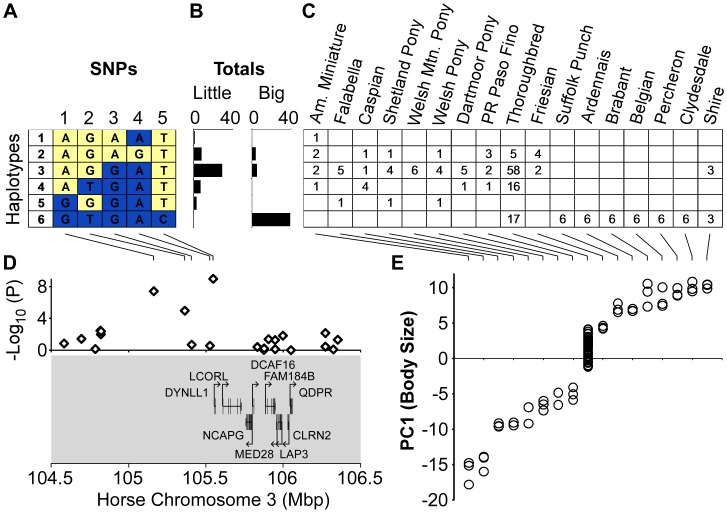
Figure 2. The 16 breed GWA scan identifies four loci associated with horse size.
On the right the breeds are shown in size order. For each locus and breed the dark column in the cell indicates the frequency of the allele that is associated with large size.
Figure 3
Figure 3. Haplotypes at the LCORL locus on horse chromosome 3 are associated with size.
(A) Haplotypes for five SNPs were inferred with PHASE and (B) have different counts in the set of all little breed horses (American Miniature to Puerto Rican Paso Fino) vs. all big breed horses (Friesian to Shire). (C) For each breed, the count of chromosomes inferred to be carrying each haplotype. (D) Size-associated SNPs on chromosome 3 are adjacent to the LCORL gene. SNP associations from the 16-breed GWA scan are plotted above the genes in this locus. Each gene’s exons (vertical bars), introns (horizontal lines) and direction of transcription (arrow) are indicated. (E) The size of each horse was quantified via a principal components analysis of 33 measurements from the head, neck, trunk and limbs. For each horse, breed membership is plotted vs. PC1-size score.
Figure 4
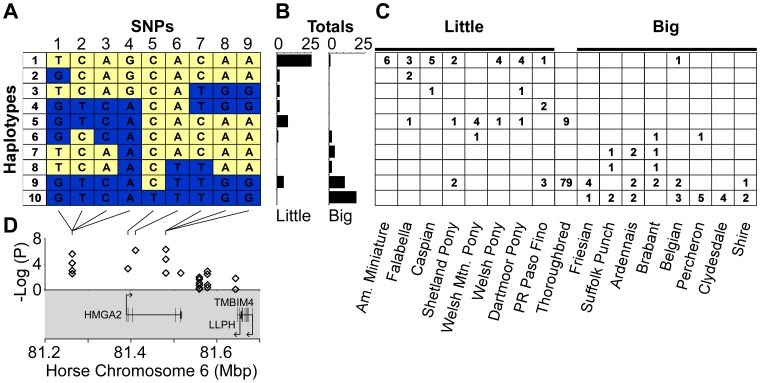
Figure 4. Association with size at the HMGA2 locus.
(A) Haplotypes spanning HMGA2 were inferred with PHASE for a set of nine SNPs that included all size-associated SNPs at the locus. (B) The haplotype counts differ in the set of all little breed horses (American Miniature to Puerto Rican Paso Fino) vs. all big breed horses (Friesian to Shire). (C) For each breed, the count of chromosomes inferred to be carrying that haplotype. (D) Size-associated SNPs occur within and adjacent to HMGA2. SNP associations from the 16-breed GWA scan are plotted above the genes in this locus. These SNPs were discovered and genotyped by capillary sequencing (see main text). Each gene’s exons (vertical bars), introns (horizontal lines) and direction of transcription (arrow) are indicated.

References

    1. Clutton-Brock J, Natural History Museum (London England) A natural history of domesticated mammals. Cambridge, U.K.; New York, NY, USA London;: Cambridge University Press; Natural History Museum. viii, 238 p. p. 1999.
    1. Brooks SA, Makvandi-Nejad S, Chu E, Allen JJ, Streeter C, et al. Morphological variation in the horse: defining complex traits of body size and shape. Animal Genetics. 2010;41:159–165. - PubMed
    1. Lango Allen H, Estrada K, Lettre G, Berndt SI, Weedon MN, et al. Hundreds of variants clustered in genomic loci and biological pathways affect human height. Nature. 2010;467:832–838. - PMC - PubMed
    1. Weedon MN, Lettre G, Freathy RM, Lindgren CM, Voight BF, et al. A common variant of HMGA2 is associated with adult and childhood height in the general population. Nat Genet. 2007;39:1245–1250. - PMC - PubMed
    1. Gudbjartsson DF, Walters GB, Thorleifsson G, Stefansson H, Halldorsson BV, et al. Many sequence variants affecting diversity of adult human height. Nat Genet. 2008;40:609–615. - PubMed

Publication types