


A MIQE-compliant real-time PCR assay for Aspergillus detection
- PMID: 22808087
- PMCID: PMC3393739
- DOI: 10.1371/journal.pone.0040022
A MIQE-compliant real-time PCR assay for Aspergillus detection
Abstract
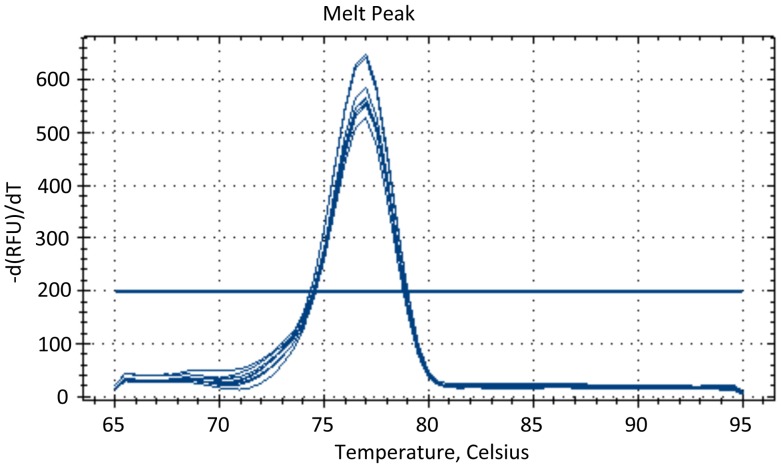
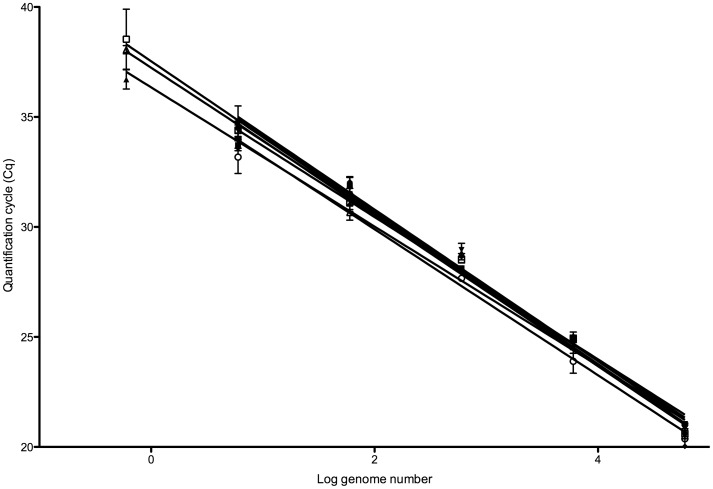
The polymerase chain reaction (PCR) is widely used as a diagnostic tool in clinical laboratories and is particularly effective for detecting and identifying infectious agents for which routine culture and microscopy methods are inadequate. Invasive fungal disease (IFD) is a major cause of morbidity and mortality in immunosuppressed patients, and optimal diagnostic criteria are contentious. Although PCR-based methods have long been used for the diagnosis of invasive aspergillosis (IA), variable performance in clinical practice has limited their value. This shortcoming is a consequence of differing sample selection, collection and preparation protocols coupled with a lack of standardisation of the PCR itself. Furthermore, it has become clear that the performance of PCR-based assays in general is compromised by the inadequacy of experimental controls, insufficient optimisation of assay performance as well as lack of transparency in reporting experimental details. The recently published "Minimum Information for the publication of real-time Quantitative PCR Experiments" (MIQE) guidelines provide a blueprint for good PCR assay design and unambiguous reporting of experimental detail and results. We report the first real-time quantitative PCR (qPCR) assay targeting Aspergillus species that has been designed, optimised and validated in strict compliance with the MIQE guidelines. The hydrolysis probe-based assay, designed to target the 18S rRNA DNA sequence of Aspergillus species, has an efficiency of 100% (range 95-107%), a dynamic range of at least six orders of magnitude and limits of quantification and detection of 6 and 0.6 Aspergillus fumigatus genomes, respectively. It does not amplify Candida, Scedosporium, Fusarium or Rhizopus species and its clinical sensitivity is demonstrated in histological material from proven IA cases, as well as concordant PCR and galactomannan data in matched broncho-alveolar lavage and blood samples. The robustness, specificity and sensitivity of this assay make it an ideal molecular diagnostic tool for clinical use.
Conflict of interest statement
Figures
References
-
- Bustin SA, Kessler HH. Kessler HH, editor. Amplification and decetion methods. 2010. pp. 53–66. editor. Molecular Diagnostics of Infectious Diseases. Berlin: De Gruyter.
-
- White PL, Barnes RA. Aspergillus PCR - Platforms, strengths and weaknesses. Medical Mycology. 2006;44:S191–S198. - PubMed
-
- Groll AH, Walsh TJ. Antifungal chemotherapy: advances and perspectives. Swiss Med Wkly. 2002;132:303–311. - PubMed
-
- Subira M, Martino R, Franquet T, Puzo C, Altes A, et al. Invasive pulmonary aspergillosis in patients with hematologic malignancies: survival and prognostic factors. Haematologica. 2002;87:528–534. - PubMed
Publication types
MeSH terms
Substances
Associated data
- Actions
- Actions
- Actions
- Actions
LinkOut - more resources
Full Text Sources
Other Literature Sources
