


STAM protocol in dementia: a multicenter, single-blind, randomized, and controlled trial
- PMID: 22815078
- PMCID: PMC10845379
- DOI: 10.1177/1533317512452038
STAM protocol in dementia: a multicenter, single-blind, randomized, and controlled trial
Abstract
Background: The Sound Training for Attention and Memory in Dementia (STAM-Dem) is a manualized music-based protocol designed to be used in the rehabilitation of cognitive functions in elderly patients with dementia (PWD).
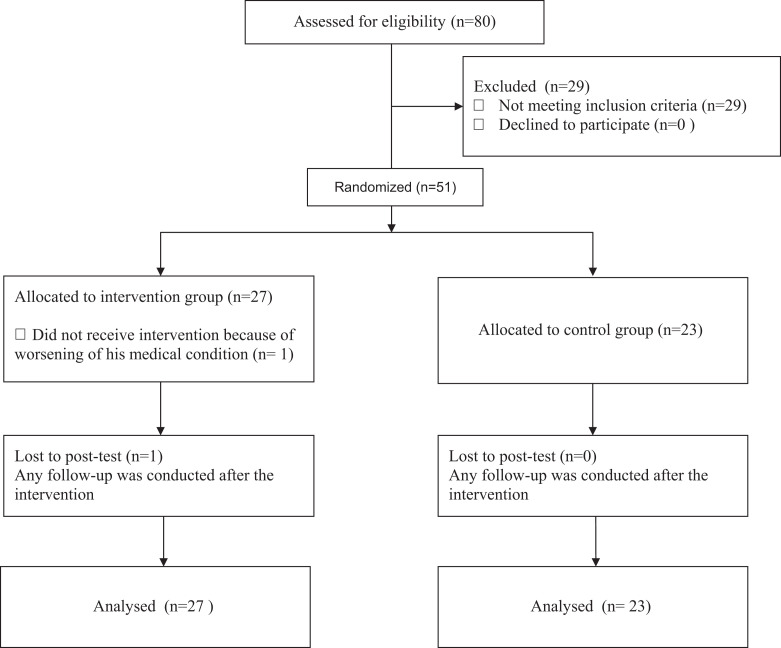
Method: This was a multicenter, single-blind, randomized, and controlled trial that involved 51 PWD. The objective was to test the STAM-Dem efficacy. Patients in the experimental group followed the STAM-Dem for 2 weekly sessions of 45 minutes for 12 weeks (in addition to standard care). Those in the control group continued with the normal "standard care" provided.
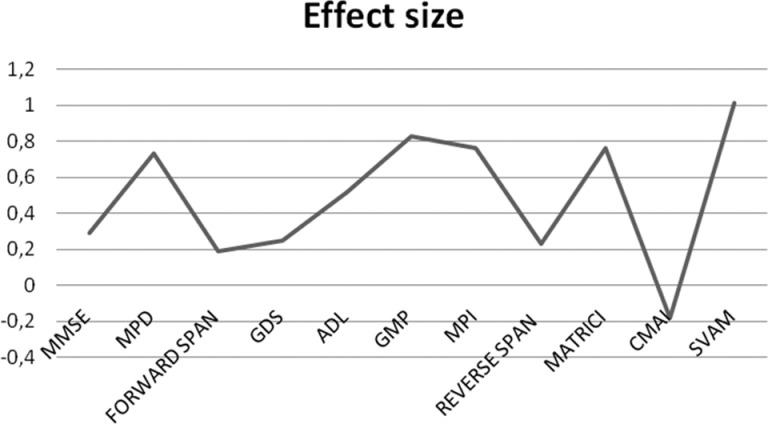
Results: In the experimental group, the instruments immediate prose memory test (MPI), deferred prose memory test (MPD), attentional matrices, activities of daily living, Music Therapy Activity Scale (SVAM) and Geriatric Music Therapy Profile (GMP) increase significantly from pre to post-test (P < .05).
Conclusion: The protocol is feasible and data suggest that there was an effect on attentino (matrices) and prose memory skills (MPI and MPD). The effect size reveals a general improvement in the results of the experimental group.
Conflict of interest statement
Enrico Ceccato, Paolo Pizziolo, Susanna Crociani, Emanuele Zanfretta, Lorenza Pollini, Paolo Alberto Caneva, and Lorella Baldin are professional music therapists.
Figures
References
-
- American Psychiatric Association. Diagnostic and Statistical Manual of Mental Disorders. 4th ed. Text Revision. Washington, DC: American Psychiatric Association; 2000.
-
- The ILSA Group. Prevalence of chronic diseases in older Italians: comparing self-reported and clinical diagnosis. Int J Epidemiol. 1997;26(5):995–1002. - PubMed
-
- Ritchie K, Lovestone S. The dementias. Lancet. 2002;360(9347):1759–1766. - PubMed
-
- Kopelman MD. Storage, forgetting and retrieval in the anterograde and retrograde amnesia of Alzheimer dementia. In: Backman, ed. Memory Functioning in Dementia. Amsterdam, The Netherlands: Elsevier Science;1992;89:45–72.
-
- Clare L, Woods B, Moniz Cook ED, et al. Cognitive rehabilitation and cognitive training for earlystage Alzheimer’s disease and vascular dementia (Cochrane Review). In: The Cochrane Library. Chichester, UK. Wiley e Sons; 2004.
Publication types
MeSH terms
LinkOut - more resources
Full Text Sources
Medical
