


Determinants of taste preference and acceptability: quality versus hedonics
- PMID: 22815522
- PMCID: PMC3422882
- DOI: 10.1523/JNEUROSCI.6036-11.2012
Determinants of taste preference and acceptability: quality versus hedonics
Abstract
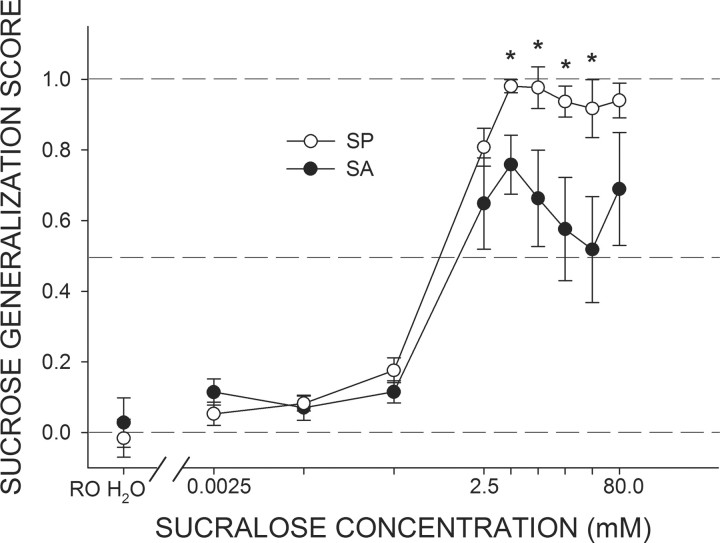
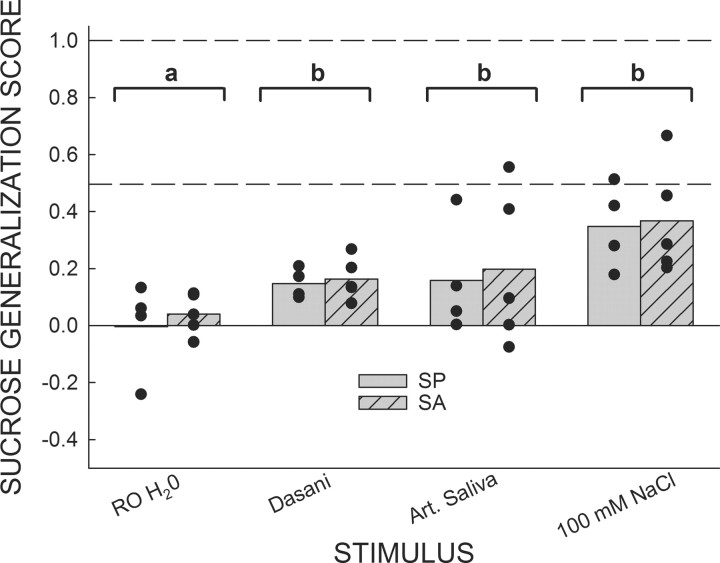
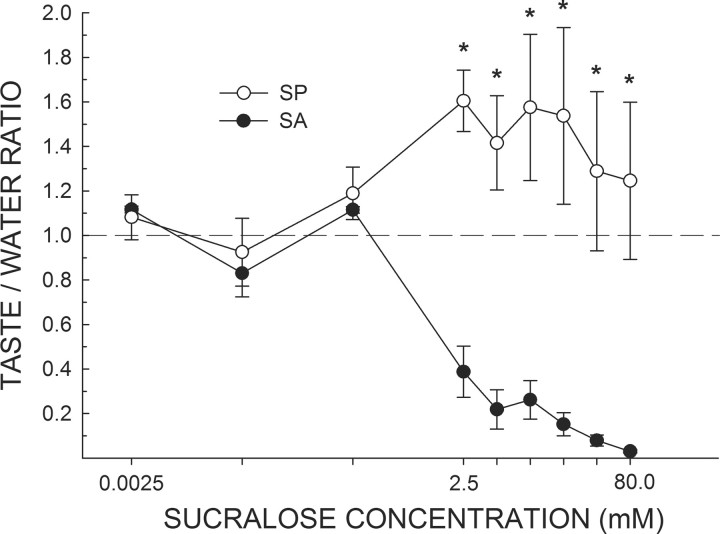
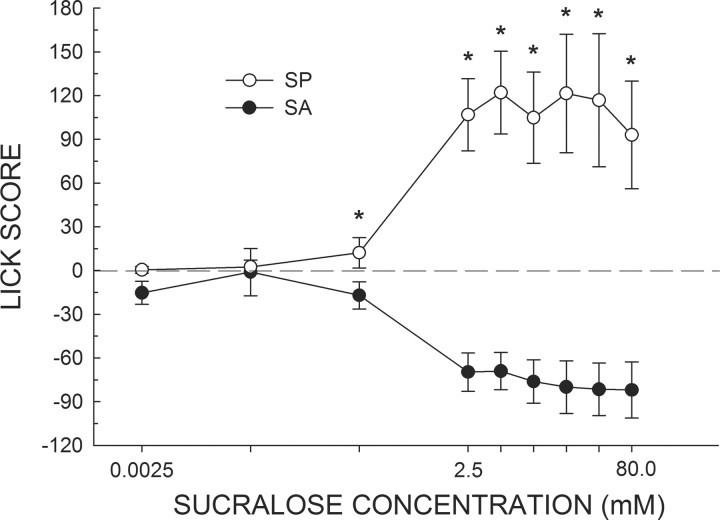
Several methods exist for reliably determining the motivational valence of a taste stimulus in animals, but few to determine its perceptual quality independent of its apparent affective properties. Individual differences in taste preference and acceptability could result from variance in the perceptual qualities of the stimulus leading to different hedonic evaluations. Alternatively, taste perception might be identical across subjects, but the processing of the sensory signals in reward circuits could differ. Using an operant-based taste cue discrimination/generalization task involving a gustometer, we trained male Long-Evans rats to report the degree to which a test stimulus resembled the taste quality of either sucrose or quinine regardless of its intensity. The rats, grouped by a characteristic bimodal phenotypic difference in their preference for sucralose, treated this artificial sweetener as qualitatively different-compared to sucralose-avoiding rats, the sucralose-preferring rats found the stimulus much more perceptually similar to sucrose. Although the possibility that stimulus palatability may have served as a discriminative cue cannot entirely be ruled out, the profile of results suggests otherwise. Subsequent brief-access licking tests revealed that affective licking responses of the same sucralose-avoiding and -preferring rats differed across concentration in a manner approximately similar to that found in the stimulus generalization task. Thus, the perceived taste quality of sucralose alone may be sufficient to drive the observed behavioral avoidance of the compound. By virtue of its potential ability to dissociate the sensory and motivational consequences of a given experimental manipulation on taste-related behavior, this approach could be interpretively valuable.
Conflict of interest statement
The authors declare no financial conflicts of interest.
Figures
References
-
- Bartoshuk LM. Taste mixtures: is mixture suppression related to compression? Physiol Behav. 1975;14:643–649. - PubMed
-
- Bartoshuk LM. Water taste in mammals. In: Weijnen J, Mendelson J, editors. Drinking behavior. New York: Plenium; 1977. pp. 317–339.
-
- Carroll ME, Morgan AD, Anker JJ, Perry JL, Dess NK. Selective breeding for differential saccharin intake as an animal model of drug abuse. Behav Pharmacol. 2008;19:435–460. - PubMed
-
- Chandrashekar J, Mueller KL, Hoon MA, Adler E, Feng L, Guo W, Zuker CS, Ryba NJ. T2Rs function as bitter taste receptors. Cell. 2000;100:703–711. - PubMed
-
- Cromwell HC, Berridge KC. Where does damage lead to enhanced food aversion: the ventral pallidum/substantia innominate or lateral hypothalamus? Brain Res. 1993;624:1–10. - PubMed
Publication types
MeSH terms
Substances
Grants and funding
LinkOut - more resources
Full Text Sources
Medical
