


Effect of early detection and treatment on malaria related maternal mortality on the north-western border of Thailand 1986-2010
- PMID: 22815732
- PMCID: PMC3399834
- DOI: 10.1371/journal.pone.0040244
Effect of early detection and treatment on malaria related maternal mortality on the north-western border of Thailand 1986-2010
Abstract
Introduction: Maternal mortality is high in developing countries, but there are few data in high-risk groups such as migrants and refugees in malaria-endemic areas. Trends in maternal mortality were followed over 25 years in antenatal clinics prospectively established in an area with low seasonal transmission on the north-western border of Thailand.
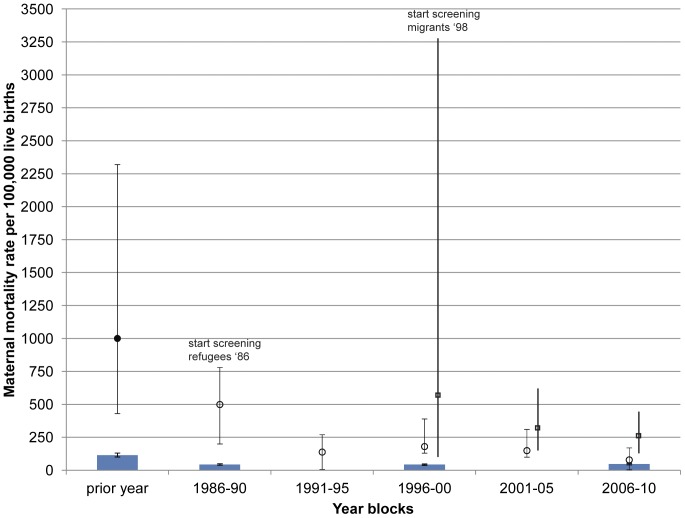
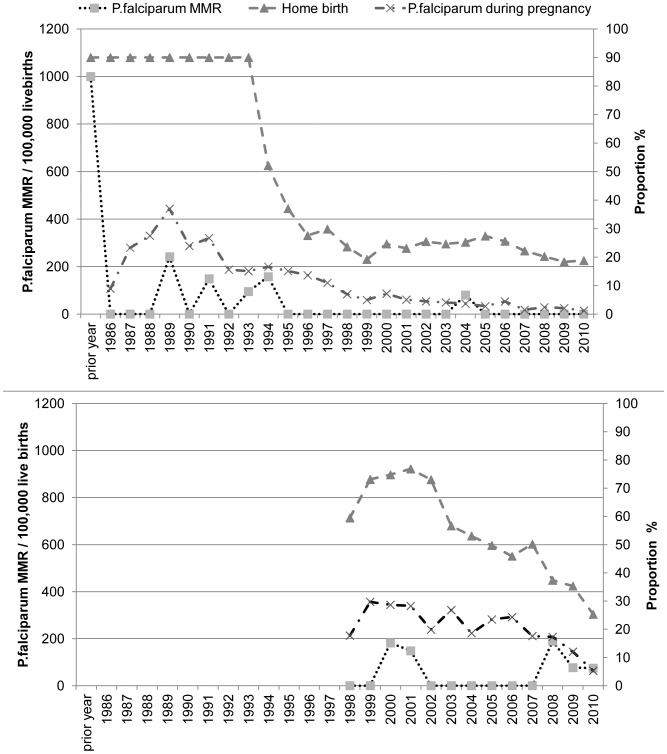
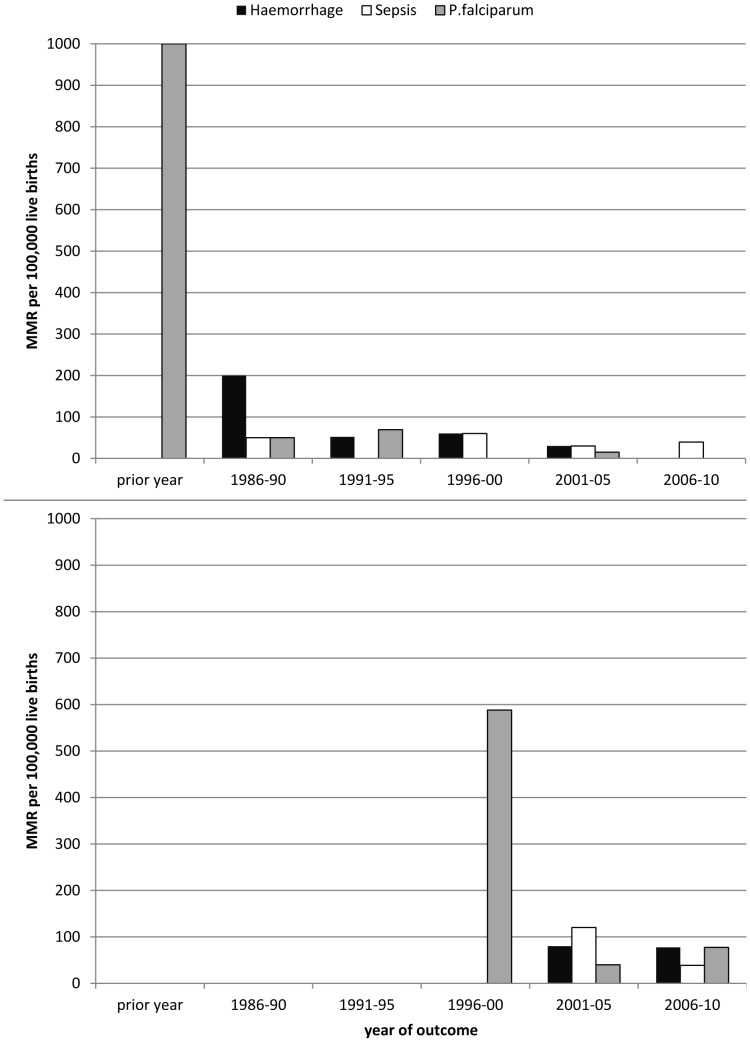
Methods and findings: All medical records from women who attended the Shoklo Malaria Research Unit antenatal clinics from 12(th) May 1986 to 31(st) December 2010 were reviewed, and maternal death records were analyzed for causality. There were 71 pregnancy-related deaths recorded amongst 50,981 women who attended antenatal care at least once. Three were suicide and excluded from the analysis as incidental deaths. The estimated maternal mortality ratio (MMR) overall was 184 (95%CI 150-230) per 100,000 live births. In camps for displaced persons there has been a six-fold decline in the MMR from 499 (95%CI 200-780) in 1986-90 to 79 (40-170) in 2006-10, p<0.05. In migrants from adjacent Myanmar the decline in MMR was less significant: 588 (100-3260) to 252 (150-430) from 1996-2000 to 2006-2010. Mortality from P. falciparum malaria in pregnancy dropped sharply with the introduction of systematic screening and treatment and continued to decline with the reduction in the incidence of malaria in the communities. P. vivax was not a cause of maternal death in this population. Infection (non-puerperal sepsis and P. falciparum malaria) accounted for 39.7 (27/68) % of all deaths.
Conclusions: Frequent antenatal clinic screening allows early detection and treatment of falciparum malaria and substantially reduces maternal mortality from P. falciparum malaria. No significant decline has been observed in deaths from sepsis or other causes in refugee and migrant women on the Thai-Myanmar border.
Conflict of interest statement
Figures
References
-
- Carroli G, Rooney C, Villar J. How effective is antenatal care in preventing maternal mortality and serious morbidity? An overview of the evidence. Paediatr Perinat Epidemiol. 2001;15:1–42. - PubMed
-
- Hogan MC, Foreman KJ, Naghavi M, Ahn SY, Wang M, et al. Maternal mortality for 181 countries, 1980–2008: a systematic analysis of progress towards Millennium Development Goal 5. Lancet. 2010;375:1609–1623. - PubMed
-
- Paxton A, Wardlow T. Are We Making Progress in Maternal Mortality? N Engl J Med. 2011;364:1990–1993. - PubMed
-
- Hanvoravongchai P, Warakamin B, Coker R. Critical interactions between Global Fund-supported programmes and health systems: a case study in Thailand. Health Policy Plan. 2010;25:i53–57. - PubMed
-
- Tangcharoensathien V, Teokul W, Chanwongpaisarn L. Kwon HJ, editor. Challenges of implementing universal health care in Thailand. 2005. pp. 257–282. editor. Transforming the developmental welfare state in East Asia. New York: Palgrave Macmillan.
Publication types
MeSH terms
Grants and funding
LinkOut - more resources
Full Text Sources
Medical
