


Delay discounting and intake of ready-to-eat and away-from-home foods in overweight and obese women
- PMID: 22819735
- PMCID: PMC3428492
- DOI: 10.1016/j.appet.2012.07.009
Delay discounting and intake of ready-to-eat and away-from-home foods in overweight and obese women
Erratum in
- Appetite. 2013 Apr;63:147. Debiasse, Michelle A [corrected to DeBiasse, Michelle A]
Abstract
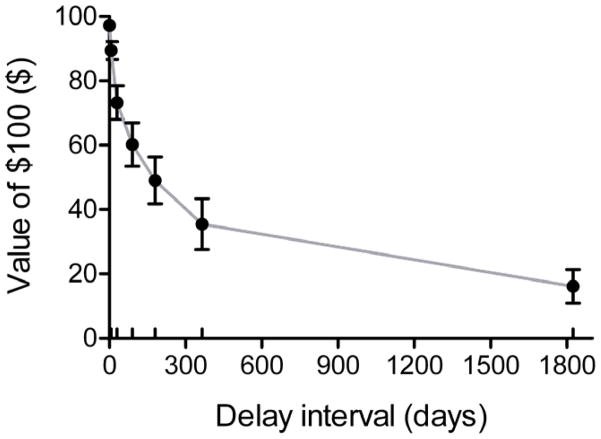
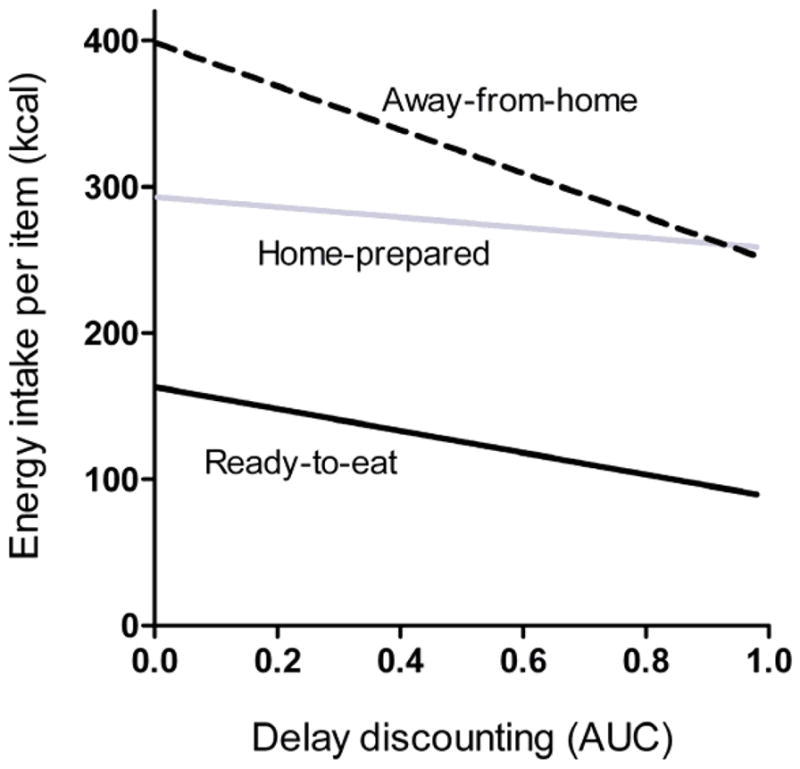
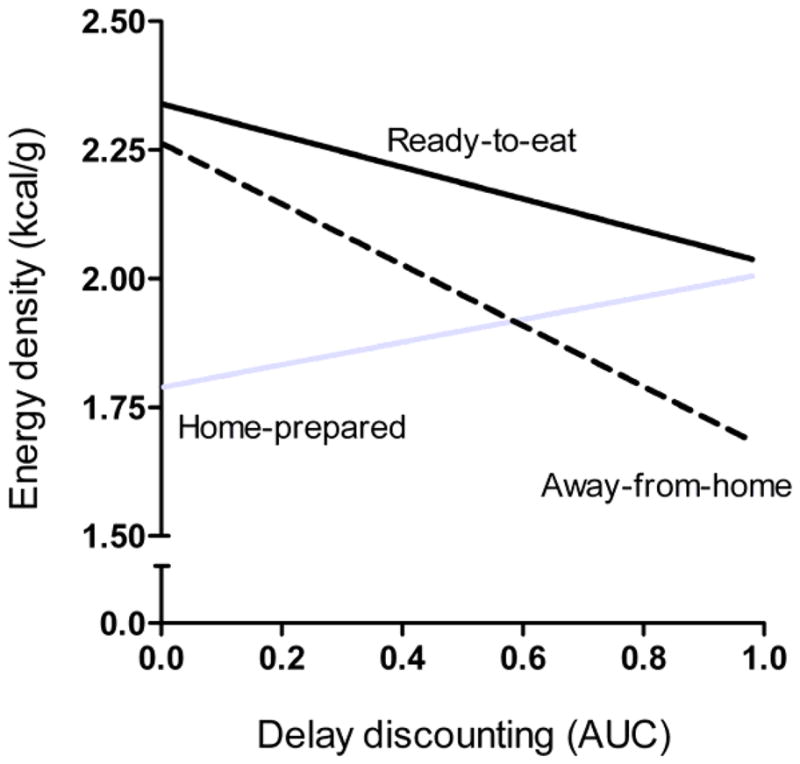
A shift from home-prepared to away-from-home and ready-to-eat foods has occurred in recent decades, which has implications for obesity and health. This study tested whether delay discounting, a facet of impulsivity reflecting sensitivity to immediate reward, is associated with the frequency of consumption and typical amount consumed of home-prepared, away-from-home, and ready-to-eat foods among overweight and obese women. Seventy-eight participants completed a binary choice task assessing discounting of delayed monetary rewards. Nutrient analysis of weighed food records characterized dietary intake over seven consecutive days. Foods were categorized as home-prepared, away-from-home, or ready-to-eat by a registered dietitian from information provided by participants. Delay discounting was not associated with the frequency of consuming home-prepared, away-from-home, and ready-to-eat foods as reflected in the percentages of recorded foods or total energy intake from each category. However, once consuming away-from-home and ready-to-eat foods (but not home-prepared foods), impulsive women consumed more energy than less impulsive women. Exploratory analyses indicated that more impulsive women chose away-from-home foods with a higher energy density (kcal/g). Impulsivity was associated with the quantity of away-from-home and ready-to-eat foods consumed, but not the frequency of their consumption. Home food preparation may be critical to weight control for impulsive individuals.
Copyright © 2012 Elsevier Ltd. All rights reserved.
Conflict of interest statement
The authors have no conflicts of interest to disclose.
Figures
References
-
- Ainslie G. Breakdown of will. Cambridge, UK: Cambridge University Press; 2001.
-
- Appelhans BM. Neurobehavioral inhibition of reward-driven feeding: Implications for dieting and obesity. Obesity. 2009;17(4):640–647. - PubMed
Publication types
MeSH terms
Grants and funding
LinkOut - more resources
Full Text Sources
