


Senior-Løken syndrome: a syndromic form of retinal dystrophy associated with nephronophthisis
- PMID: 22819833
- PMCID: PMC3504181
- DOI: 10.1016/j.visres.2012.07.003
Senior-Løken syndrome: a syndromic form of retinal dystrophy associated with nephronophthisis
Abstract
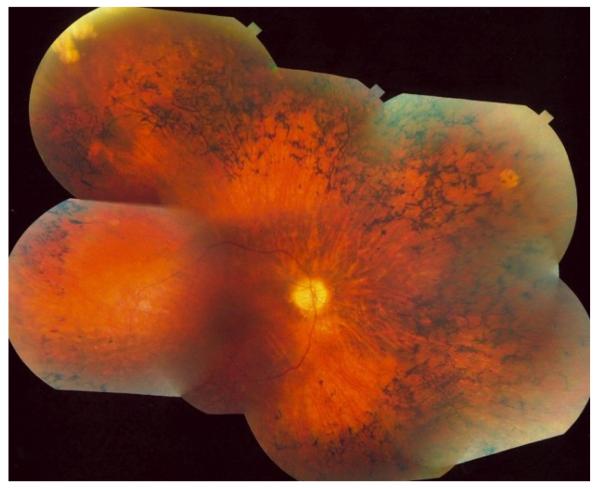
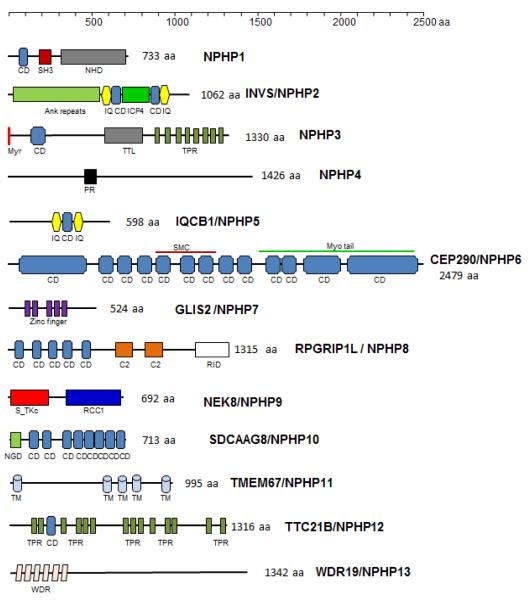
Senior-Løken syndrome (SLS) is an autosomal recessive disease characterized by development of a retinitis pigmentosa (RP)- or Leber congenital amaurosis (LCA)-like retinal dystrophy and a medullary cystic kidney disease, nephronophthisis. Mutations in several genes (called nephrocystins) have been shown to cause SLS. The proteins encoded by these genes are localized in the connecting cilium of photoreceptor cells and in the primary cilium of kidney cells. Nephrocystins are thought to have a role in regulating transport of proteins bound to the outer segment/primary cilium; however, the precise molecular mechanisms are largely undetermined. This review will survey the biochemistry, cell biology and existing animal models for each of the nephrocystins as it relates to photoreceptor biology and pathogenesis of retinal degeneration.
Copyright © 2012 Elsevier Ltd. All rights reserved.
Figures
References
-
- Arts HH, Doherty D, van Beersum SE, Parisi MA, Letteboer SJ, Gorden NT, Peters TA, Marker T, Voesenek K, Kartono A, et al. Mutations in the gene encoding the basal body protein RPGRIP1L, a nephrocystin-4 interactor, cause Joubert syndrome. Nat. Genet. 2007;39:882–888. - PubMed
-
- Atala A, Freeman MR, Mandell J, Beier DR. Juvenile cystic kidneys (jck): a new mouse mutation which causes polycystic kidneys. Kidney Int. 1993;43:1081–1085. - PubMed
-
- Attanasio M, Uhlenhaut NH, Sousa VH, O’Toole JF, Otto E, Anlag K, Klugmann C, Treier AC, Helou J, Sayer JA, et al. Loss of GLIS2 causes nephronophthisis in humans and mice by increased apoptosis and fibrosis. Nat. Genet. 2007;39:1018–1024. - PubMed
Publication types
MeSH terms
Substances
Supplementary concepts
Grants and funding
LinkOut - more resources
Full Text Sources
Other Literature Sources
Medical
Research Materials
